State readjusts childcare assistance after complaints about rate change, but concerns remain
Aug 30, 2026 | 8:00 am ET
Description
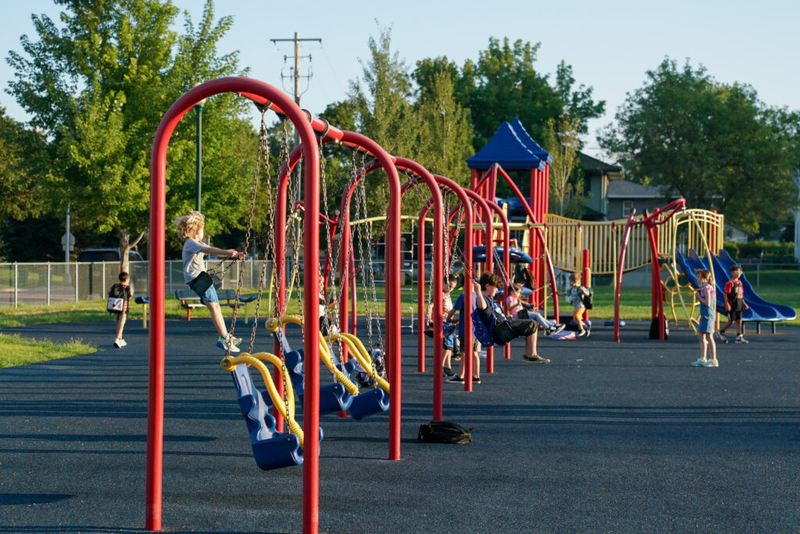
Students in the Sioux Falls School District play on a playground. (Courtesy of Sioux Falls School District)
A Sioux Falls after-school coordinator said she fielded calls from panicked parents this month after the state altered childcare assistance payments — in some cases slashing assistance by more than 80%, she said.
Rebecca Wimmer is the coordinator for the Sioux Falls School District’s after-school program. She reported hearing from families who said it would be more cost-effective for a parent to quit working and stay home with their kids than to pay for the lost assistance. She relayed those stories to state lawmakers, the Governor’s Office and the state Department of Social Services.
Child Care Assistance is a federal-state program that helps low-income working parents, students and job trainees afford childcare. South Dakota’s program costs the state about $6.7 million and the federal government $28.4 million. It covered 3,346 children in June.
At the start of this month, the Department of Social Services made a change to its payment model that Wimmer said would have cut payments to some individual families by hundreds of dollars.
The switch was part of a planned overhaul of the department’s payment model, meant to make payments more predictable for childcare providers. Complaints from affected families and providers resulted in the department readjusting payments a little over a week later for urban after-school programs, where the effects were especially severe. Urban counties include Minnehaha, Lincoln, Meade and Pennington.
Change to tiered, flat rates
State Rep. Brian Mulder, R-Sioux Falls, advocated on behalf of families for the readjustment. Mulder works with Volunteers of America, which provides after-school care. He is grateful for the department’s decision.

“For this school year, we’re in a spot where school can start and families can feel confident they have proper funding for out-of-school care to support their needs and child’s needs,” Mulder said.
Under the old system, program payments were based on a child’s actual hours of attendance, which meant payments could fluctuate and make it hard for providers to predict their income.
The department switched to three tiers of flat weekly rates earlier this month: a full-time rate for more than 28 hours of care per week, part-time for 16-27 hours and limited for 1-15 hours.
The rates were informed by a 2024 market survey of Child Care Assistance-enrolled providers. For after-school programs in Sioux Falls and Rapid City, the new rates set full-time reimbursement at $185 a week, with part-time dropping to $92.50 and limited to $46.50.
The change cut some families’ state payments by hundreds of dollars a month, Wimmer said, including one family that would have had state payments cut from $950 a month to $185 — a monthly cost of $765.
After the readjustment, part-time and limited rates were both raised to $101.25 — which “gets us very close” to the cost of after-school care, Wimmer said.
Department spokeswoman Tracy Mercer did not say if such a drastic change for families’ payments was intentional or an oversight by the department. The tiered approach, she said, is a “responsible use of program dollars.” Some providers have called for the state to cover full-time enrollment no matter how many hours children attend.
“Program dollars should not cover significant periods when a child is not receiving care,” Mercer said. “CCA funds are limited, and the department has a responsibility to use those dollars as effectively as possible so they can stretch to serve as many eligible families as possible.”
The state estimated the weekly, tiered payment plan would cost the state $3 million more overall before rolling it out — money that would benefit providers and families across the state. The expected increase was within the department’s budget, Mercer said. The department did not immediately share an updated estimate with the readjusted rates.
Overall ‘revamp’ still needed, provider says
Wimmer said there are staffing and overhead costs outside of a child’s physical attendance. Her program runs at school sites, requiring staff to arrive before the school day ends to transform cafeterias into program spaces. Other off-site providers need staff to drive to a school, wait and then transport children to the off-site care location.
$10 million settlement over online gaming child exploitation will fund safety, after-school efforts
“The market for childcare is just not set up where a part-time rate payment works very well,” Wimmer said.
Wimmer said she expects the department will ultimately have to “revamp the whole model,” because part-time and limited rates for younger children still don’t reflect what it actually costs providers to operate and leave too many costs for providers and families to absorb.
Mulder, the lawmaker, said he heard criticism of the change from after-school providers and families. He did not hear from childcare providers for younger children or their families in the Sioux Falls area. Nor did he hear from suburban or rural after-school programs.
The department will begin its next market rate survey this fall. The department plans to update rates in fiscal year 2028.
Mercer said the department “remains open to receiving additional feedback” on the new payment model from other childcare providers.
Governor candidates react
South Dakota Democratic nominee for governor Dan Ahlers said in a news release that the fallout from the rate change “should never have happened in the first place.” The readjustment is not enough, he said.
Ahlers serves as president of the Dell Rapids before- and after-school program, where he said state funding decisions can “put enormous pressure on providers and families.”
Childcare providers already struggle to balance worker wages, affordability for families and quality care for a service that is “essential to our economy, our workforce and the future of our communities,” he added.
“As governor, I will work with parents, providers, employers and communities to make quality childcare more affordable for families and help providers remain viable,” Ahlers said.
Republican Gov. Larry Rhoden, Ahlers’ opponent in the Nov. 3 election, told South Dakota Searchlight that the Department of Social Services addressed “some of the immediate concerns” of families and providers.
“We’ll continue to peel these issues off as they come and work for solutions for whatever it might be,” Rhoden said, “but I’m pretty happy with the way that our team has responded so far, and we’ll continue to try and respond appropriately on issues as they come forward.”
Billy Mawhiney, with the South Dakota Afterschool Network, said any changes should increase access and affordability, not reduce it.
“If kids are going to an after-school program, their grades will be higher, their self esteem will be higher, their reading scores and math scores — everything we want for a child is going to improve,” Mawhiney said. “The better opportunity, more affordability and more access we can get for after-school care, the more South Dakota kids will have access to a better life.”

Pierre, SD