School’s punishment of parents protesting transgender athletes was discriminatory, court rules
Aug 28, 2026 | 5:00 am ET
Description
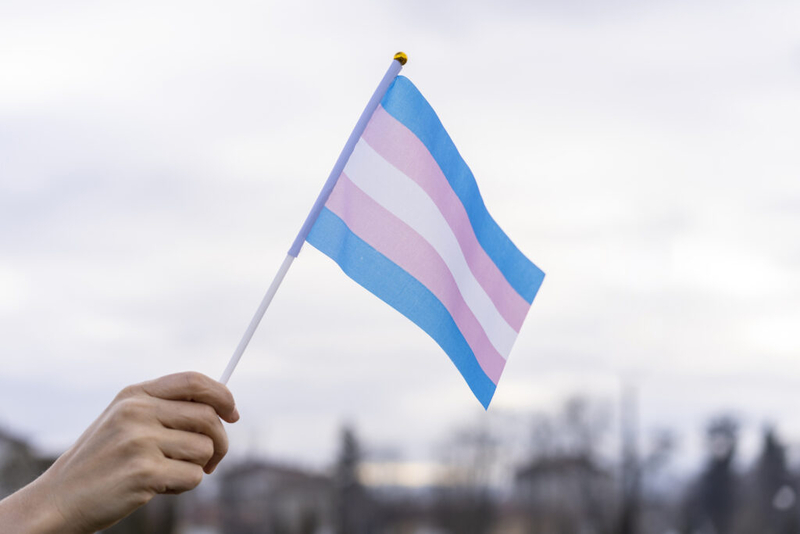
The decision is the latest legal setback for transgender rights advocates. (Getty Images)
In 1996, a school district in Milford, New York, barred a Christian children’s organization from using its facilities after school. The school contended that the club’s plans to pray, teach the Bible, and study scripture violated its prohibitions on religious worship.
But the U.S. Supreme Court disagreed. Because the school allowed other groups to use those same facilities, its prohibition of the club had specifically discriminated against its viewpoints, Justice Clarence Thomas wrote in the 2001, 6-3 ruling of Good News Club v. Milford Central School.
This week, a federal court applied a similar test to an emotional New Hampshire standoff: the Bow School District’s decision to remove several parents from a high school soccer game and ban them from future games for protesting a transgender female athlete.
In a ruling Wednesday, the 1st Circuit Court of Appeals sided with the parents, moving to overturn a New Hampshire court’s ruling and find that Bow had also engaged in viewpoint discrimination by punishing parents wearing wristbands opposing transgender female athletes from participating in girls’ sports.
“While the school district may make predictive judgments about whether disruption may occur and ‘need not be certain of its forecast,’ it cannot use those projections to immediately suppress a passive, silent protest that did not impair any of the legitimate school administration interests recognized by the Supreme Court,” wrote Judge Sandra Lynch in the majority opinion.
All three judges ruled to overturn a 2025 U.S. District Court of New Hampshire ruling that sided with the school district, but one circuit court judge, Julie Rikelman, disagreed with the reasons the majority used to get to its ruling.
The decision is the latest legal setback for transgender rights advocates. In July, two New Hampshire transgender female athletes who had sued to strike down a 2024 state law barring female transgender athletes from girls’ sports teams in grades 5 to 12 withdrew their lawsuit, after the Supreme Court upheld the constitutionality of similar laws in Idaho and West Virginia.
This week’s decision also comes after the Legislature passed a law to pare back a school district’s ability to issue no-trespass orders.
House Bill 1184, which takes effect Oct. 18, requires school districts and municipalities to obtain the approval of their full governing body — such as their select board or school board — before issuing a “no-trespass” order against a person. While Gov. Kelly Ayotte vetoed that bill, calling it “unworkable” for local officials and police departments, the House and Senate overturned the veto nearly unanimously on Aug. 19.
A removal and then a ban
The federal lawsuit stems from a charged day at a soccer field in September 2024.
The Bow High School female soccer team was playing Plymouth Regional High School. Plymouth’s team included Parker Tirrell, a transgender athlete who had only a week earlier obtained a federal court injunction to be exempted from New Hampshire’s new law on transgender athletes and be allowed to play.
In the weeks before the game, several parents had reached out to Bow School District officials to voice their opposition to transgender girls playing on girls’ sports teams, with one, Kyle Fellers, describing transgender supporters as participants in “a mentally ill cult.” Another parent, Anthony Foote, issued a post on Facebook the day before the game raising safety concerns about a transgender girl playing against the Bow team and calling for parents to protest at the game.
Having seen that post, Bow Superintendent Marcy Kelley, Principal Matt Fisk, and Athletic Director Michael Desilets expressed concern that Tirrell would face harassment, and asked a Bow Police Department lieutenant to attend the game, according to court records. They also sent a note to parents urging restraint.
During the game, three parents began wearing pink wristbands with “XX” written on them and “NAD,” short for gonads, meant to symbolize opposition to transgender participation in girls’ sports. They were told to take the wristbands off by both Fisk and the police lieutenant. When one parent refused, school officials instructed the referee to pause the game until the wristbands were removed. All parents eventually complied and the game resumed, but school officials later ordered Foote to leave school grounds after he displayed a poster stating “Protect Women’s Sports for Female Athletes.”
Later, the district sent Fellers and Foote no-trespass orders that prevented them from entering school grounds or attending games for at least a week, though the district later allowed Fellers to attend soccer games while the federal court considered his lawsuit. Foote and Fellers are among the four parents who sued.
A test of the First Amendment
The circuit court confronted a key First Amendment test: Was the Bow School District’s removal and subsequent ban of the parents from sports games a “subject matter restriction” or “viewpoint discrimination”?
Speech restrictions can be legal if they are subject matter restrictions, meaning the ban is for a broad topic of speech. The courts must still find such a ban reasonable.
However, if the restriction appears to target a specific viewpoint within that topic, it is not constitutional, the Supreme Court has held.
Governments may deploy such restrictions only to a “limited public forum,” such as an enclosed school meeting; it may not generally impose speech restrictions over a “traditional public forum,” such as a park or sidewalk.
In Bow’s case, Lynch ruled that the district’s actions constituted viewpoint discrimination, pointing to the school district officials’ testimony that the symbols on the pink wristbands were “exclusionary” and “hateful.” That suggested the district took action against the parents “because it disagreed with the protest message conveyed,” Lynch wrote. “This went beyond mere content neutrality,” she added.
“The characteristics of the school as a place of learning reinforce that administrators cannot favor one side of a debate involving parental speech on an issue of prominent public concern, and which, in those parents’ views, concerned the safety of their children,” Lynch wrote.
Lynch noted that school districts have more leeway to restrict speech than other government bodies if they predict it will cause “material disruption”; federal courts have upheld school decisions to ban clothing that features a Confederate flag that would likely upset students, for instance.
But she ruled that the defendants had not proved the wristbands had caused a material disruption, since the parents had worn them quietly and since it was not clear that any players had noticed them. “As appellants concede, actions by school administrators to intervene to prevent actual harassment would be permissible under the First Amendment,” she wrote. She added: “But appellants’ silent display of the ‘XX’ symbol at the September 17 game fell short of harassment and disruption.”
The order sends the case back to the district court in New Hampshire, which must now decide an appropriate remedy. But the ruling implied the law in future cases is not yet settled.
In her concurrence, Rikelman agreed there had been viewpoint discrimination, but criticized the other majority opinion for not applying the existing legal tests more clearly. Specifically, she noted that Lynch chose not to pick between the two commonly used tests — the limited public forum test or a broader test that applies to schools specifically known as Tinker. Rather, Rikelman noted, Lynch’s decision relies on neither test.
Explaining that decision, Lynch wrote that neither test was a “perfect fit for this public high school speech case, and we note that the Supreme Court has not addressed this precise question.”
New state law
The passage of HB 1184 will likely limit future school districts’ usage of no-trespass orders.
The new law requires a full school board or select board vote before no-trespass orders can be issued, and requires that the order be issued to protect public safety or prevent substantial disruption or property damage. After 35 days, the law requires the governing body to take a new vote if it wants to extend the no-trespass order, and limits any order to one year.
The law also allows a person who is issued an order to request a hearing before the governing body to contest the order, and to appeal a negative result to a superior court.
“This is trying to balance both an issue where you need to throw somebody out of a building with the citizens’ right to be able to use public facilities,” Sen. Tim Lang, a Sanbornton Republican, said in a speech before the veto override.

Concord, NH