Flock Safety spent $102,000 lobbying last year. Today cities are demanding safeguards.
Aug 28, 2026 | 4:15 am ET
Description
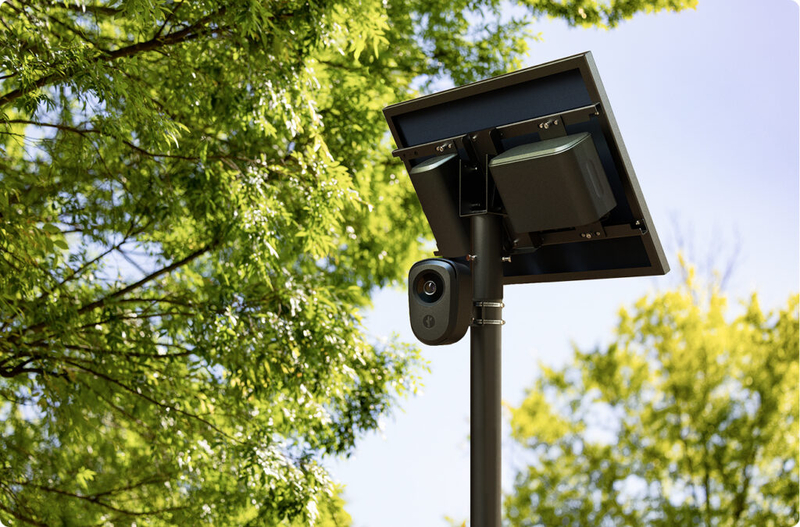
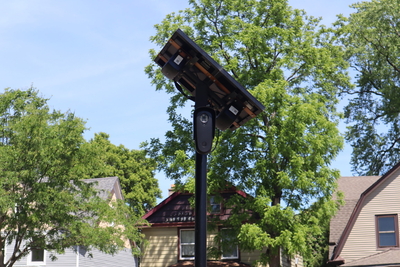
Flock Safety license plate readers are typically mounted on tall poles, with a camera and solar panel on top. The company says its technology is used in more than 6,000 communities across 49 states in partnership with thousands of law enforcement agencies nationwide. (Photo courtesy of Flock Safety)
Flock Safety, the multi-billion dollar producer of Flock automatic license plate reader cameras, spent $102,000 last year lobbying for state legislation to increase its nationwide surveillance network. That’s according to a report by Open Secrets, which found that the controversial company dedicated over $2 million on lobbying efforts across the country in 2025.
The findings come as communities continue pushing back against Flock cameras. Some areas have cancelled contracts and removed the cameras altogether, while others have opted to increase oversight and auditing of how the cameras are used by police.
Flock cameras work by photographing every vehicle and license plate that passes by their view. The images and information are stored in a database that can be searched by law enforcement officers who work at agencies with Flock contracts. In many cases, police officers may query tens of thousands of cameras at once to determine whether any have sighted a vehicle sought by law enforcement. Using the captured data, police departments can also use Flock to keep track of a vehicle’s regular movement patterns.
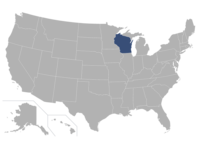
In Wisconsin, Flock spent the $102,000 lobbying for a pair of Republican bills, Assembly Bill 300 and Senate Bill 299, which would have provided grants to allow local law enforcement agencies to obtain and install automatic license plate reader cameras. The legislation failed to pass in 2025.
Police departments have defended Flock cameras as valuable tools to combat crime from homicides to car theft. Critics, however have pointed to cases of officers searching Flock’s network for questionable or illegal reasons. Some departments have used Flock for immigration enforcement as the Trump administration ramped up its plans to carry out mass deportations. One sheriff’s deputy in Texas used Flock to locate a woman who’d recently had an abortion, fueling fears that local law enforcement were working to criminalize reproductive healthcare following the overturning of Roe v. Wade. In many other cases, male officers used Flock to monitor or stalk people, particularly current or former romantic partners.
Several of these cases have played out in Wisconsin. Earlier this month, former Menasha officer Cristian Morales was sentenced to six months in jail and three months probation for misusing Flock to stalk his ex-girlfriend. Meanwhile, new felony charges have been levied against former Kenosha County sheriff’s deputy Frank McGrath, who was found to have used Flock and a squad car tracking system to monitor his girlfriend, also a Kenosha sheriff deputy.
Josue Ayala, a former Milwaukee officer, was charged for the same behavior. Ayala avoided jail time and instead received a year of probation after taking a guilty plea. More recently, Milwaukee Detective Tehrangi Chapman was charged with using Flock to monitor someone he has been accused of stalking since 2019, years before Flock came to Milwaukee. Chapman was one of the internal affairs detectives who investigated the allegations of Ayala’s Flock misuse.
Each of the officers in these cases were charged with felony misconduct in public office, except for Ayala, who was charged with a misdemeanor.
Questions around how the cameras are used have led to a distrust of the Flock Safety technology itself. Wisconsin communities including Kaukauna, Sturgeon Bay, Verona, Appleton, Oshkosh, Dane County and Stoughton have all cancelled their Flock camera contracts.

Despite having several officers charged with misusing Flock and sustained calls from the public to stop using the technology, Milwaukee has retained its Flock contract. The police department has cited it as an asset in quickly developing leads and solving crimes. On Tuesday, however, 12 of Milwaukee’s 15 common council members signed a letter asking both the Fire and Police Commission and Police Chief Jeffrey Norman to review the department’s use of Flock cameras and to consider additional safeguards before the city begins to shape its 2027 budget — three times the number of alders who signed a similar letter in March.
The council is asking for more information on how the Flock system is used, including a list of every agency that shares license plate reader data with the Milwaukee Police Department, and every agency with which the department shares its own data. The council is also demanding a complete accounting of searches by outside agencies using Milwaukee’s Flock network, as well as those conducted by the department on behalf of another agency. The letter also is requesting a list of all system users and their searches.
In June, as controversy over Flock grew, the Milwaukee Police Department took steps to increase auditing procedures to flag suspicious searches, and restrict the number of officers who had access to the Flock system. The department also said that it shares its Flock network with state partners, but not with federal agencies.
But the common council letter asks for more, including for case numbers and specific justifications for every Flock search, automated misuse detection, independent auditing, prohibitions on using Flock for immigration enforcement without a judicial warrant and regular public reporting to both the Fire and Police Commission and council.
The letter also urges that, as discussions begin over the 2027 city budget, the city examines how Milwaukee’s Flock camera network has been funded over recent years, including how the contracts were granted multiple waivers as they were renewed. The city’s waivers, along with the use of sole source contracts with Flock, has made it possible for Milwaukee’s camera network to grow without approval from the council.
In response to the letter, MPD said in a statement that it will work with the commission and council to respond to concerns, and that it is committed to transparency and dialogue.
Madison, WI