State fails to quash Sussex resident’s appeal of offshore wind approval
Aug 26, 2026 | 6:00 am ET

Description
Photo courtesy of Spotlight Delaware
Why Should Delaware Care?
Spiking electricity prices have sparked calls from across the mid-Atlantic for the construction of new power plants. But a proposed offshore wind farm near the Maryland/ Delaware state line has drawn stiff opposition and various lawsuits from local government officials and residents.
Delaware’s Environmental Appeals Board will hear a challenge to state approvals of a controversial offshore wind project, despite arguments that a federal review of the plan is too far along for the state to intervene.
During a meeting Tuesday, the board – which serves as an administrative court for environmental appeals – ruled that a legal challenge brought by South Bethany homeowner Edward Bintz to state decisions favoring the U.S. Wind project could move forward.
“This has gone on for over a year and a half,” Environmental Appeals Board Chair Michael Horsey said. “[The board] should be able to hear [the case] on the merits whether it’s wrong, right or indifferent.”
Tuesday’s ruling is the latest chapter in a two-year legal and political fight over US Wind’s offshore project, which has pitted many in Sussex County against state officials who see the 114-turbine wind farm as key to easing Delaware’s soaring electricity prices.
The ruling Tuesday rebuffed arguments from an attorney for the state, who said a federal consistency review of US Wind’s offshore wind project done by Delaware environmental regulators should not be challenged.
The attorney claimed that because the project is so far along with the federal review and approvals, there is nothing the state appeals board could do even if it found that the previous secretary of the Delaware Department of Natural Resources and Environmental Control erred in the approval.
“There’s nothing that can be implemented to redress his complaints because the federal process is already in motion,” Devera Scott, a deputy attorney general representing DNREC said. “It’s done. There’s nothing that DNREC could do.”
After deliberating in private during a brief executive session, the Environmental Appeals Board denied DNREC’s efforts to dismiss the case. The merits of the appeal could be heard as early as next month.
In his challenge, Bintz, a retired attorney and property owner in South Bethany, claimed that former DNREC Secretary Shawn Garvin caused him and his property “real damage” when ruling that the US Wind project was consistent with federal agency rules.
He also argued that DNREC failed to properly notify the public in the decision-making process. As a result, Bintz is asking the state appeals board to evaluate whether the secretary or agency legally erred in any of those review and permitting steps.
Bintz said after the hearing that he was happy with Tuesday’s outcome.
“I don’t think the process was fair, and it was jammed through,” he said, referring to the DNREC approval.
Representing Bintz in his appeal is Jane Brady, a former Delaware attorney general and former chair of the state Republican Party. The case is one of several in which she is fighting US Wind’s project.
She and Bintz have also challenged the project in federal court, and she is representing the Caesar Rodney Institute, a conservative think tank, on two separate appeals – one in state Superior Court and the other also pending in front of the EAB.
Ocean City, Md., officials are also opposing the project across state lines in Maryland’s court system.
The pushback fueling the legal challenges has also spread to the legislative realm. In 2025, the US Wind project was also at the heart of a late-night standoff among Delaware lawmakers, leading to legislation that ultimately tossed out a local-land use decision that had denied a permit for a land-based substation that is integral to the project.
On Tuesday, Brady said there may also be future challenges to another recently passed bill, Senate Bill 346, which governs how the EAB operates. Gov. Matt Meyer signed it into law earlier this summer.
Brady argues the new law could significantly limit the public’s access to certain information considered during the secretary’s decision-making process.
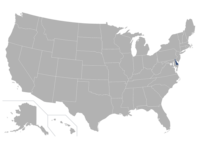
Dover