JKT tops 50% of first-choice votes for Alaska governor, Republican opponents concede
Nov 13, 2026 | 8:45 pm ET

Description
Jonathan Kreiss-Tomkins speaks with a reporter before voting on Election Day, Tuesday, Nov. 3, 2026 at the University of Alaska Anchorage. (Photo by Loren Holmes/Alaska Beacon)
Jonathan Kreiss-Tomkins, a Democrat, is declaring victory in Alaska’s gubernatorial election.
In results posted Thursday night by the Alaska Division of Elections, Kreiss-Tomkins had more than 50% of the first-choice votes for governor in this year’s election, putting him above the threshold for a ranked choice runoff.
CNN declared him the winner against three Republican challengers on Thursday night. The Associated Press has not yet called the race, and the Alaska Division of Elections is not scheduled to certify the result until Nov. 25. Preliminary final results are expected Nov. 18.
“It was a team effort every step of the way, and we always believed we could (win),” Kreiss-Tomkins said on Monday. “So it’s really really gratifying to have that official race call, or whatever CNN calls it, to kind of put some punctuation on the sentence.”
Kreiss-Tomkins was the lone Democrat in a field of four candidates seeking to replace Republican Gov. Mike Dunleavy, who is term-limited and was unable to run for re-election this year. Dunleavy could run again in four years.
Even before Thursday, preliminary results indicated Kreiss-Tomkins would win the race even if it went to a ranked choice runoff.
Kreiss-Tomkins’ closest opponent in the election was Republican Bernadette Wilson, who had 28.7% of the 256,823 first-choice votes counted by the end of the day Thursday.
Republican candidate Dave Bronson was third, with 13.7% and Republican candidate Treg Taylor was fourth with 7.3%.
“Congratulations to Governor-elect Kreiss-Tomkins on winning the Alaska governor’s race with a majority of the vote,” Bronson said in a statement posted on his campaign Facebook page. “Alaskans have made their choice, and I respect their decision. It was a pleasure campaigning against him. I wish him all the success.”
By phone on Friday morning, Wilson said that while she was disappointed in the result and hoped for a different outcome as more ballots were counted, the trajectory since Election Day wasn’t a surprise.
“JKT was on top on election night, on top in the first round. He’s gonna be your governor,” she said.
Wilson and Kreiss-Tomkins were both born in Alaska, and Wilson said that while they disagree on policy, she is happy that someone from the state will be leading it.
“I know that he genuinely cares about the state. We disagree very strongly on what (caring for the state) looks like and how we get there, but I don’t look at him and think, ‘Oh my gosh, you’re some outsider guy who just moved here 10 years ago and now thinks you should be the governor.’ And so he’ll be just the third governor that was born here,” Wilson said.
Kreiss-Tomkins, 37, also will be the youngest governor in state history and the first Democrat since 2002, when Tony Knowles left office after an eight-year term.

No announcements on transition plan yet
Kreiss-Tomkins said he expects to announce the members of his transition team — the people who will help organize Alaska’s new government — early next week.
“Next week there will start to be a pretty steady cadence of updates and announcements from us,” he said.
Alaska’s constitution requires the new governor to be sworn into office at noon Dec. 7. Kreiss-Tomkins said he hasn’t yet decided a location for that event. He declined to say whether he’s thinking of Anchorage, Juneau, or Sitka, his hometown.
Dec. 15 is the statutory deadline for the new governor to present a draft budget. In 2018, when Dunleavy took over from former Gov. Bill Walker, he introduced a slightly modified version of a Walker proposal, then unveiled a major fiscal austerity plan in February, the deadline for the governor to submit amendments to the budget.
“There’s a lot to do, and we’re excited to get to work with an obsessive, problem-solving energy,” Kreiss-Tomkins said on Friday.
“We’re thinking about the budget next year, we’re thinking about building an administration and we’re thinking about a governing agenda, and each of those three things are big things, and taking them all apace now that there’s a little bit more clarity,” he said.
Kreiss-Tomkins will work with predominantly Democratic coalitions in the state House and Senate. The House coalition will have at least 24 members and could have as many as 27, depending on the result of close races where ballot counting is continuing.
The Senate coalition is expected to have a bare-minimum 11 members, including 8 Democrats, 2 Republicans and 1 independent.
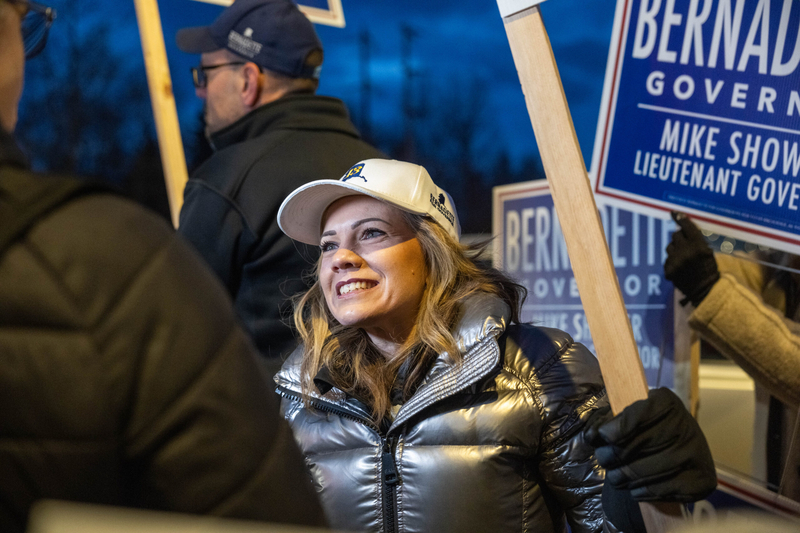
Wilson explains her thoughts on why Republicans lost the election
Seventeen candidates registered for the primary election, including two Democrats, three independents and 12 Republicans.
In the primary, Kreiss-Tomkins finished with the most votes, followed by fellow Democrat Tom Begich, Wilson and Bronson.
Begich withdrew from the race in order to consolidate support behind Kreiss-Tomkins, which promoted fifth-place finisher Treg Taylor into the top four.
Lt. Gov. Nancy Dahlstrom disqualified Taylor, citing his failure to properly complete a financial disclosure form on time, but she reversed her decision days later.
The brief disqualification saw Taylor’s wife replace him on the ballot; she was removed once his candidacy was restored.
Wilson had the highest vote total among Republicans in the primary election. Before the primary, she had said that in order to consolidate support, she would quit the race if she wasn’t the top vote-getter.
Other Republicans made similar pledges, but Bronson and Taylor stayed in the race, pointing out that even if they withdrew, they would have simply been replaced by other Republicans who finished lower in the primary result.
With three Republicans on the ballot, the Alaska Republican Party and top Republican officials — including Dunleavy — generally declined to endorse one candidate or another and instead urged Republican candidates to “rank the red” by choosing Wilson, Taylor and Bronson in any order.
Wilson, by phone on Friday, said that wasn’t an effective strategy.
“The reality is, the Republican Party, the donors, you know, all of the conservative groups, they had the ability to suck the oxygen out of the room, even if other candidates do not want to withdraw,” Wilson said.
With three options to choose from, Republican donors stayed away or limited their financial help, Wilson said. Independent expenditure groups didn’t participate in the election to the degree that they did in 2022 or 2018, either.
While Kreiss-Tomkins is on track to win a majority of the first-choice votes for governor, Wilson believes that could have been different with more financial support and organization from Republicans.
“That’s why I say, even if JKT takes it on the first round, there’s no doubt in my mind that this is a very direct result of not being able to consolidate and collaborate, and that’s something that on the conservative side — we really got to look at ourselves in the mirror and figure out what we’re going to do here,” she said.
Wilson said she intends to stay active in Alaska politics — she has campaigned for conservative causes for almost two decades — but isn’t yet sure about her next steps.
At a statewide level, she urged Alaska conservatives to start immediately thinking about 2028, when incumbent Sen. Lisa Murkowski, R-Alaska, faces re-election.
According to historic primary election results, most registered Alaska Republicans oppose Murkowski and prefer a more conservative Republican, but Murkowski has been able to stay in office with the support of Democrats, moderate Republicans and independents.
Wilson, who opposes Murkowski, said that unless Republican organizations — including the state party — organize and back a single candidate in 2028, they risk a repeat of the vote dilution that happened this year.
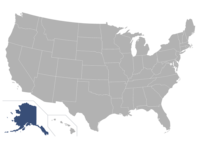
Juneau