How the ‘Rule of 90’ became a campaign calculation for RI’s embattled incumbent governor
Aug 25, 2026 | 5:00 am ET

Description
Scott Conley, 53, a McKee supporter and regional vice president for the National Education Association of Rhode Island, has been a special education teacher at Davies Career and Technical High School in Lincoln for 21 years. (Photo by Laura Paton/Rhode Island Current)
To many Rhode Islanders, the “Rule of 90” sounds like an obscure lesson from high school geometry.
Not to Scott Conley. The 53-year-old special education teacher at Davies Career and Technical High School has had more than a decade of schooling on the rule proposed as an alternative to the 2011 pension reforms led by then-General Treasurer Gina Raimondo.
The Rule of 90 would offer retirement with full benefits to participants who reach at least 60 years old, and whose years in government service plus their age add up to 90. A 61-year-old with 29 years of service, or a 62-year-old with 28 years of service would also be eligible for retirement under the same formula — five years ahead of the current “Rule of 95” retirement policy that resulted from Raimondo’s pension changes. Before 2011, public employees could generally retire at age 60 with 10 years of service, or at any age with 28 years of service.
“I’m not someone who’s just counting down the clock, but it’s nice to know if I work 30 years, I have the option to leave when I would like to,” said Conley, who also serves as a regional vice president for the National Education Association of Rhode Island.
Unions have failed to win over legislative leaders on Smith Hill, who have stuck to Raimondo’s plan restricting cost-of-living increases and other benefit changes until the pension system reaches 75% funding.
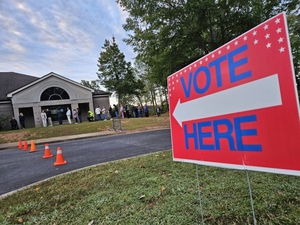
Enter Gov. Dan McKee. Down 20 points in his reelection bid against Democratic primary challenger Helena Buonanno Foulkes, McKee announced on Aug. 20 — the first day of early voting — that he would include the Rule of 90 provision in his fiscal 2028 budget proposal.
“Fifteen years ago, a promise was taken away from our workers,” McKee said in a statement following the Thursday afternoon press conference with union leaders. “They didn’t break that promise — they kept showing up and doing the job anyway. It’s past time to begin the process of making people whole, and one of the ways I can do that is by putting it in my budget. This will let veteran teachers retire with the respect they’ve earned, and open the door for the next generation coming up behind them. As long as I am Governor, this state will show up for working people.”
Motives questioned
The Foulkes campaign said the governor’s pledge was a political maneuver meant to win union support.
“Dan McKee has been the governor for six years,” Angelika Pelligrino, a Foulkes campaign spokesperson said in an email Friday. “That means he has had six budget cycles to adopt the Rule of 90. He hasn’t done it. And now — two months after his most recent budget and on the first day of early voting — he’s making a cynical, empty promise that he has no plan to pay for.”
Joe Fleming, a political analyst for WPRI-TV 12, also acknowledged the political benefits for McKee’s reelection campaign.
“He’s looking to grab more teacher support by doing this,” Fleming said. “This is probably something to motivate the rank and file members of the union, to give a reason why they should vote for the governor.”
The trio of unions leading the charge for the Rule of 90 — the Rhode Island Council 94 of the American Federation of State, County and Municipal Employees, the National Education Association of Rhode Island and the Rhode Island Federation of Teachers and Health Professionals — have each endorsed the governor already. The three groups represent a combined 34,000 teachers and government workers.
The National Education Association asked both McKee and Foulkes about their stances on pension benefits, including retirement, during interviews prior to the endorsement decision, Stephanie Mandeville, an association spokesperson said.
Jim Cenerini, spokesperson for Council 94, said McKee never discussed the Rule of 90 proposal with union leaders prior to its endorsement vote.
A spokesperson for the Federation of Teachers and Health Professionals did not immediately return requests for comment.
Sophie Mestas, a McKee campaign spokesperson, also said the governor has expressed support for the issue previously.
But McKee’s own budget director warned about the implications for the state pension fund when Rule of 90 legislation was reviewed by Senate lawmakers in May.
“Any bill that expands retirement benefits will increase State retirement costs over time and may slow the decline of the State’s unfunded liability,” Brian Daniels, director of the state Office of Management and Budget, wrote in the May 14 letter. “Further, as the State continues to face structural deficits in the coming years, any increased pension contributions may require cutting other programs or increasing revenues.”
At what cost?
As of June 30, 2025, the pension system stood at 66.3% funding, with a nearly $4.4 billion unfunded liability, according to the state’s actuarial valuation report. The state is expected to pay $405.2 million, or 6.8% of its general revenue, to cover its share of retirement contributions in the current fiscal year, Daniels wrote.
A 10-member panel set up in 2023 under Rhode Island General Treasurer James Diossa’s office to consider the long-term impact of the 2011 pension reforms considered how the Rule of 90 would affect the health of the pension system in its final report in 2024.The Pension Advisory Working Group estimated the earlier retirement age would increase state and local contributions by $12.1 million in fiscal 2025, with annual contributions increasing in subsequent years. The measure would increase the unfunded liability by $106 million and decrease the funded ratio by half a percent, the report stated.
And it could diminish benefits for retirees, who by ending their careers five years earlier, lose out on the extra years of contributions.
I’m not someone who's just counting down the clock, but it’s nice to know if I work 30 years, I have the option to leave when I would like to.
Carla Rojo, a spokesperson for Diossa’s office, said the estimates included in the report reflect 2024 demographics, and would need to be updated based on present pension funding ratios and plan participants.
Rojo did not directly answer when asked for Diossa’s stance on the proposal.
“Treasurer Diossa supports responsible and sustainable changes that do not jeopardize the long-term financial health and stability of the pension system,” Rojo wrote in an email Friday.
Senate President Valarie Lawson and House Speaker Christopher Blazejewski were similarly noncommittal, noting the legislation, if included in the fiscal 2028 budget, will be “thoroughly examined through the public committee review process.” Their spokespeople confirmed that McKee had not given them a heads up about his budget pledge beforehand.
Promises broken
Supporters frame the proposal as a matter of fairness, resurrecting a promise to the 60,000 public employees that was “broken” through the 2011 pension reform.
It might also help rebalance the scales with Massachusetts, which has lured Rhode Island teachers with a more favorable benefits system, said Maribeth Calabro, president of the Rhode Island Federation of Teachers and Health Professionals.
“We are effectively training our workforce only to watch them cross the border to a state that honors their service with a functional retirement contract,” Calabro wrote in a May 14 letter to lawmakers in support of the Rule of 90. “Rhode Island cannot continue to act as a ‘training ground’ for our neighbors while our own staffing levels reach a breaking point.”
Letting public employees and teachers retire earlier could heighten workforce challenges for cities and towns already plagued by vacancies and limited capacity, Randy Rossi, executive director of The League of Cities and Towns, wrote in a letter to lawmakers.
The bill, sponsored by Senate Majority Leader Frank Ciccone, a Providence Democrat, failed to advance out of the Senate Committee on Finance. The same fate came to the House companion, sponsored by Rep. Deborah Fellela, a Johnston Democrat and retired Providence public school teacher.
The measure does little for the 28,000 already retired state employees, whose pleas to restore the cost-of-living adjustments suspended in 2011 remain mostly unanswered.
But Conley sees it a sign of progress — small, but symbolic. He could retire at 62 rather than 65 if the rule is included in the fiscal 2028 budget.
Will it sway his vote in the primary?
“I was already planning on voting for the governor,” Conley said, noting his appreciation for McKee’s signature on the charter school moratorium law.

Providence, RI