Nashville state lawmakers enter fray over fight for fairground speedway
Aug 25, 2026 | 6:01 am ET
Description
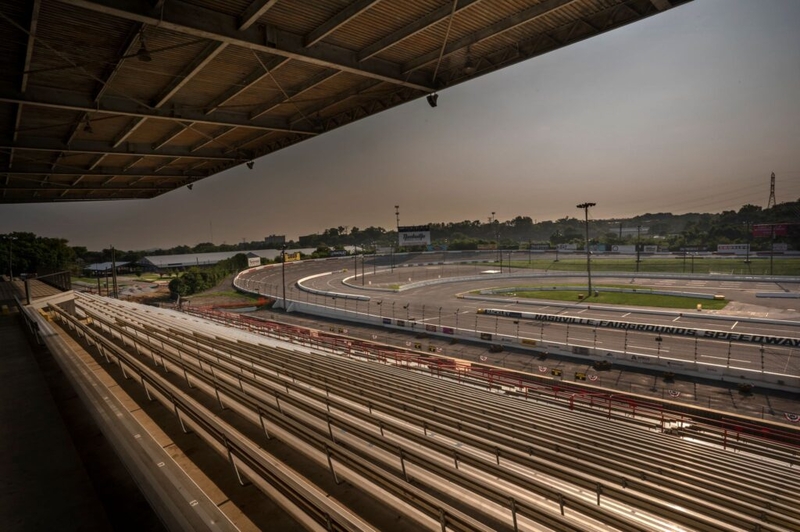
An anti-racing group started a campaign this summer to gather the 40,000 signatures required to put an amendment before Nashville voters in 2027 that would remove the fairgrounds racing requirement from the city charter. (Photo: John Partipilo/Tennessee Lookout)
Five years after a proposal surfaced to renovate the Nashville fairground racetrack with $84 million in taxpayer funding, area state lawmakers are split over the concept of racing at the speedway.
Former Nashville Mayor John Cooper announced a proposed deal with Speedway Motorsports in 2021 that would cost city taxpayers $50 million in bonds to renovate the city’s fairground speedway. Then, Gov. Bill Lee and the Nashville Visitors and Convention Bureau agreed to chip in another $17 million each.
But nearly five years later, the cost to renovate the Nashville Fairgrounds Speedway has likely increased to more than $100 million, and cost has barely factored into the debate over whether city voters should repeal the requirement for racing at the fairgrounds.
The Nashville Fairgrounds Speedway has not hosted a NASCAR event since 2000. But in 2011, 70% of Nashville voters approved an amendment to the city’s charter that requires racing at the fairgrounds, essentially preventing the city from tearing down the facility without another vote.
An anti-racing group, called Restore Our Fairgrounds, started a campaign this summer to gather the 40,000 signatures required to put an amendment before Nashville voters in 2027 that would remove the fairgrounds racing requirement from the city charter. As part of its push, the group has been selling voters on the idea that the track could be torn down and replaced by affordable housing.
In response, another pro-racing group, called Decline to Sign, has emerged, arguing the anti-racing group is gathering signatures under false pretenses.
NASCAR close to returning to Nashville after Cooper reaches deal with Bristol Motor Speedway
State Rep. Bob Freeman, a Nashville Democrat who came out publicly in favor of keeping the track, said he didn’t have an opinion on whether public money should go toward a renovation but was against the group gathering signatures under the guise of “affordable housing.” He called their petition drive “intellectually dishonest.”
“Should they be racing there?” Freeman said. “I don’t know that I care. I’ve been to the track. I enjoy it. But the people of Nashville have spoken. We voted on it. Had the referendum. Now it’s up to the city to figure out what to do with it.”
Freeman joins state Rep. Aftyn Behn, a Nashville Democrat, in opposing the latest effort from the anti-racing group. Behn, in a post to her Substack blog, compared the track to the Ryman Auditorium — the iconic downtown music venue that was threatened with demolition in 1974 —adding that it has such a high historical value that it should be preserved.
On the other side favoring a charter amendment vote are state Reps. John Ray Clemmons and Caleb Hemmer, both Nashville Democrats and former Nashville fair board commissioners.
Hemmer said he feels Nashville has been “constrained” by the charter since it was revised, especially as the fairgrounds and surrounding neighborhood changed in the last generation, getting new homes and businesses. He contends the Metro government and fair board need “more flexibility” to manage the property.
“I think the site and the neighborhood and the city have evolved to where that is not the best use of the property and we should evaluate other options outside of racing,” Hemmer said.
Ingram (Nashville SC) vs. Speedway Motorsports
Behind the scenes, the political fight over the speedway is between Nashville billionaire John Ingram and Speedway Motorsports.
Ingram, owner of Nashville Soccer Club and chairman of family business Ingram Industries, has opposed racing because it conflicts with play at Geodis Park, the team’s stadium, built next to the racetrack in 2022.
Speedway Motorsports, which owns Bristol Motor Speedway, the Nashville Superspeedway in Lebanon, and nearly a dozen other tracks, has wanted to hold a NASCAR race within the city limits for years.
The political fight is also between two Nashville lobbying firms. Cooley Strategies, run by former Gov. Phil Bredesen advisor Dave Cooley, represents the anti-racing side. Calvert Street Group, founded by Darden Copeland, represents the pro-racing side.
Copeland is currently running for U.S. Congress as the Democratic nominee for House District 7.
Any deal to build a new racetrack in Nashville could also allow Speedway Motorsports to sell the Nashville Superspeedway in Wilson County, which the company purchased in 2021 for $131.5 million.
Tennessee Republican lawmakers in leadership haven’t publicly weighed in on a deal in years. Lee has previously supported the renovation plan in 2022 but will leave office in January. Speedway Motorsports hosted a Major League Baseball game at its Bristol speedway in 2025 with several lawmakers in attendance.
If the anti-racing group’s signatures are certified by the mid-September city charter amendment deadline, the vote will go before Nashville voters during the mayoral election in 2027.
Nashville, TN