How Storms Can Be A Boon For Invasive Species In Hawaiʻi
Aug 24, 2026 | 6:01 am ET
Description
Photo courtesy of Honolulu Civil Beat
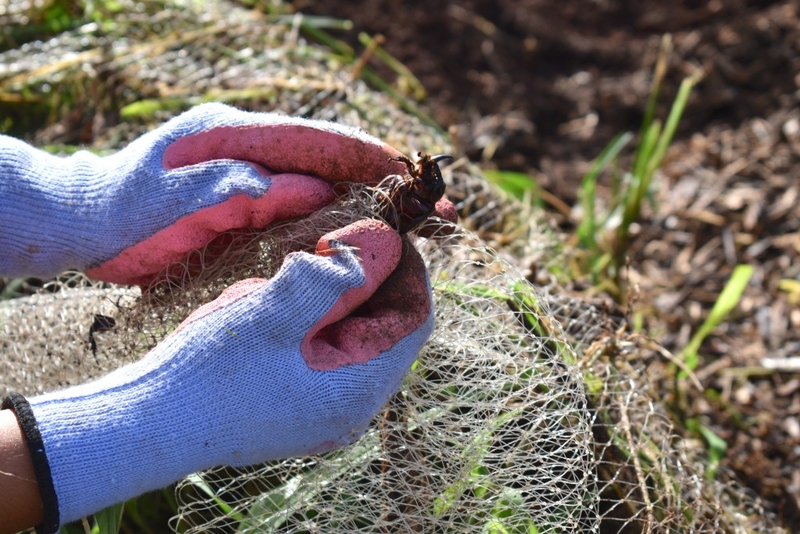
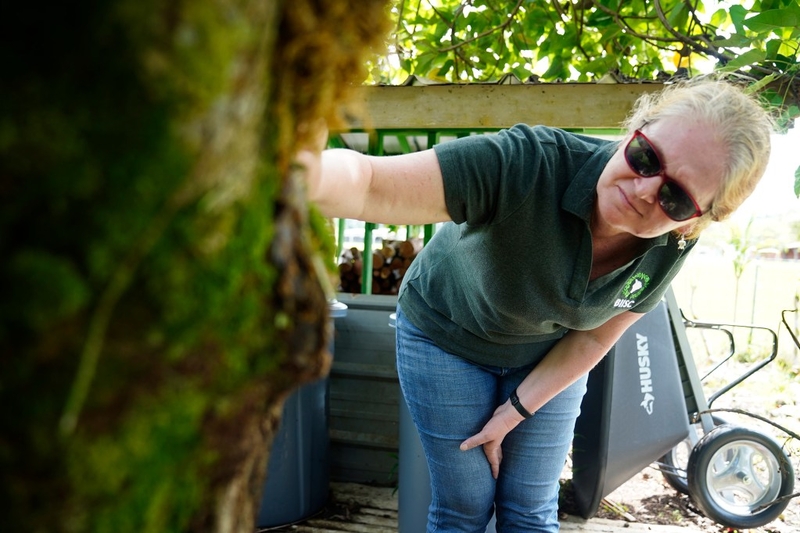
Parts of Franny Brewer’s house flooded due to the rains that came pouring down with Hurricane Lala, and she spent several days without power. But even as the program director for the Big Island Invasive Species Committee has been working to take care of her basic needs, she’s also had coconut rhinoceros beetles on her mind.
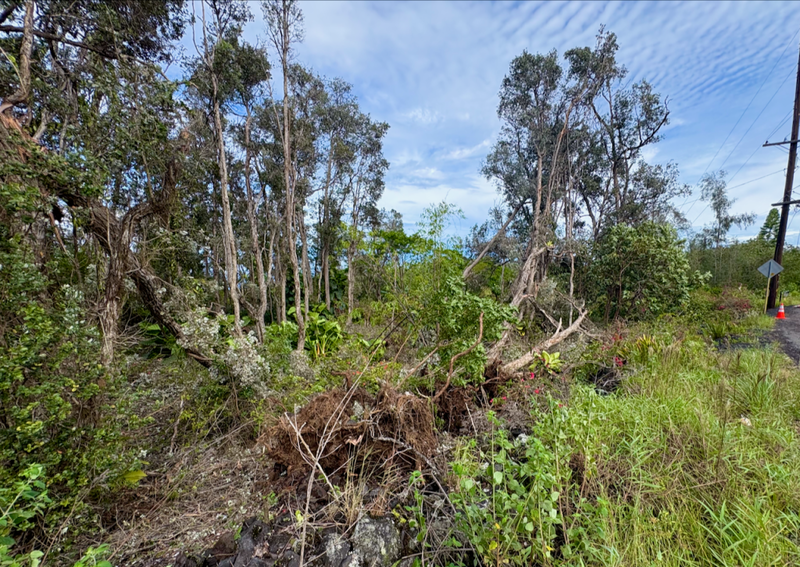
After the winds and heavy rain, tree branches and coconut fronds are still littering roadsides and backyards all over the island. They’re the perfect conditions for CRB to spread, Brewer said. Until now, The pest was only found in the north Kona region of the Big Island until July, when a single dead beetle was spotted in Hilo.
“A big concern is having lots of green waste that isn't necessarily going straight to the county facilities, where it can be managed,” Brewer said. It won’t be easy to get rid of all the leaves and branches and “people might be dumping it on the side of the road,” she added.
It’s not just the spread of CRB that worries Hawai‘i’s invasive species managers. Hurricanes and other large storms have consistently been linked to the spread of invasive species all around the Pacific, and in other island ecosystems. Insects, mammals, seeds and pathogens have all been shown to spread within islands and between islands. Wind, flooding, the movement of waste, the introduction of large quantities of supplies via cargo and the destruction of trees and fences are just a few of the factors, and scientists and land managers are still working to better understand the way the two threats — invasive species and climate-fueled storms — interact.
Elliott Parsons, a specialist with the Pacific Regional Invasive Species and Climate Change Management Network, said extreme storms and other climatic events rank high in the list of climate-related concerns that natural resource managers all around the Pacific identified on a survey Pacific RISCC conducted recently. He and his colleagues have begun tracking the variety of ways storms play out in fragile ecosystems, as the storms themselves have become more severe and more frequent.
“I hadn’t thought about hurricanes and invasive species until working with people on Guam after Typhoon Mawar in 2023,” said Laura Brewington, co-director of the Pacific Research on Island Solutions for Adaptation’s climate change research program. In that territory, invasive plants took over where forests were damaged and pests, including little fire ants, spread extensively throughout the island due to the way green waste and debris was moved around after the storm. CRB has also thrived there in the time since the storm, in part because the beetles are more likely to infest weak and damaged trees.
“It opened my eyes to how important it is to prepare ahead of a storm and to have a management plan in place,” Brewington said.
Hawaiʻi has yet to develop such a plan.
Rafting, Swimming, Dropping Branches
On Kauaʻi, where a number of invasive species are concentrated in the Wailua area, Haylin Chock, outreach specialist with the Kaua‘i Invasive Species Committee, said big storms pose a threat to their efforts to contain little fire ants.
The current population of ants is located on one side of a valley that is very difficult to reach.
“We've tried rappelling and going down into these steep parts of the valley. But we're mostly concerned that during a major flood event little fire ants are going to raft and end up farther down into the valley, and then eventually work their way up to the residential side of the river.”
In the upper forested areas of the island, however, Chock said the group is most concerned with Rapid ʻŌhiʻa Death, which is caused by a fungus known to infect damaged trees.
On the Big Island, the potential for new and worsening ROD outbreaks is also weighing heavy on resource managers’ minds this week. Brewer said she is concerned that the recent damage to native forests including in Kaʻū and Puna has been extensive — although an official assessment of the damage in those places is likely months if not years away.
She remembers when Hurricane Iselle got very close to the Puna region in 2014 and led to the loss of a large number of ʻōhiʻa trees.
“We've been watching the outbreaks in Kaʻū over the last couple years, and this is very disheartening,” she said. “In the next few months we could start to see a huge outbreak.”
Fallen tree limbs and flooding can also impact fencing, which is often erected to protect native forest and other areas from wild pigs. Brewer said a number of fence reconstruction efforts caused by the Kona low storms had just gotten underway on the Big Island and Hurricane Lala will likely add insult to injury.
“They were just starting to get that stuff fixed, and now they're going to be whacked again because in Kaʻū some of those fences are probably buried under landslides,” she said. “So now you have pigs coming into these sensitive areas.”
Parsons said the Pacific Regional Invasive Species and Climate Change Management Network has been putting together a grant application to study the economic impacts of the Kona low storms on ungulate management.
Native plants struggle to come back after storms, but invasives tend to rebound quickly. And invasive plants’ seeds tend to be especially conducive to dispersal by big winds and flooding.
“When you get a storm that basically denudes an area of vegetation and kind of wipes it clean, it is often invaded by invasive plants,” Parsons said.
Brewington pointed at how the population of highly invasive and tenacious yellow guava trees exploded on Kauaʻi after Hurricane Iniki destroyed forestland in 1992.
Rodents are another potential concern. In the Caribbean, research has shown that hurricanes and other storms have provided a path for rats to establish on islands where they hadn’t lived in the past due to rafting and swimming, and their populations expanded on islands where they did already exist.
In parts of Hawaiʻi where state resource managers have already spent years working to eradicate rats — such Lehua Island, a tiny crescent-shaped island off of Niʻihau that serves as a sanctuary for seabirds — land managers are daunted by the prospect of seeing them return.
Preparing For The Future
Jonathan Ho, plant quarantine branch manager at the Department of Agriculture and Biosecurity, said he is taking a wait-and-see approach at the moment.
In the case of CRB, Ho said the downed trees are still fairly fresh, so the likelihood of beetles laying eggs in them “is minimal at best.”
“The areas that were hit most predominantly aren't in the known infested areas of CRB. So, from a risk management standpoint, requiring composting, fumigation and spreading it real thin — all of the mitigations for CRB — aren't warranted because the pest isn't known to exist there.”
In the short term, he said most of the plant material is being removed and processed according to the state’s interim management rules. And taking care of the community’s more immediate public health and safety needs as well as their access to infrastructure comes first. “I think managing the secondary impacts from pests is something to be considered after the fact,” Ho said.
He said Queensland longhorn beetle is another species he’s keeping an eye on, but added that their spread is unlikely. In the case where pests might move with the wind or the water, he said the department will survey the affected areas — but it could still likely be difficult to know whether to attribute their presence to the storm.
After the Kona lows, Ho added, when large piles of plant and tree material were collected in parks, the department surveyed the waste for little fire ants and didn’t find any. “If we do start finding these types of events leading to very prolific spread then obviously additional mitigations and considerations need to be taken into account moving forward during preparation,” he said.
After years of seeing what has happened on other islands around the Pacific, Brewington wants to see that preparation done first — before the problem gets worse. And she doesn’t think preparation needs to be seen as at odds with other forms of emergency response.
“We have to make sure that people are safe, that they have food, water and electricity. But that also shouldn't stop the state from being willing to request federal or state emergency funds to support post-storm invasive species management,” she said.
Brewington stressed that such a plan can be established ahead of time, and can be in place and ready for rapid response when a storm hits. Given the fact that scientists were predicting an extreme El Niño year, and the strong hurricane season such a year brings, she said, this spring would have been the time to start planning ahead.
On Kauaʻi, Chock said KISC has been working on “a response plan that would be multi-agency across the whole island,” with just that kind of preparation in mind. Meanwhile, land managers from across Hawaiʻi have identified a thorough list of ways to prepare for storms that will make managing invasives more challenging as the climate changes.
In the near term, however, Ho and Parsons both said the most important thing that all Hawaiʻi residents can do is report any unusual plant, insect or animal to the state’s 643-Pest hotline or by using the iNaturalist app. The hope, they said, is to help state officials and resource managers gain a clear picture of what the state is up against after this spate of recent storms head off on their paths across the Pacific.
Honolulu, HI