Pennsylvania agriculture business leaders call for immigration reform
Nov 19, 2026 | 7:34 pm ET
Description
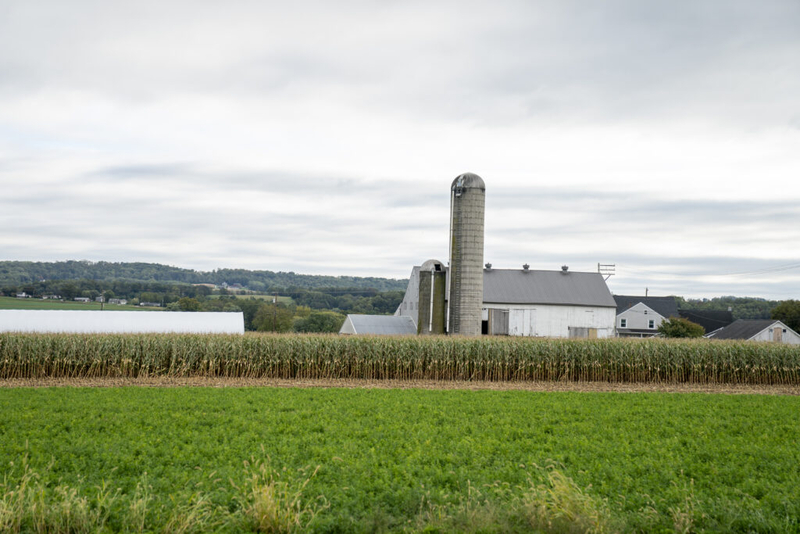
The edge of a cornfield in Ronks, Lancaster County on October 14, 2025. (Photo by Jessica Kourkounis for the Pennsylvania Capital-Star)
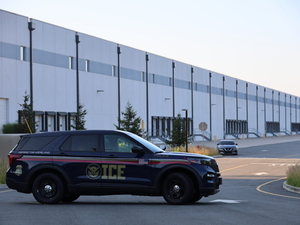
More than 30 Pennsylvania farmers, agriculture businesses and organizations endorsed a letter asking U.S. Agriculture Secretary Brooke Rollins and U.S. Homeland Security Secretary Markwayne Mullin to reform worker visa programs and the aggressive tactics Immigrations and Customs Enforcement agents use to target immigrant workers.
“We are concerned that employees with legal status have been detained in recent actions and aggressive enforcement has caused workers with status to miss work due to fears of being caught in farm-targeted actions,” the letter, authored by PennAg Industries Association President Christian Herr, read. “…Due to an aging and declining population, and a lack of interest on behalf of many nativeborn Americans, it is essential that our industry be able to utilize an immigrant workforce.”
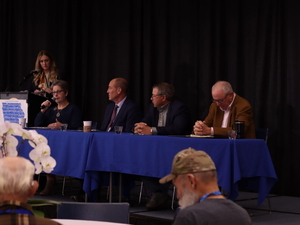
Leaders of some of the businesses and organizations that were part of the effort met with Gov. Josh Shapiro and state Agriculture Secretary Russell Redding Thursday in Lancaster County to discuss the struggles workers have faced and the path to reform.
“It was important for me to hear directly how these immigration challenges — immigration enforcement challenges — were affecting you,” Shapiro said. “At the same time, we have a secure border, we can also have compassion for the people who are working here in our communities, whether it’s on our farms, in our factories or in our small businesses.”
While he noted that many of the requested reforms would have to be enacted by the federal government, Shapiro said his “loud voice” could be helpful in efforts to sway federal officials and members of Pennsylvania’s congressional delegation.
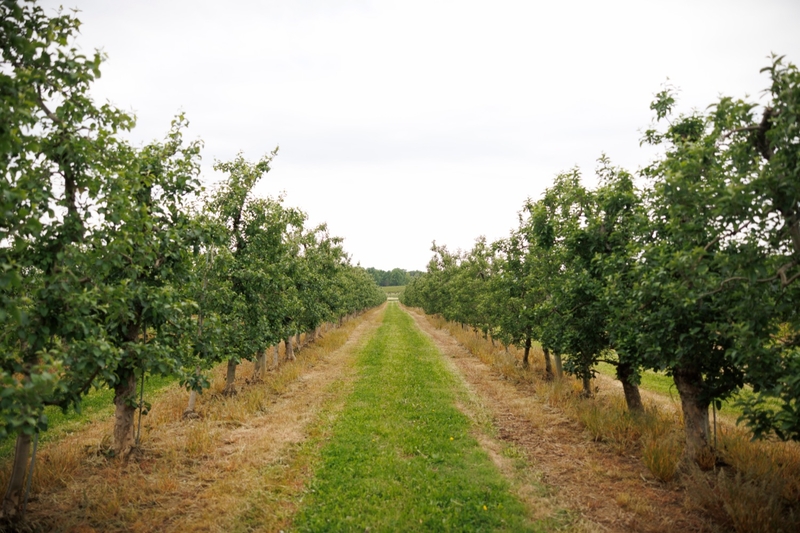
Sarah Zost, president of the State Horticultural Association of Pennsylvania and an Adams County fruit grower, discussed how ICE agents detained three workers at her farm conducting traffic stops during commute hours. The workers made up a quarter of her winter crew.
“Two of them had worked for us for over a decade, and one has a wife and kids who go to my local school district,” she said.
Zost said other farms around her have also had workers detained under similar circumstances, including some in the United States legally.
“In our case, they had a warrant, but not for any of our employees,” she said. “They were looking for a neighbor of one of them and just happened to see [workers] carpooling to work in the morning of the target demographic and pulled them over.”
Zost said that her workers ended up agreeing to be deported. When workers self-deport, they are often banned from entering the United States for three or more years.
“Being here legally does not get you a get-out-of-jail-free card from harassment for ICE,” she said. “There’s a culture of fear and concern because you get targeted because of what you look like.”
ICE’s tactics, she said, do not just affect the workers they detain and the businesses they work for, but all of the foreign-born employees at the business and nearby.
“There are worker chats and farmer chats of any sightings of ICE in the area, and everyone will stay home to avoid those kinds of interactions,” she said. “It causes lost time on all farms because workers, regardless of visa status, stay home.”
Astin Melhorn, president of Paragon Poultry Management Group, said that along with the impacts of immigration enforcement action, sudden changes in policy have hurt his business and workers as well
Poultry workers do not qualify for the seasonal H2-A visa program used by traditional agriculture businesses. So since 2015, his company has sponsored dozens of employees through the EB-3 visa program.
Workers who obtain the visa are granted permanent residency. The process can take years, but Melhorn said it had been a relatively predictable one.
This year, however, eight employees finishing the six-year process of obtaining their visas learned that President Donald Trump had signed an executive order stopping all visas from Guatemala.
“That’s a very frustrating thing when you’re an employer trying to do things correctly,” Melhorn said.
Like others, he said his business has also been impacted by aggressive ICE tactics. Earlier this year, 17 workers were detained, including some with work permits.
“[They] were shipped as far as Oklahoma,” Melhorn said. “When they were released, they had to find their own way back to Pennsylvania … Some self-deported, some have cases and so they’re working through those, and some were released.”
“That very much rocked our world and rocked our industry,” he added.

Herr, the author’s letter, was also at the roundtable meeting. He said he’d heard from many in the agriculture business who consider themselves conservative — even some who voted for Trump — but are uncomfortable with how the current mass deportation program has played out.
“We look at the talking heads throughout the country who, from time to time, state that Americans voted for deporting 20 million people. I think that’s a misread,” he said. “Because I can tell you that there are many, many folks in this community, from this sector, from agriculture and agribusiness, who don’t feel that way. I would say a large majority of them don’t.”
In his letter, he explicitly called for federal immigration agents to prioritize targeting criminals instead of workers, and their actions to be done in a “lawful, orderly, and transparent manner.”
He also called for legislation. He and others at the roundtable specifically advocated for the passage of the Securing Agriculture’s Workforce Act, a bill sponsored by Pennsylvania Republican Rep. Glenn Thompson – who is wrapping up his time as chair of the House Agriculture Committee.
The bill would allow workers with H-2A visas to stay in the U.S. year-round, instead of just seasonally, and would expand the program to workers in agriculture-related businesses like Melhorn’s, who are currently ineligible.
It also calls for permitting some experienced, unauthorized agriculture workers to apply and be eligible for H-2A visas.
The proposal currently has 61 co-sponsors, including 10 Democrats. Rep. Chrissy Houlahan is the only Pennsylvania Democrat currently signed on.
Agriculture business owners at the roundtable also called on federal elected officials from Pennsylvania, especially Republicans in Congress, to work with them. Next year, Democrats will have majorities in the U.S. House and Senate after an election seen broadly as a rebuke to Trump.
It’s unclear, however, whether the president will be willing to work with Democrats on immigration reform. Following the election, he appointed Stephen Miller, an immigration hardliner who has advocated for family separation, the end of birthright citizenship and the suspension of habeas corpus for detained immigrants, to be his chief of staff.
“This idea with congressmen who are afraid of the White House and pander to — I think that changed,” Herr said. “I’ve had some conversations with local congressmen about this and I do think there’s a reassessment of this issue and where the constituents are. When you have a room full of folks from construction, and agriculture and healthcare, it’s a meaningful point to say, ‘Look this really needs to be maturely addressed,’”
Herr added that the issue had become “personal” for him, especially after immigrant workers helped his businesses through Pennsylvania’s Avian Influenza outbreak.
“They’re looking over their shoulders. They’re uncomfortable. They’re always wondering when their time is gonna be up here,” he said. “There’s people who have been here for a quarter century, who have raised their families here. It’s sort of Congress and whoever is in the White House to say, “Alright, let’s do a reset here.’”
Harrisburg, PA