Payouts soar as use of force by Burlington police on Black residents hits record high
Aug 17, 2026 | 6:56 am ET
Description
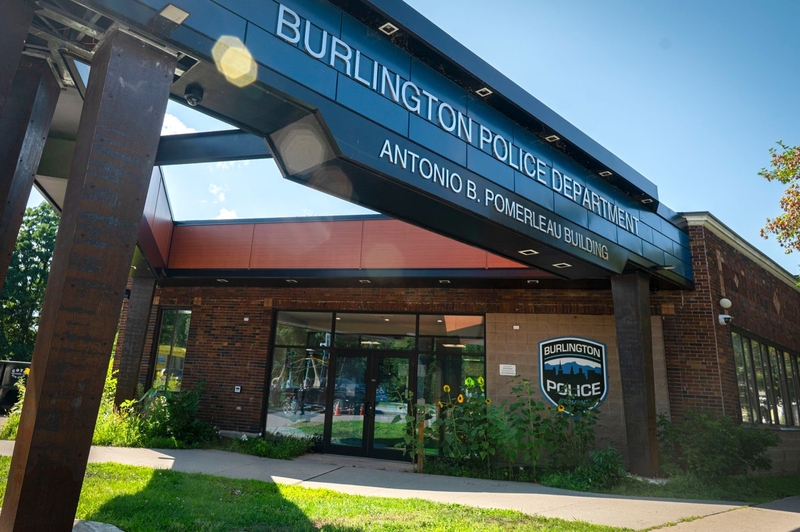
The Burlington Police Department on North Avenue in Burlington on Thursday, August 13, 2026. Photo by Glenn Russell/VTDigger
When a call for police to help discipline a child over stealing escalated into a hospital visit, Burlington mother Cathy Austrian filed a complaint with the city’s police oversight body hoping to spur change.
The body, the Police Commission, found the incident — in which officers restrained Austrian’s son, who is Black and has emotional and intellectual disabilities, and called in paramedics to inject him with ketamine — to be a troubling violation of the department’s own use-of-force policy. But the department disagreed, with then Police Chief Jon Murad backing the officers’ actions as an appropriate use-of-force.
So Austrian turned to the courts, suing the city in 2024 over excessive use-of-force and racial discrimination. This summer that case was settled for $150,000.
The lawsuit was the latest in a string of five cases Burlington has settled over police use-of-force since 2019, amounting to nearly $1.5 million in payouts to aggrieved parties, and costing the city an additional $747,500 in legal fees, according to records obtained by VTDigger through a public records request. Like Austrian’s case, all five involve people who are Black or have mental health challenges.
“The case is over, but the family’s hope is that the consequences from this case actually continue to drive change forward,” Austrian’s lawyer, Hillary Rich, an attorney for the American Civil Liberties Union of Vermont, said.
As the cost of use-of-force has risen for Burlington taxpayers in recent years, the department’s use-of-force against Black people has too, reaching an all-time high of 99 in 2025, according to the department’s latest data, recorded since 2012. Black residents are overrepresented among these use-of-force incidents, at six times the rate of their population share, a VTDigger analysis of the department’s data found.
The city and department began working years ago, amid a national reckoning over policing, to address use-of-force. But the numbers show a persistent racial gap, and advocates and Black leaders say not enough has been done to close it.
“The fact that the data show record-high disparities in use-of-force on Black subjects demands our immediate attention and a meaningful response,” Mayor Emma Mulvaney-Stanak wrote in a statement to VTDigger, in response to the disparities. “These trends are not simply a data point to monitor — they are a serious equity concern that requires us to examine how policing practices, policies, and broader community conditions contribute to these outcomes.”
‘What do we do about it as a city?’
Following a 2020 executive order from Gov. Phil Scott, in the wake of the death of George Floyd, the Burlington police department adopted a statewide policy on use-of-force, encouraging deescalation tactics to reduce the need for force during encounters.
In 2025, use-of-force rose to the highest number since recorded data in 2012.
As overall incidents rose, so did the number of both Black and white people involved. But incidents involving Black people hit a record 99 in 2025, compared with an annual average of 56 in prior years. In 2025, 230 white people were involved in use-of-force incidents, compared with an average of 177 in previous years.
The raw numbers, however, point to a racial disparity: Black people’s share of use-of-force incidents outpaces both their share of the population and their share of arrests.
The rate at which Black people experience use-of-force in Burlington is roughly six times greater than their share of the population. Black people represented 28% of total use-of-force incidents in 2025 but only around 4.7% of the Burlington population, according to the U.S. Census Bureau. White people represented 65% of use-of-force incidents in 2025 and 85% of the city’s population.
Black people have made up 16% of all arrests in Burlington since 2012, but 24% of use-of-force incidents since 2012 — a 50% higher representation in use-of-force incidents relative to arrests. White people have made up 70% of arrests since 2012, and represent 70% of use-of-force subjects.
Relative to their share of interactions with the police, Black people were represented in use-of-force incidents at nearly three times the rate of white people in 2025. Black people were disproportionately injured during use-of-force incidents with Burlington police in 2025.
Stephanie Seguino, a University of Vermont economist who studies racial disparities in Vermont traffic stops, said there tend to be two explanations for these disparities: Black behavior is more criminal or Black people are perceived to be more criminal. Police departments often use the former explanation, she said, while research points to the latter to be true.
Seguino, a former member of the city’s Police Commission, sought to target implicit bias when she was on the Commission in 2021, which recommended further training for such bias when responding to Austrian’s complaint.
Interim Police Chief Shawn Burke said the department follows guidance from the Vermont Criminal Justice Council for implicit bias training under Vermont’s Fair and Impartial Policing policy.
“The rates reported by BPD on their internal reviews of their data, is for their review to look for disparities in how they police their community. The data suggest a disparity exists, but does not establish the basis of the disparity or that biased policing occurred,” Christopher Brickell, executive director of the Vermont Criminal Justice Council, wrote in a statement to VTDigger.
When presenting the 2025 use-of-force data during a Police Commission meeting in May, Burke said the department needs to “interrogate the data” and “keep asking questions about it,” regarding the apparent racial disparities. He contextualized the rise in use-of-force incidents by a rise in gunfire incidents since 2022.
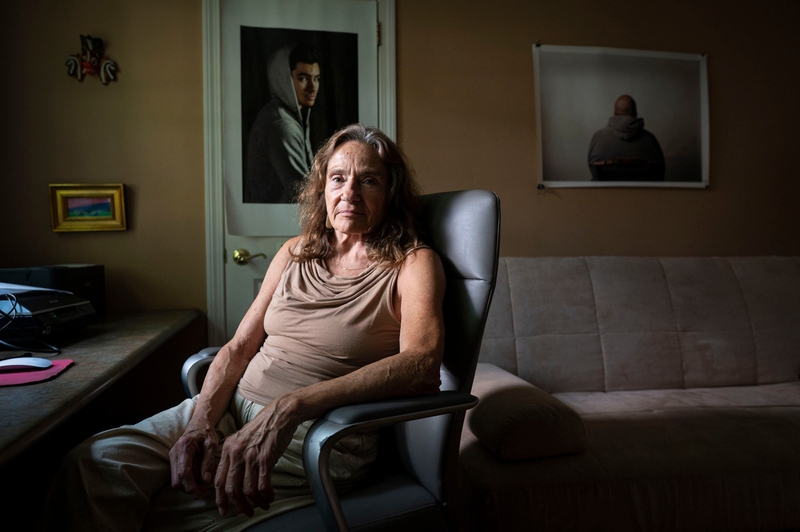
Seguino said she historically has not seen meaningful analysis of the data occur.
“What do we do about it as a city, especially given these lawsuits that have cost taxpayers a lot of money, and that’s the problem that I see. There’s no inquisitiveness, there’s no desire to dig deeper or even to identify it as a problem,” she said.
In a statement to VTDigger, a spokesperson for the Mayor’s Office said the city has been examining the data in recent months and is now “at a point where we need to do a qualitative dive on specific incidents to better understand any trends.”
In that review, the city has identified two areas where they see the greatest racial disparity: 3.5% of Black trespass incidents resulted in use-of-force in 2025, compared to 1.6% for white trespass incidents. And 18.2% of Black disorderly conduct incidents resulted in use-of-force compared to 10.3% of white disorderly conduct incidents.
‘How much it has cost the city’
While Austrian’s case was the most recent to be settled with the city, the largest was an excessive use-of-force case involving three Black brothers — Albin, Charlie and Jeremie Meli — who settled with the city in 2023 for $750,000. It was filed the same year as another lawsuit that alleged excessive use-of-force against Mabior Jok, who is also Black, which settled for $215,000.
Former Burlington City Councilor Ali Dieng remembers approving those settlements during his time on the council. He worried that the payouts, paid for in part by the city’s insurer and the city’s liability insurance reserve fund, would cause the city’s insurance premiums to rise.
“Unnecessary use-of-force for those two cases, it was not right and do you see how much it has cost the city,” Dieng said.
The city’s liability insurance premiums have risen over the past five years but it has done so on par with inflation rates, according to information provided by the Mayor’s Office.
Cities often pay millions each year to settle police misconduct cases. New York City, for example, averages $170 million in police settlement spending per year, while a smaller city like Cambridge, Massachusetts, averages at $11,400 per year, according to an analysis by The Marshall Project. Cambridge has a population of 122,588 people, while Burlington’s population is only 44,019.
Seguino expressed concern that on top of the near $1.5 million the city has paid in settlements, taxpayers fronted additional legal fees to represent these cases. The city spent $747,500 in legal fees to defend the five cases, according to information provided by the Mayor’s Office.
For Dieng and Seguino, this amount creates an accountability concern because an officer can repeatedly use excessive force but face little consequence while the cost is shifted to the public.
In one of the five cases, an officer punched Douglas Kilburn, a man in poor mental health who was later found dead, according to court filings. The officer faced no discipline, and instead received a letter of reprimand for swearing during the altercation, then-Police Chief Jon Murad announced in 2020 after an investigation.
The officer is now tied to another excessive use-of-force lawsuit currently pending in U.S. District Court that alleges that he used excessive force against another individual and that the department has “intentionally failed” to train, discipline or supervise city police officers. Murad, the police chief during the incident, declined to comment, and the city’s lawyers could not be reached for comment in time for publication.
In the Kilburn case, which the city settled for $45,000, as well as the Austrian case, the department has deemed the officers’ use-of-force as appropriate. But Rich and Seguino see them as an example of officers not following the department’s commitment to deescalation.
The department’s use-of-force policy has a strong emphasis on deescalation. In 2025, the department facilitated a refresher training for officers in its primary deescalation program, called Integrating Communications, Assessment, and Tactics, a spokesperson for the Mayor’s Office told VTDigger.
“In those instances, we’re very methodical about seizing opportunities in which to create distance, contain people within a dwelling or a physical area, where then we can begin a communication strategy, either using crisis negotiators or in concert with our social workers that we have on team or the street outreach team,” Burke said in an interview with VTDigger, describing its mental health response
One of those mental health response teams, CARES mental health response program, which was created in the wake of the 2020 Black Lives Matter protests, was terminated by the city late last year. City council members warned that gaps in crisis response could remain despite the Howard Center taking on some of the work.
The Rev. Mark Hughes, executive director of the Vermont Racial Justice Alliance, also expressed concern that the city has been backtracking on its commitments made during 2020, referencing a landmark resolution passed by the City Council in 2020, which outlined steps to systematically address racial disparities.
“This question was asked and answered five years ago,” Hughes said, referring to how to address racial disparities in the city’s policing. For him, the solution goes beyond more implicit bias training for police officers, and instead requires systematically addressing racial disparities throughout various city departments by utilizing the city’s Racial Equity, Inclusion and Belonging office. That office has been used to examine use-of-force disparities, according to the Mayor’s Office.
“This process included engagement with REIB (Racial Equity, Inclusion and Belonging) Director Dr. Kelli Perkins, who was very helpful in developing new questions of the data,” the mayor’s spokesperson wrote in its statement to VTDigger.
But for Hughes, addressing the racial disparities goes beyond examining the data and means accountability for the police department.
“The city has got to make some tough decision because there is no reason why we should have to live in a city that is normative — that our law enforcement officers are just going to be more aggressive,” Hughes said.
Read the story on VTDigger here: Payouts soar as use of force by Burlington police on Black residents hits record high.
Montpelier, VT