Lawsuits challenge Money Out of Politics ballot measure on First Amendment grounds
Nov 06, 2026 | 2:00 pm ET
Description
Getty Images
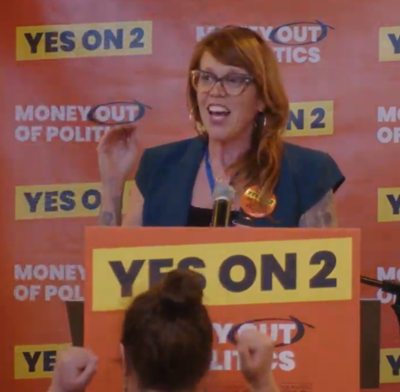
Two lawsuits have been filed against Proposal 2, the “Michiganders for Money Out of Politics” ballot measure that passed on Tuesday with over 80% of the vote, arguing it violates the First Amendment.
The proposal is scheduled to take effect by Dec. 3, 2026, under Michigan election law, unless a court blocks its implementation. The measure bans campaign spending from “regulated electric and gas utilities, contractors with over $250,000 annually in government contracts, and people and organizations with substantial connections to those utilities or contractors.”
Both lawsuits — one filed by the Mackinac Center for Public Policy and the other filed by CMS Energy, Consumers Energy and DTE — were filed in federal court in the Western District of Michigan.
Both lawsuits question whether the state can restrict political spending by utilities and their employees based on their contributions to the elected officials who regulate them.
The Mackinac Center, a free-market policy think tank, writes in its lawsuit, “It is an alarming and far-reaching law. It also violates the First Amendment.”
Specifically, that suit challenges the portions of the law related to “Electioneering Communications” and “Campaign Expenditures,” arguing that the text of the law that Proposal 2 enacted is too broad in defining which organizations would be subject to significant reporting requirements of their donors and contributions under the new law.
“Mackinac has no way of determining which of its public communications will qualify as supporting, promoting, attacking, or opposing a candidate or ballot question under Proposal 2, as this broad phrase could include virtually every statement made about those subjects,” the lawsuit writes. “Mackinac likewise has no way of determining which communications will qualify as being made ‘for the purpose of influencing or attempting to influence the action of the voters.’ Mackinac will thus be required to either refrain from speech that could fit these vague standards or face the burdensome reporting requirements that apply to political committees.”
They argue that this is a First Amendment violation in limiting the free speech rights of the Mackinac Center because, “The reporting requirements burden Mackinac’s ability to engage in constitutionally protected speech by imposing onerous costs on Mackinac and exposing it and its supporters to harassment. This creates an impermissible chilling effect on Mackinac’s speech and association.”
“Michiganders shouldn’t face fines or jail just so that they can discuss politicians, policy, or elections,” said Patrick J. Wright, vice president of the Mackinac Center Legal Foundation, in a press release announcing the lawsuit. “These rules threaten access to information voters rely on and violate the privacy of people who support organizations they believe in. We’re bringing this lawsuit to protect free speech and open debate and to prevent giving partisans a nasty tool that can be used to criminally punish their opponents for daring to speak their minds.”
The lawsuit from CMS, Consumers and DTE, on the other hand, argues that the First Amendment is violated by Proposal 2 through “speaker-based viewpoint discrimination” in specifically targeting utility companies and their employees. Even if treated as content-neutral, the lawsuit continues on, the law fails to meet the threshold needed to limit campaign contributions, which would be “preventing quid pro quo corruption or its appearance.”
“There is no evidence of such corruption by Michigan’s utilities—no scandal, no exchange of official acts for money, no examples whatsoever,” lawyers for the utility companies wrote, adding that the coalition of organizations behind the MMOP ballot measure have “regularly opposed Michigan’s utilities” on policy issues.
Samuel Bagenstos, a University of Michigan law professor and lawyer for the ballot measure, however, was confident that the defense in court of the new law would be strong, adding that new campaign finance laws regularly trigger lawsuits, but that the proposal was drafted with existing judicial decisions in mind.
Maura Cowley, the campaign manager for the Michiganders for Money Out of Politics campaign, said the lawsuit was “no surprise.”
“The corporations bankrolling our opposition have been gearing up for this lawsuit since Proposal 2 first qualified for the ballot, if not before,” Cowley wrote. “On Tuesday, Michiganders spoke loud and clear, voting to pass Proposal 2 with an overwhelming majority and delivering a resounding mandate to end pay-to-play politics and put power back where it belongs – with the people. The bottom line is that we are confident Proposal 2 will withstand legal scrutiny, and we were fully expecting and are prepared to take on this and any challenge.”
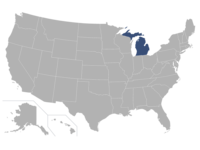
Lansing, MI