Catching Our Eye News Roundup, Aug. 11, 2026
Aug 11, 2026 | 8:49 am ET

Description
The Ohio burgee. (Getty images file photo.)
Every morning in the Ohio Capital Journal’s free newsletter, The Eye-Opener, we round up the news and commentary from across Ohio and around the country and world that is catching our attention. We call this feature Catching Our Eye, republished here.
Please subscribe to our free daily newsletter to get all the Ohio news you need to know right to your inbox every weekday morning.
If you already subscribe, please share with your family and friends so they know about the Ohio Capital Journal too: https://ohiocapitaljournal.com/subscribe/
Catching Our Eye
• School funding. The Statehouse News Bureau’s Jo Ingles reports, “Income taxes over property taxes not an option for many Ohio school districts, report says.”
As the call for property tax relief echoes around the state, some have proposed funding schools with income taxes instead. About a third of Ohio’s school districts already have special income taxes. And more districts are likely to consider asking voters to approve them as part of efforts to reduce property taxes. But a new report warns that might not work for many districts.
Policy Matters Ohio’s Zach Schiller said school district income taxes can have some benefits. For example, he said, they don’t tax Social Security income, thereby making it easier for senior citizens who are living on fixed incomes. But Schiller said income taxes also have some flaws.
• School funding, part deux. WVXU’s Zack Carreon reports, “More local schools are pursuing earned income tax levies, but they still aren’t very popular.”
Local school districts say rising costs and waning financial support from state government have forced them to make some tough decisions lately. In an effort to cut back, several districts have laid off staff and announced plans to close buildings.
As school systems look to mitigate their financial woes, some are turning to a new idea for levy funding: an earned income tax levy…
Earned income tax levies tax residents’ wages and tips, excluding retirement and investment income. Traditional income tax levies are broader, taxing wages and tips, plus retirement income, investments, and capital gains. Schools have typically used property tax levies to fund operations, but as property values have jumped in recent years, taxpayers say they’re being stretched to far.
While some districts see income tax levies as a potential solution amid those concerns, elsewhere the answer isn’t so clear.
• Ohio farmers. The Ohio Newsroom’s Erin Gottsacker reports, “Meet five Ohio farmers surviving in a landscape of climbing costs.”
A bipartisan group of agricultural leaders are warning Congress of a deepening crisis on America’s farms. The cost of fertilizer has more than doubled since 2020. Fuel costs surged following the war in Iran. And U.S. agricultural exports are at their lowest levels in years.
Farmers across the country are reaching a breaking point. Last year, farm bankruptcies rose by 46% — a trend that’s carried into this year too. The Ohio Newsroom spoke with five farmers from across the state to get a glimpse into how they’re coping with climbing costs.
• Flock. WOSU’s Katie Geniusz reports, “Flock surveillance cameras are watching Columbus. Here’s what to know.”
Flock Safety’s Automated License Plate Reader (ALPR) cameras have made many headlines over the past few months. Privacy advocates hate them, police like them and the Columbus City Council seems split.
Columbus City Council has scheduled a public hearing on the Flock cameras at 4 p.m. Monday at City Hall. Here’s everything you should know about why the technology is controversial, what has happened in Columbus and what the future may look like.
• Party hearty. NPR reports, “Voters are sick of the 2-party system. A new poll shows they’re open to big changes.”
Amid growing frustration with both major political parties, voters are open to some big changes.
A new poll, commissioned by supporters of election reforms and shared with NPR, shows there is significant support for upending winner-take-all U.S. House elections and single-member congressional districts and instead moving toward proportional representation, a system that elects multiple representatives in a single district in rough proportion to a party’s vote share.
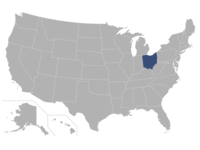
Columbus, OH