With feds’ eyes on quantum technology, Utah pushes its own efforts
Aug 10, 2026 | 6:01 pm ET
Description
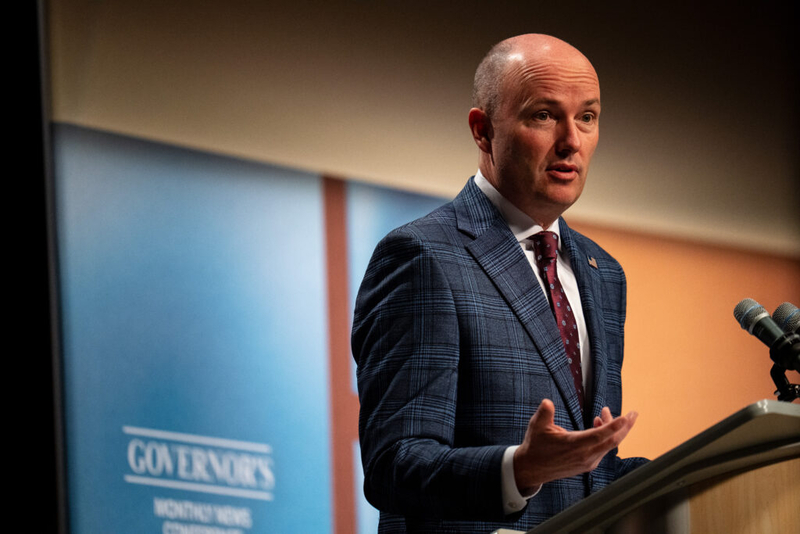
Gov. Spencer Cox speaks during a news conference broadcast by PBS Utah in Salt Lake City on Thursday, March 19, 2026. (Pool photo by Trent Nelson/The Salt Lake Tribune)
Following similar steps of elected officials in Washington D.C., Utah Gov. Spencer Cox is spearheading the state’s own push to bolster quantum technology development with a new executive order.
The technology, often used to create tools in computing, sensing and communications by applying the principles of quantum physics, has been in the eye of leaders across the country, including President Donald Trump, who signed an executive order in June directing his cabinet to accelerate its deployment.
The state, Cox said in his own executive order signed Monday, will create the Utah Quantum Initiative and the Quantum Coordination Council, a governing body to oversee the effort led by the Governor’s Office of Economic Development.
“Quantum technology is going to change how we compute, communicate, manufacture, discover new medicines and defend our country, and Utah has the people and infrastructure to help lead that transformation,” Cox said in a statement.
“We already have world-class researchers, a strong semiconductor and advanced manufacturing base, a growing technology sector and important defense assets,” he said. “This initiative is about connecting those strengths, building a workforce ready for what comes next and making sure the technologies of the future are invented, built and put to work here in Utah.”
While quantum technologies are still under development, Cox’s office said in a press release they have the potential to “create extraordinarily precise sensors and enable advances across national security, medicine, energy, manufacturing and other industries.”
The move also follows bipartisan intentions to increase federal funding to improve the country’s odds against China in the race to develop quantum computing advances, according to a report from Bloomberg. The U.S. House is expected to debate increasing the annual military spending on the technology by 68% to $567 million sometime this year.
The state doesn’t need to build a quantum ecosystem from scratch, Jefferson Moss, commissioner of the Governor’s Office of Economic Development, said in a news release. Some pieces are already in Utah, including research teams in state universities and high-performance computing infrastructure.
Utah’s semiconductor, electronics and advanced manufacturing sector may also play a role in the state’s endeavor, the release says.
“Our job is to connect our researchers, manufacturers, entrepreneurs, investors and workforce around a common strategy,” Moss said. “If we do that well, Utah can become a place where quantum discoveries move from the laboratory into companies, products and real-world applications.”
One of the priorities of the Utah initiative is to develop career pathways and education programs to increase the workforce that’s expected to work in the industry, as well as supporting the commercialization of quantum technologies.
The order also directs those involved in the initiative to “develop a defense-sector strategy focused on quantum sensing and communications,” to pursue federal funding opportunities and to identify policy strategies to advance the technology.
By March, 2027, the Quantum Coordination Council is expected to deliver a “quantum landscape report,” identifying the state’s infrastructure, manufacturing and workforce assets, as well as gaps and opportunities to attract investment.
Salt Lake City, UT