March of Dimes report highlights Arkansas’ gaps in maternity care
Aug 11, 2026 | 6:00 am ET
Description
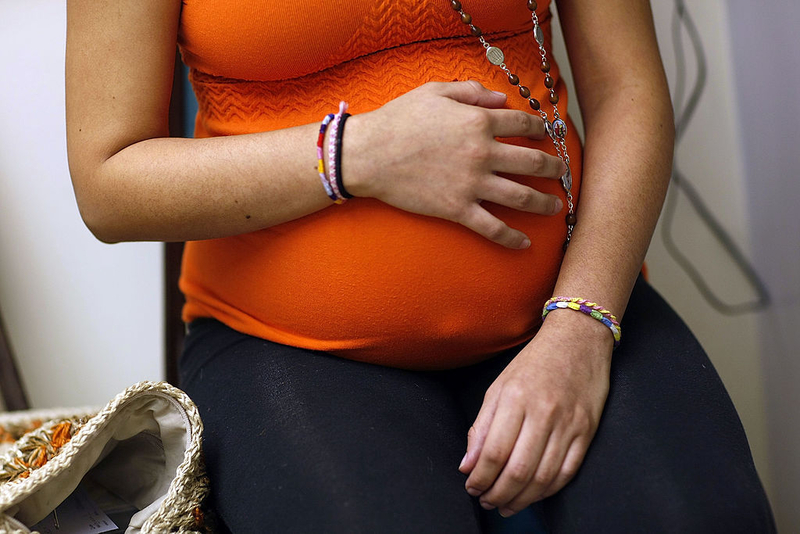
(Photo by Joe Raedle/Getty Images)
About 78,000 Arkansas girls and women between the ages of 15 and 44 lived in a county with nowhere to give birth and no obstetric physicians in 2024, according to a Tuesday report from the women’s and children’s advocacy group March of Dimes.
Almost half of Arkansas’ 75 counties are maternity care deserts, compared to one-third nationwide, according to the report, which collected data on access to maternal healthcare in 2024. Nearly 5,000 babies were born to residents of those 33 counties in 2024.
“Maternity care deserts are not naturally occurring, nor are they inevitable,” the report states. “They are the result of policy decisions and longstanding underinvestment in maternity care infrastructure.”
The report also takes into account the rates of uninsured or underinsured residents of counties nationwide. Roughly half of Arkansas births are covered by Medicaid, but the future of the state’s program and the number of Arkansans covered are both in limbo after recent federal changes.
Arkansas has the nation’s fourth-highest rate of maternal mortality, with 38 maternal deaths per 1,000 live births between 2018 and 2022, according to the independent health research center KFF. The state’s ongoing shortage of maternal health resources has caught the attention of elected officials, medical professionals and advocacy groups.
A bipartisan 2025 law aimed to add more maternal health services to Medicaid, but Arkansas remains the only state that has not taken advantage of the federal option to increase postpartum Medicaid coverage from 60 days to 12 months after birth.
Arkansas Advocates for Children and Families has repeatedly called for the state to adopt this coverage extension. The organization also believes that “Arkansas must protect access to coverage and care before, during, and after pregnancy,” Camille Richoux, the organization’s health policy director, said in a statement Monday.
“Stable health coverage is an important foundation for a healthy pregnancy, which makes the uncertainty surrounding Arkansas’s ARHOME Medicaid expansion particularly concerning,” Richoux said.
The Trump administration has told the state it won’t renew Arkansas’ hybrid Medicaid expansion, creating uncertainty about the program covering more than 200,000 people. The One Big Beautiful Bill Act also slashes rural Medicaid spending by $15.5 billion annually over the next decade.
These cuts “could lead to additional labor and delivery unit closures and put entire rural hospitals at risk,” Richoux said.
Maternity ward closures increase drive times
The average Arkansan’s travel time from home to the nearest delivering hospital was 22 minutes in 2024, according to the March of Dimes report. Additionally, 29% of pregnant Arkansans traveled more than 30 minutes and 8% traveled more than an hour to give birth that year, according to the Arkansas Center for Health Improvement.
By 2024, six hospitals’ labor and delivery units had closed since 2020. Two more have closed this year, adding Ouachita County to the list of maternity care deserts and increasing some Arkansans’ drives to delivering hospitals from there and from Fort Smith.
Only 22 of Arkansas’ 75 counties now have labor and delivery units. Nationwide, 96 labor and delivery units closed in 35 states between January 2024 and May 2026, and nearly two-thirds of those closures were in rural hospitals, according to the March of Dimes report.
Arkansas hospital administrators have said low insurance reimbursement rates have forced them to cut services, including labor and delivery, in order to stay open. Decreasing numbers of births lead to decreases in hospital revenue, which in turn puts labor and delivery units in jeopardy.
The longer it takes to get to a delivering hospital, the higher the risk of health problems for mothers and newborns, according to a 2022 study from the American College of Obstetricians and Gynecologists. Paramedics in rural areas have seen an uptick in the number of deliveries being performed in ambulances.
The March of Dimes report designated counties with only one birthing facility and fewer than 60 obstetric clinicians per 10,000 births as low- to moderate-access to maternal healthcare. The difference is that low-access counties have uninsured rates of 10% or higher for women between the ages of 19 and 54, and moderate-access counties have rates below 10%.
Sevier, Miller, Grant, Crittenden, Cross and Pope counties had low access to maternal health in 2024, according to the report. Saline, Lonoke, Phillips, Mississippi and Greene counties had moderate access.
Attempts to bolster insurance coverage
About 83,000 Arkansas women between the ages of 19 and 54 were uninsured in 2024, according to the March of Dimes report. About 60% of Arkansas counties have at least 10.9% uninsured residents, and many of those counties are also maternity care deserts, particularly in western Arkansas.
DHS has been required by law since 2024 to “redetermine eligibility for postpartum mothers receiving coverage under a Medicaid eligibility category within eight (8) weeks of giving birth” and enroll those still eligible for Medicaid into another category before the 8-week deadline.
Between Jan. 1 and March 31 of this year, 45% of postpartum Arkansans lost Medicaid eligibility during this time frame, an increase from 37% a year earlier, according to required quarterly reports from DHS.
The Healthy Moms, Healthy Babies Act of 2025 grants pregnant Arkansans presumptive Medicaid eligibility, meaning it fast-tracks their Medicaid applications and provides coverage until it’s proven they’re not eligible.
The law also allows doulas and community health workers to be reimbursed by the state, and established Medicaid coverage for certain kinds of pregnancy-related care.
Earlier this year, implementing the new requirement for Medicaid and private insurance to cover doula care had a shaky start because of a missed deadline. As of July 1, Arkansas still hasn’t put this into practice, according to the March of Dimes report.
Little Rock