Data center developers want to build in three Pa. communities. Each has its own experience.
Aug 10, 2026 | 3:02 pm ET
Description
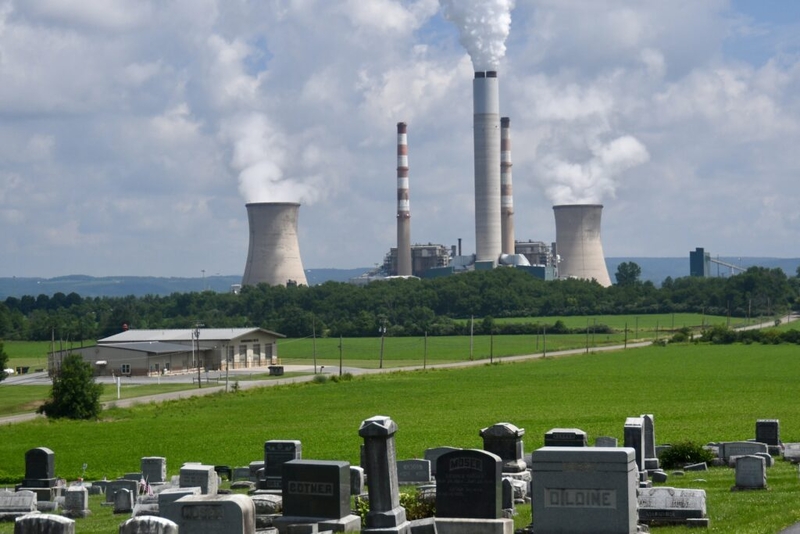
The Montour Steam Electric Station rises above farmland the plant's owner wants to rezone to allow Amazon to build data centers. (Photo by Peter Hall/Capital-Star)
(This article was updated Tuesday, Aug. 11, 2026, to clarify that Brent Fish is no longer a partner in Fishlips LLC.)
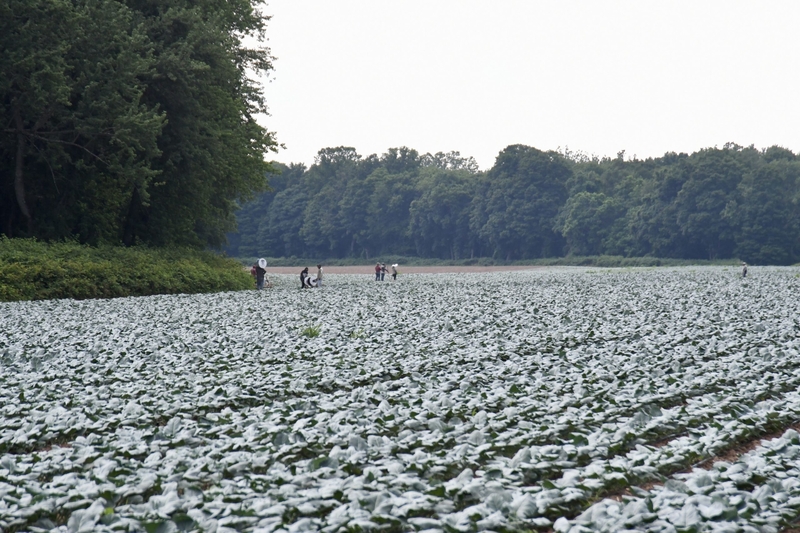
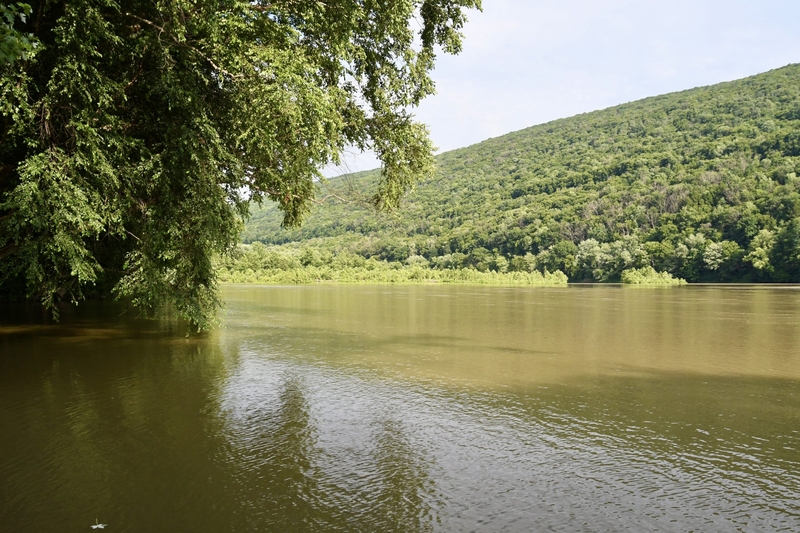
Hidden in a maze of tree-lined creeks and flood channels on the Susquehanna River’s West Branch, the fields of Muncy Farms are set apart from the modern world.
Guiding his red farm truck along a rutted tractor path, John Schaeffer points out waterfowl and wildlife on the margins of the fields, planted with rows of dusky green broccoli sprouts stretching into the summer haze. He stops near the riverbank, recalling the riverbed there is a massive stone slab.
“What I would do is I’d leave a couple of beach chairs down here, and I would bring down a couple of beers and a little cooler, bag of peanuts,” he says. “And I’d sit there and just watch the wildlife. It was my own private shale beach.”
For Schaeffer, a retired investment banker whose connection to the farm goes back to his childhood, it is both a respite and a responsibility. He and his 90-year-old uncle Malcolm Barlow share the rambling 1769 farmhouse — the oldest in Lycoming County — and the family has chosen, over the years, to keep it a working farm.
Situated on the outskirts of Montoursville and less than ten miles from Williamsport, Muncy Township is no stranger to development pressure. Half a century ago, Schaeffer’s neighbors sold land across the highway, where the Lycoming Mall was built and now stands largely vacant.
“That was a field that I used to ride horses in,” Schaeffer said, adding his family refused offers from the developer. ”They came to us, asking us to sell our land, and we said, of course, we couldn’t do that.”
Now, the community of just more than 1,000 people is one of the latest in the commonwealth to face change from the newest megatrend to shape the nation’s economy.
In April, Williamsport developer Daniel Klingerman, who made his name in the hotel business, submitted an application for approval to build three data center buildings and associated infrastructure on 100 acres of cornfields just downriver from Muncy Farms.
“Probably the first reaction in our community was fear,” said Karin Waugh, who lives about a mile and a half from the site. While the property is zoned for industrial use, the township zoning ordinance was adopted long before hyperscale data centers existed, she noted.
Like many municipalities, Muncy Township has no rules to specify how data centers should be built to ensure they don’t infringe on nearby properties.
And what little industry the township has, including a support site for the fracking industry and a commercial bakery, has been unobtrusive, Waugh said.
There happens to be … something special going on that I can't necessarily put my finger on why it's become as big of an opposition as it has.
“The biggest problem with that is when you smell the Pop Tarts and Nutri Grain bars that are being baked at Kellogg’s,” she added.
The data center, she fears, would spoil the tranquility of the home her husband and father built.
“We go outside, we can hear the birds … the air is nice. We don’t have to worry about going out there and breathing in diesel fumes,” Waugh said.
To Schaeffer, his beach, which lies just below the site, would be ruined if the plans come to fruition.
“I would sit and hear the humming from up there, and I wouldn’t bother. Screw it,” Schaeffer said, throwing a stick into the woods.
The new gold rush
Data centers, in the simplest sense, are locations where computer servers connected to the internet or other networks are housed. They’ve been around since the advent of the World Wide Web, providing the computing power behind e-commerce websites, media streaming services and cloud computing and storage.
With advancements in artificial intelligence, they have grown into a new breed: Hyperscale data centers house thousands of computers requiring as much electricity as a small city, cooling systems that can consume hundreds of thousands of gallons of water daily and back up generators sometimes numbering in the hundreds to ensure that they can remain constantly online.
Officials, including President Donald Trump and Sen. Dave McCormick have cast the race to develop artificial intelligence as a generational goal akin to putting a man on the moon. It will have long lasting implications for national security and global economic leadership, they say, making new energy and data center development crucial.

And while federal and state governments can steer data center development through broad policy changes, such as tax incentives or speedy permitting, the decisions on how data centers are built and whether they fit their communities fall to elected leaders at the lowest rungs of government — like township supervisors or borough councils.
Amid steeply mounting public concern about data center growth this year, state lawmakers introduced at least 30 bills to regulate or encourage data center construction. Gov. Josh Shapiro signed laws this summer requiring data centers to report their power and water consumption to the state Department of Environmental Protection and better forecasting of power demands.
Meanwhile, Shapiro’s plan to incentivize responsible development by tying voluntary standards for data centers to a state sales tax break on computer equipment foundered in the state Senate.
In Pennsylvania, there are roughly 80 data center projects ranging from preliminary efforts to secure land and power to five that are actually under construction, according to the crowdsourced website Trackdatacenters.com.
Before such a project can break ground, it must go through a series of reviews to ensure plans follow state environmental permit requirements and local zoning and planning rules such as property line setbacks, building size and appearance and traffic management.
In many communities where data centers are proposed, there has been strong public opposition. It stems from the reputation the data center industry has earned in hotspots such as northern Virginia and Memphis, Tennessee, as noisy, polluting and dominating communities.
Other concerns include depletion of groundwater in areas where people rely on wells and spikes in energy costs as increased demand for electricity meets constraints in the supply.
Community stewards and public officials in three Pennsylvania counties, Cumberland, Lycoming and Montour, have met data center proposals with varied responses, from unquestioning acceptance to organized community resistance and rejection.
Anthony Township in Montour County turned away a data center project after government officials determined that the plans didn’t meet local requirements.
Others have embraced them. In Middlesex Township, Cumberland County, officials rezoned land and gave preliminary approvals that cleared the way for construction to start on the first phase of construction on PAX-1, billed as one of the largest data center hubs in the commonwealth.
Igal Feibush, founder and CEO of Pennsylvania Data Center Partners, the company building the Middlesex data center named PAX-1, said it’s natural for people to have questions about what’s being built in their neighborhoods and when it’s something new, they have more.
“I make myself available to residents anytime, any place, in order to sit down and answer questions,” Feibush said, adding that PAX-1 has not received any special treatment and in some respects has received greater scrutiny. Why there has been such backlash is “the big question,” he said.
“There happens to be … something special going on that I can’t necessarily put my finger on why it’s become as big of an opposition as it has,” he said.
Lycoming County’s oldest farm
Sean Tetreault and his wife Rae-Ellah Biddle, bought their 19th century brick farmhouse in 2021 because they wanted a home that was part of Lycoming County’s history. Originally built for a member of the family that owned Muncy Farms before Schaeffer’s, it now lies sandwiched between the farm and the proposed data center site.
“I knew at some point in time [Klingerman] was going to do some type of development. That is what he does for a living,” Tetreault said of the field that separates him by more than a quarter mile from his nearest neighbor. Klingerman did not respond to interview requests.
The site itself was once part of Muncy Farms, which was established by colonial land speculator and suspected British Revolutionary War spy Samuel Wallis. He held thousands of acres along the West Branch and was among the first to settle in the area. The stone farmhouse provided refuge for early settlers of the area from Indian raids Wallis, himself, was alleged to have fomented.
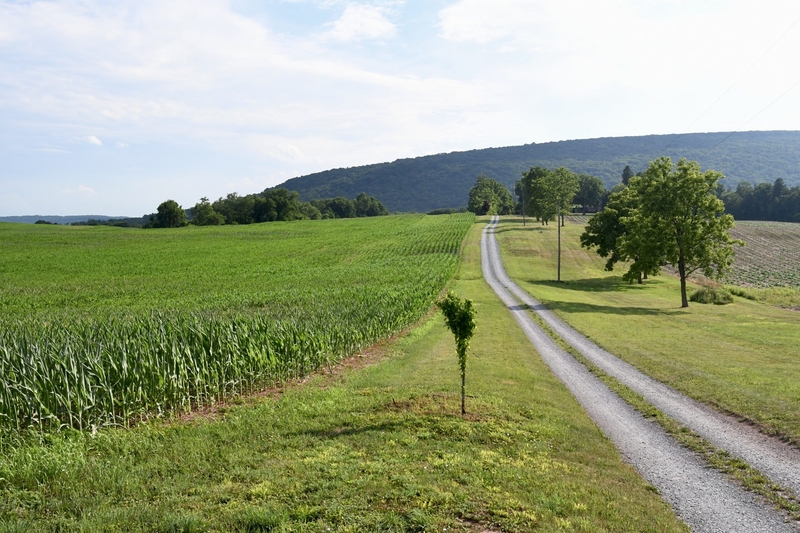
Generations later, the farm was owned by Henry and Margaret Brock, a wealthy couple who had agreed to care for Schaeffer’s uncle Barlow and his three older siblings, who were sent to the United States from England to escape the German Blitz in World War II. Later, a widowed Margaret Brock adopted the two brothers and two sisters and left the farm to them when she died in the 1960s.
Schaeffer, who inherited his half of the farm from his mother Sheila, said the data center site was sold in the 1990s, when his other uncle, Brian, wanted out of the joint ownership. A local hospital approached the siblings and offered to buy the 100 acres for a senior living facility, Schaeffer said. They sold the land and used the money to buy out their brother’s share.
The senior living home was never built, Schaeffer said, and the property changed hands a number of times before Klingerman and another area developer, Brent Fish, bought it. Their companies, Danko Holdings II LP and Fishlips LLC, are the applicants for the data center project. Klingerman did not respond to requests for comment and Fish told the Capital-Star he is no longer a partner in the property.
When the township supervisors learned of the impending data center proposal this spring, they scrambled to enact a moratorium on data center applications. Tipped off by the legal notice for the moratorium, the developers rushed to submit their application for a conditional use approval in April, township Solicitor Joe Orso said.
A hearing on conditional use is required when a type of development is not explicitly permitted by the zoning ordinance. It balances the interests of the property owner and developer with those of nearby landowners, allowing officials to impose requirements such as traffic improvements or constraints on the size or height of buildings.
The township contends the application was never properly submitted because Danko and Fishlips skipped a preliminary step. The companies also filed an application to amend the township zoning law to allow data centers, Orso said.
The developers now claim the township failed to act on the applications as required within 60 days and has filed a motion in county court that the project should be deemed automatically approved, Orso said, adding that the township contests the claim.
Tetreault said he and others in the township are researching what others have done to manage data center development as the township officials are working to develop their own updated ordinance.
“We gotta find a way to make this work for everybody,” he said, noting nearby municipalities already have data center ordinances in place. “We’re trying to pull all those resources and find any useful research about these data centers to … essentially find ways to make sure if this is going to go in, they do it responsibly for the environment and for the neighborhood.”
‘Copy and paste’
About 15 miles to the south, the Montour Steam Electric Station rises like a rock formation from the surrounding farmland. Once fired by coal, the 54-year-old power plant has been converted to run exclusively on natural gas and produces 1.5 gigawatts of electricity, according to its owner Talen Energy.
Last fall, Talen filed applications with the Montour County planning commission to rezone nearly 900 acres of land in Anthony Township near the power station from agricultural to industrial. Talen owns about 500 acres that are already zoned industrial in adjoining Derry Township, where the plant stands.
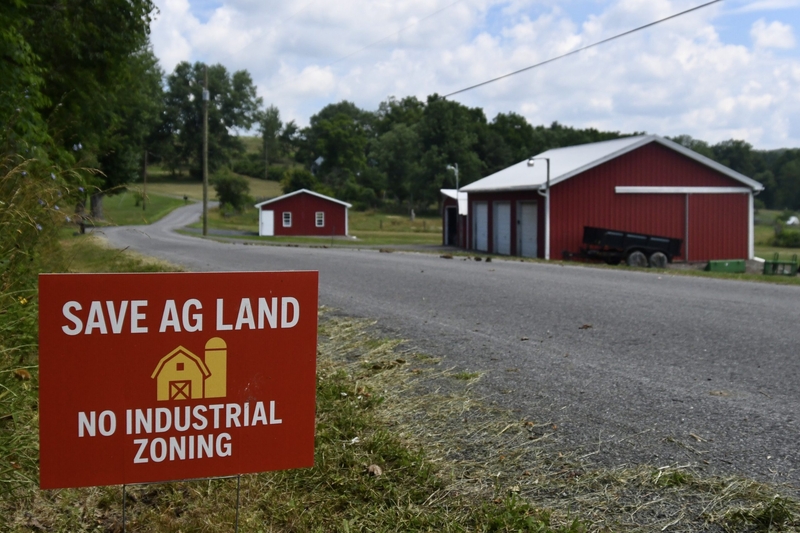
Colby Wesner, a pediatrician who lives in Anthony Township, said Talen provided few details about its plan, and speculation turned to the electricity generating company’s recent real estate deal in neighboring Luzerne County.
In March 2024, Talen announced it had sold a 1,200-acre data center campus near Berwick for $650 million to Amazon Web Services. It would be powered directly by Talen’s Susquehanna Steam Electric Station, a 2.5 gigawatt nuclear power plant in Salem Township.
Wesner said opponents of the Anthony Township rezoning request immediately suspected Amazon also wanted the land around the Montour plant, with direct access to power, for data centers.
“It’s like, ‘Wow, they’re hitting copy and paste over here,’” he said, noting that the lack of information put residents on a defensive footing before Talen had formally filed its applications. “It started to get pretty fiery right out the gates.”
Adding to the furor was the fact that a number of county officials, including the director of the planning commission and a county commissioner, had signed non-disclosure agreements with Talen and a consultant.
“The non-disclosure agreements just set off a whole avalanche of paranoia … like it just makes your mind go very dark right away,” Wesner said.
He attended a meeting at the volunteer fire department in August and found out there was a small group opposing the project looking for volunteers. Wesner said he was motivated to join them in part because the rezoning request included part of the Montour Preserve, which the plant’s builder established as both an emergency water supply and a public recreation area.
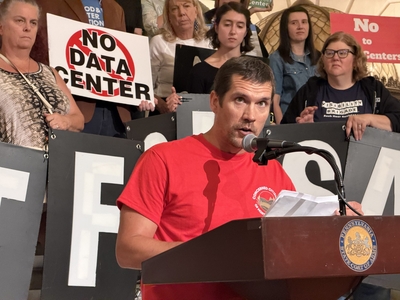
Sam Burleigh, who helped organize the town hall, brought together people from the meeting to form Concerned Citizens of Montour County, which worked to consolidate residents’ objections. When the group presented a petition to the county commissioners opposing Talen’s rezoning, it had 3,000 signatures, or roughly one sixth of the county’s population.
“It was just us saying, ‘Hey, do you guys realize what Talon’s trying to do?’ We figured that Talon was working with Amazon just from what was going on in the Berwick area, but we couldn’t say that because we didn’t know it was actual yet,” Burleigh said.
Through a combination of internet sleuthing and Right to Know requests to the county and the local economic and development agency, the group gathered “little tidbits of information” and eventually assembled a clear picture that the rezoning would benefit Amazon, Wesner said.
“By no means was this ever transparently presented to us,” he said. “I mean, we fought tooth and nail as a small community, just literally put all these little shreds of information together, scouring LinkedIn profiles, seeing who’s copied on emails, searching newspaper articles … and I mean we figured it out.”
Wesner said the company’s representatives remained evasive at the 2025 November planning commission meeting, when the public had an opportunity to ask questions.
“We had this information, and I, almost like a lawyer in a deposition, was asking these questions, and they would defer or kind of give very gray answers,” he said, adding that Talen eventually did disclose that it planned to turn over the rezoned land to Amazon in the final public hearing held by the county commissioners.
Talen did not respond to a list of questions from the Capital-Star but provided a brief statement saying the company is continuing to “engage with the community.”
“We are still evaluating potential future use of the land we own surrounding the Montour Steam Electric Station. No next steps have been finalized at this time,” the statement said
Planning commission member Larry Blosky said the lack of transparency from Talen bothered him, noting that during the public hearing, the company’s representatives could not articulate a reason why the change in zoning was necessary.
Blosky said he was prepared to vote either way, depending on the outcome of the commission’s question and answer session. In the end, Blosky said he felt the commission didn’t have enough information about the potential impacts of the decision.
“They left us in a position where we couldn’t be sure voting in the affirmative was the right way to go,” he said, adding, “We felt like they were more prepared than they were.”
The biggest factor, Blosky said, was the impact that rezoning so much land from agricultural use to industrial could have on the landscape. He noted that Talen and other data center developers are believed to be purchasing additional land in the vicinity. Feibush confirmed to the Capital-Star that Pennsylvania Data Center Partners is speaking to landowners in Montour County.
“Once these things get approved, there’s no taking it back. There’s no changing it back easily,” Blosky said.
In November, the planning commission voted 6-1 not to recommend the rezoning. After a public hearing in January, the Montour County commissioners voted unanimously Feb. 10 to deny the application.
Greg Molter, director of the county planning commission and an Anthony Township supervisor, said he was struck by the surge in public interest as word of Talen’s request spread. The planning commission meetings usually had three to five people in the audience. The November meeting, when the commission was scheduled to vote, had to be held in a gymnasium with more than 300 people attending.

“Not one of them came forward saying, ‘Yes, approve this.’ In fact, when we gave our decision and made it public, they broke into song, singing, ‘This land is my land,’” he said during a discussion on preparing for data center development at the Pennsylvania State Association of Township Supervisors conference in Hershey last April.
Molter noted that the data center use could have been granted even without rezoning, as a special exception. So after its vote, the commission set to work to develop a data center ordinance with a special committee including county commissioners, municipal zoning officers and concerned citizens.
The committee developed an amendment in less than four months and the commissioners adopted it in April. It accomplished the work by calling on other counties and townships that had already enacted data center specific land use rules.
At the township supervisors’ conference, Molter offered a few pieces of advice for fellow elected officials. He counseled against signing non-disclosure agreements, even though it is legal.
“As a public official, it makes you seem untrustworthy,” he said, adding that without proper training and legal advice, “When questioned about these things and you make the wrong comment, your reputation, your integrity will be questioned, and you will become the target of the public.”
Burleigh said the public pressure campaign continues and Talen has indicated it’s not abandoning the project. Landowners around the plant have received letters of intent to buy their property, he said. The Houston-based company in July also filed applications to the state Department of Environmental Protection for air quality permits for two new generating units at the Montour power station that would nearly double its output.
“So now we’re kind of ramping ourselves up, knowing that it’s coming, and not sure when they’ll actually submit an application to do that,” he said.
While Anthony Township relies on the county for land use planning decisions, some other municipalities in Montour would not be covered by the new ordinance, Burleigh said. His group is working to ensure those townships have their own data center rules in place.
“If we fight and win, they’re just going to move across the township line and try to do it there,” Burleigh said. “We’re trying to get the other townships to protect themselves and kind of create a hub of communities that will deter the data centers from coming into the area.”
‘A gift-wrapped present’
At his energy and innovation summit last summer in Pittsburgh, Sen. Dave McCormick touted $90 billion of investments in Pennsylvania’s tech and power sectors. Among the projects he claimed would bring tens of thousands of jobs and position the commonwealth as an AI leader was a $15 billion, three-campus data center planned near Carlisle in Cumberland County.
A month and a half before that July announcement the Middlesex Township board of supervisors had already knocked down a major hurdle for the proposal.
At a 7:30 a.m. meeting May 30, 2025, the board unanimously approved a zoning change for nearly 700 acres of farmland to specifically allow data centers. Four people spoke during the meeting, three of whom urged the supervisors to get more information about the project and its impacts before voting, meeting minutes show.
But Charles Courtney, a Harrisburg real estate lawyer representing Pennsylvania Data Center Partners, noted the amendment had been recommended by the township zoning commission and the county planning commission. He impressed on the board that the viability of the project would turn on the timing of the zoning change.
To get assurance that electric utility PPL would be able to supply the 1.3 gigawatts the campuses would consume, the zoning had to be in place first. And without reserving the power, the project could lose out to dozens of similar projects being proposed across the commonwealth because there isn’t enough electricity for all of them, Courtney said, according to the minutes.
The project was also accepted into the Shapiro administration’s Office of Transformation and Opportunity’s fast track permit program for high-impact economic development and infrastructure projects in January 2025.
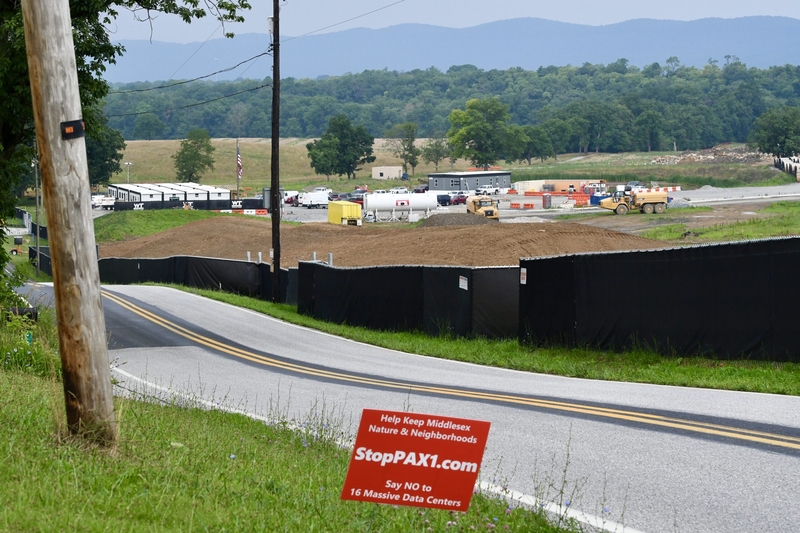
Former Supervisor William Goodhart, who voted for the zoning change, and Dr. Phil Neiderer, who took Goodhart’s seat in last year’s election, both declined to discuss the project. Neiderer also spoke at the township supervisors’ conference and said residents’ concerns have mostly centered on water use at the site, and said the township is negotiating a community benefits agreement with the developer.
Residents who are now fighting the project, which is in the early stages of construction, say they believe the zoning change was purposefully kept below the radar to minimize opposition.
“There was no promotion of it from an engagement perspective,” said Andrew Dymski, who is among a group of ten Middlesex residents suing to reverse the decision. “And so, from a resident’s perspective, it feels like it was hidden until it was too late.”
Feibush, of Pennsylvania Data Center Partners, said the assertion that the process lacked transparency is “myth and disinformation.”
The company made its first public presentation in October 2024, six months before it requested the zoning change, he said, adding that during that time, representatives attended planning commission meetings, additional supervisors meetings and met with county officials.
“Anybody that had any remote interest in understanding what happens in the township, you would think that they would just check in at least once every six months,” Feibush said. ”The idea that we just showed up and sent an ordinance down the public officials’ throats, or there was any lack of transparency … both on the public officials’ side and on our side is completely ludicrous.”
Feibush added that the data center development is preferable in many respects to the 1,400 homes that had been planned there.
“We thought that we had … a gift-wrapped present for the community,” he said, noting that the data center, once in operation, would not increase traffic or place additional demands on schools.
“We are spending private dollars to enhance and upgrade infrastructure in that area. We are providing an incredible amount of tax revenue that is going to transform Middlesex Township, the county, and … the school systems,” Feibush said.
We fought tooth and nail as a small community, just literally put all these little shreds of information together, scouring LinkedIn profiles, seeing who's copied on emails, searching newspaper articles … and I mean we figured it out.
In the year since the innovation summit announcement, public pressure surrounding the project has mounted, with opposition groups coalescing around leaders like Dymski. The lawsuit he’s part of alleges the zoning change amount
A township supervisors meeting last Wednesday, where the board was expected to vote on final approval for the first phase of the project, was postponed because the crowd overflowed the meeting room.
Pennsylvania Data Center Partners has named the hub PAX-1. If completed, it would include up to 16 purpose-built data centers in three campuses, each with a dedicated 450 megawatt electrical substation.
The site, proposed on former farmland, is bounded to the south by Country Club Road, with a mix of homes and businesses. The Conodoguinet Creek wraps around the land from the west and forms an oxbow bend, separating it on three sides from neighboring properties. A high voltage electric transmission line bisects the property.To the east, on the other side of the Conodoguinet, lie
The Meadows, a neat subdivision of single-family homes, and Country Manor, a mobile home court.
Hilda Vázquez Rosa in Country Manor is actively working to raise her neighbors’ awareness of the project and has filed dozens of Right-to-Know Law requests in an effort to learn details, such as who is involved. Printed copies of the responses to her requests from the township, the Shapiro administration and other state and county agencies cover the kitchen table in her trailer.
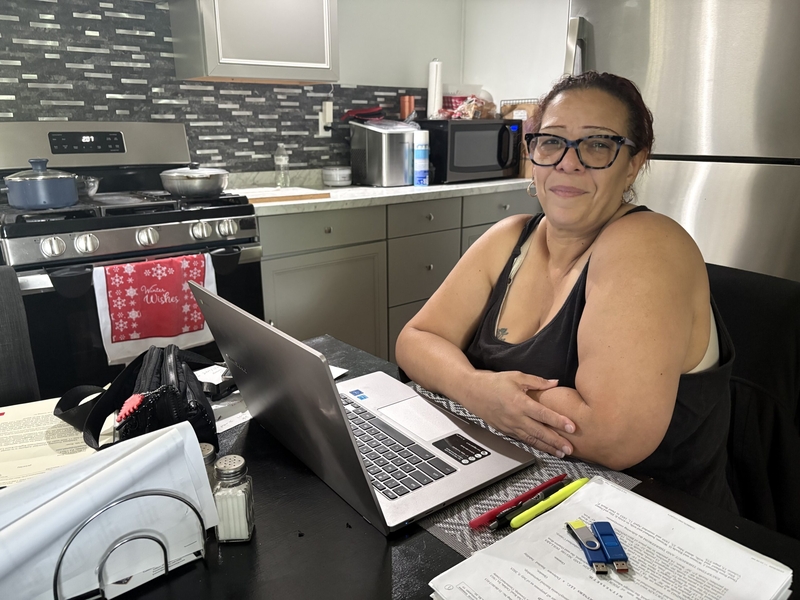
“They don’t talk with clarity,” she said, adding that the project’s developers seem to tell local officials what they want to hear, but have been vague about impacts on the community, electricity supply and wildlife.
“For me, it’s sad and I’m frustrated sometimes because a lot of neighbors are fighting in this situation,” Vazquez Rosa said, adding that many believe it’s too late to stop the project. “But we can if we continue to verify, if we continue to claim transparency, we can stop it.”
Monica and Mark Kurtz, who live in The Meadows, gathered around the dining room table of their Teaberry Lane neighbors, Stanley and Jody Shivell, who are among the plaintiffs suing the supervisors along with Dymski. They said their homes have been rattled by blasting at the site. The sound of construction equipment working across the creek can be heard in the Shivells’ back yard.
Many in the neighborhood have been there since the homes were built in the early 1990s.
“Our daughter married the boy across the street,” Monica Kurtz said, adding that the couple planned to stay in their “forever home” for retirement and now worry that their home’s value could be reduced by half. “”We’re trapped when you take the value of our house and you divide that in half.”
The way the PAX-1 project was handled underscores the power of local officials to make major land use decisions like those raised when data center developers come to town, Mark Kurtz said.
“They always say the local officials impact your life the most, and we’re seeing it now — how the Middlesex Township supervisors ramrodded this thing through and opened the barn door, so to speak, and let the wolf in,” he said.
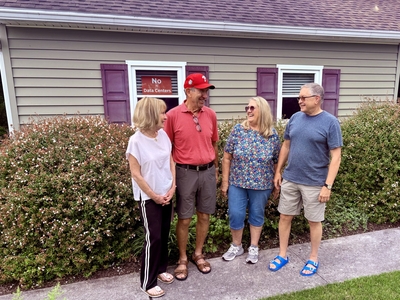
(Photo by Peter Hall/Capital-Star)
As data center projects across the commonwealth proceed, public sentiment against the developments is causing a sea change in state politics. Shapiro, who is running for reelection, and his GOP opponent, state Treasurer Stacy Garrity, have tempered their enthusiasm. Garrity has called for a moratorium, while Shapiro has called for “strict guardrails” while touting his tax incentive guidelines.
The winner in November will have both the power and an imperative to balance voters’ interests while ensuring the data center industry doesn’t pass on Pennsylvania for other states. Likewise, nominees for 229 seats up for election in the General Assembly will be listening to constituents’ views on data centers.
The legislature is set to return to session in late September for three weeks before the election and could still work to pass additional measures to regulate development, including a moratorium bill to give local officials time to prepare by adopting data center-specific zoning.
For townships, boroughs and cities yet to face data center proposals, the experiences of Montour County, Middlesex Township and Muncy Township could guide citizens and officials in how to respond and what not to do.

Harrisburg, PA