Governor signs law to expand microtransit to seniors, disabled residents statewide
Aug 10, 2026 | 6:41 am ET
Description
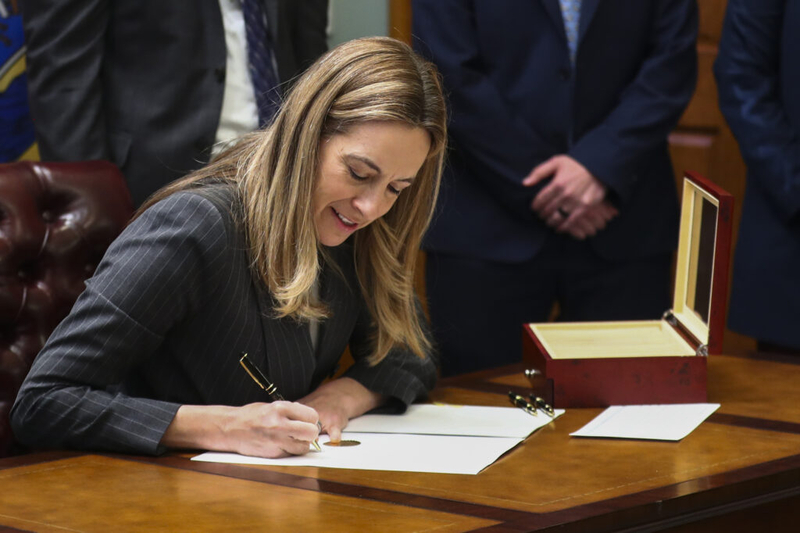
A bill signed by Gov. Mikie Sherrill on Friday seeks to expand access to microtransit for seniors and disabled residents statewide. (Photo by Dana DiFilippo/New Jersey Monitor)
More state aid would be available for county programs that provide seniors and residents with disabilities with on-demand microtransit programs under legislation signed by Gov. Mikie Sherrill.
New Jersey lawmakers voted unanimously in late June to pass a bill that expands NJ Transit’s existing accessibility program to include microtransit options, vehicles people can hail from their phone to take them to work, school, or doctors’ appointments, or to connect with existing public transportation.
“For too many seniors and residents with disabilities, the biggest barrier isn’t whether transportation exists — it’s whether they can actually access it when they need it. This law gives counties another tool to bridge that gap,” bill sponsor Assemblyman Kenyatta Stewart (D-Passaic) told the New Jersey Monitor.
The law, signed by Sherrill on Friday, allows counties to seek funding from the state’s senior citizen and disabled resident transportation assistance program to pay for their microtransit options. The state budget has about $56 million for that fund this year.
Passaic County now runs a microtransit program that offers $1.90 rides through a service called Via that operates in Passaic and Clifton. Trenton residents can take GoTrenton for $2; it’s also available for free to maternal health workers and women who are pregnant or recently gave birth under a partnership with the New Jersey Maternal and Infant Health Innovation Authority. NJ Transit has the MicroLink pilot program that serves a half-dozen towns in Bergen and Monmouth counties.
New Jersey is home to some 1.7 million seniors, roughly 18% of the state’s population, and more than 25,000 people with disabilities receive services from the state.
“Every New Jerseyan deserves the opportunity to remain independent and connected, and this legislation helps move us closer to that goal,” Stewart said.
The law does not specify what counties must include in their plans, but it defines “on-demand microtransit” as a shared motor-vehicle service that allows a rider to select pick-up and drop-off locations by phone or mobile app, with transportation provided at a time of their choice or as “as soon as possible” after the rider logs on.
It also requires that programs funded through the program and operated by the county, even via a subcontractor, to pay drivers as regular employees as opposed to independent contractors.
Trenton, NJ