If it’s socialism, show us
Aug 10, 2026 | 6:30 am ET

Description
Campaign signs supporting President Donald Trump sit in the front yard of a home on November 01, 2020 in Kenosha, Wisconsin. (Photo by Scott Olson/Getty Images)
Michigan voters have barely finished choosing their candidates for November, and already one of the oldest labels in American politics is getting another workout.
Abdul El-Sayed’s victory in this week’s Democratic primary for U.S. Senate offers a timely example. El-Sayed is unapologetically progressive, and voters should scrutinize his proposals, challenge their costs and consequences, and decide whether they want them enacted.
But they should evaluate the policies he actually proposes, not an economic system attached to them because the label is politically useful.
Most of what is being called socialism in American politics today isn’t socialism.
Socialism encompasses many traditions, but its fundamental distinction from capitalism concerns who owns and controls the economy’s productive assets. Under capitalism, the bulk of businesses and other means of production are privately owned and controlled. Under socialism, the bulk are under some form of social, collective, worker or democratic control.
Communism goes further, ultimately envisioning common ownership of the means of production and a classless society.
Compare that with what is routinely labeled “socialist” today: higher taxes on wealthy Americans, expanded health coverage, stronger labor protections, environmental regulation, public investment and a larger social safety net.

Those policies may be wise or foolish, affordable or too expensive, effective or ineffective. But they do not abolish private property, eliminate private businesses, transfer the American economy to collective ownership or end capitalism.
That distinction is the entire point.
Calling something “socialist” or “communist” carries political power because of what those words cause many Americans to imagine: the Soviet Union, Cuba, Maoist China, Venezuela, state control, economic failure, political repression and the loss of freedom.
That history is authentic. But raising a tax rate or expanding health coverage within a capitalist economy is not the Soviet Union.
Branding it as such creates an emotional association before voters examine what is actually being proposed. Call a healthcare proposal socialist, and perhaps you don’t have to explain why it will fail. Call a Democrat a communist, and perhaps you don’t have to engage with what that person actually believes.
It’s lazy politicking. The label does the work the argument should have done.
And it assumes remarkably little of the American voter. Repeat the label often enough and perhaps we stop asking what a proposal actually does.
The more frightening the label, the more evidence we should demand.
What specifically makes a proposal socialist? Does it move substantial portions of the economy from private to social or collective control? Or does it leave America’s capitalist economy intact while changing a tax rate, regulation or government program?
If someone calls a Democrat a communist, ask what belief or proposal makes that description accurate. If there is an answer, examine it. If there isn’t, perhaps the label wasn’t intended to inform you, but to provoke you.
But this is about more than political vocabulary. Democracy depends not only on laws and institutions, but on honesty, trust and good faith. Deliberately misrepresenting an opponent’s position undermines those norms. So does treating policies as somehow illegitimate simply because voters choose something we oppose.
Democracy does not promise us the policies we want. It gives citizens the power to choose among competing ideas. If Americans vote for higher taxes, expanded public programs or greater regulation, that does not make the system socialist.
It means the system worked.
We are free to believe voters made the wrong choice. But the democratic response is to make a better argument and persuade them to choose differently, not attach a frightening ideological label to a legitimate democratic choice.
If a policy costs too much, show us the numbers. If it will hurt Michigan businesses or families, explain how. If a regulation will eliminate jobs, provide the evidence. If a program will create waste, make the case.
Those are arguments. “Socialism” and “communism” are not.
When political leaders repeatedly substitute those words for a substantive case against what their opponents actually propose, voters should consider another possibility, that perhaps the label is necessary because the argument isn’t strong enough without it.
America has always debated the boundary between private markets and public responsibility. We built public schools and universities, Social Security and Medicare, highways and libraries while maintaining an overwhelmingly private, market-based economy.
We can and should argue about where that boundary belongs. But we can’t genuinely have that argument if every movement of the boundary becomes “socialism” and every political opponent becomes a “communist.”
So the next time “socialist” or “communist” appears in a political speech, advertisement or social media post, look past the label. Ask what it actually means, whether it accurately describes the policy and what evidence supports the claim. Then ask the question that matters most: Why does the speaker need me to fear the label instead of persuading me to oppose the idea?
Michigan voters don’t need politicians to tell us what to fear. We need them to make their case. If an idea is bad, defeat it with facts. If a policy is misguided, expose its flaws. If an argument is strong, make it.
Words still mean things. We should insist that our politics does, too.
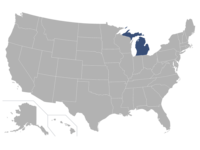
Lansing, MI