The Jericho Road in SC: Who is my neighbor?
Aug 10, 2026 | 7:30 am ET
Description
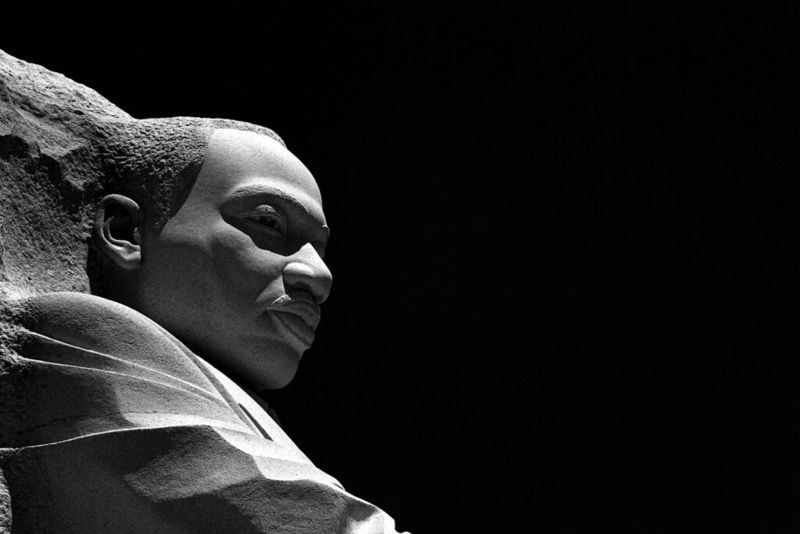
The Martin Luther King Jr. Memorial in Washington D.C., as seen on Dec. 2, 2018. (Photo by Brett Bowers via Getty Images)
“True compassion is more than flinging a coin to a beggar. It comes to see that an edifice which produces beggars needs restructuring.” — Martin Luther King Jr.
Not long ago, I received a text from a friend, a CarePortal volunteer: “Hey, a family friend has some bedding she’d love to give to a family in need. Let me know if you’ve got any requests right now.”
CarePortal connects at-risk and vulnerable families with trained church members to meet tangible needs — beds, clothing, utility payments, groceries — before a crisis escalates into
something like foster care.
The very next day, a request came in. A family of six had lost everything in a house fire. Within two hours, four community groups had responded. The entire request was met.
My breath catches every time I witness something like this. It reminds me that people in our communities care deeply about their neighbors. I see that most clearly in Sumter, but I know these networks exist in towns across our state.
Still, compassion can meet immediate needs without addressing the reasons why those needs exist. And when the same kinds of crises surface again and again, they can no longer be understood as isolated hardships.
They are entrenched patterns: the mother who finally receives a job offer but sold her car the week before to buy groceries and now has no way to get to work; the mother raising her children alone while managing her twins’ serious medical needs, always one small setback away from losing everything.
These are not rare stories. They are catastrophic, preventable situations happening to our neighbors.
For those of us who haven’t lived these realities, it is easy to create distance, to assume these hardships must be the result of bad decisions that could never touch our own lives.
Here is what the data tells us: In Sumter County, more than three out of four public school students are considered economically disadvantaged, according to the state Department of Education poverty index. More than 40% of all children in Sumter County are raised in single-parent households, in an economy built around costs that assume two incomes, while the minimum wage remains $7.25 an hour.
We ask the impossible of families, to stretch what they have, to fold and refold their resources like origami: carefully, creatively, endlessly. No matter how intricate the folds, one dollar cannot
become more than one dollar.
One of the most enduring stories in the Christian tradition is the parable of the Good Samaritan. A man is beaten and left for dead on the side of the road. The first people to pass him are members of his own community; they see him and keep walking. Then comes a stranger, a Samaritan, someone his community would have regarded as an outsider. He stops, binds the
man’s wounds, carries him to safety, and pays for his care.
The Good Samaritan story refuses to let us ignore any person’s humanity. The stranger doesn’t ask whether the injured man deserved his help. He sees the man’s suffering and lets that recognition alone reorder his priorities.
Dependence is not a moral failure. None of us make it through life without help. The injured man’s needs create an obligation, not because he earned it, but because he was a human being.
Martin Luther King Jr. later reflected on this same story and argued that helping the wounded traveler is only the beginning.
Eventually, we must ask why so many people are being beaten and left by the roadside in the first place.
That is the question before us in South Carolina. Why are so many families standing so close to the edge?
When more than 40% of households across South Carolina earn too little to afford the basic cost of living, we are no longer talking about individual failure. We are talking about systemic failure.
So, the question returns, again and again: Who is my neighbor?
If she is the mother who sold her car to buy groceries, answering it means caring about wages and transportation. If she is the mother raising twins with serious medical needs, it means caring about access to healthcare, affordable childcare, and paid leave.
If they are the family who lost their home to faulty wiring, it means caring about housing accountability.
In Martin Luther King Jr.’s words, caring about our neighbors requires more than “flinging a coin to a beggar.” It requires more than isolated acts of charity. We must ask what kind of community
we are building together.
Because the work of loving our neighbors is more than responding when someone falls. It is building a road where fewer people fall in the first place.
That is the invitation of The Jericho Road series. Over the next few articles, we’ll look at the data and the stories of our neighbors to understand what strengthens families and what leaves them
vulnerable to crisis.
Columbia