Oregon looks to how other states fund their transportation needs
Aug 07, 2026 | 7:56 pm ET
Description
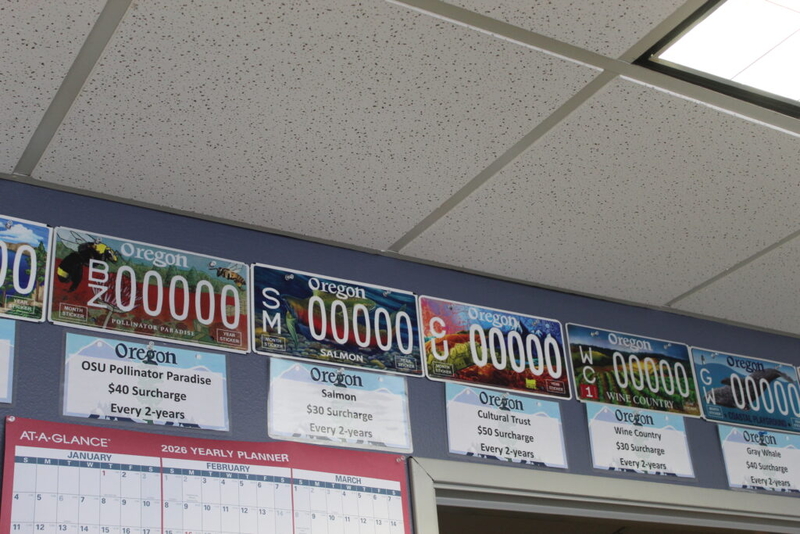
Oregon receives most of its transportation funding from vehicle registration and title fees, driver’s license fees, its 40-cent-per-gallon gas tax, and a weight-mile tax on heavy vehicles. (Photo by Mia Maldonado/Oregon Capital Chronicle)
The transportation group charged with vetting and recommending ideas to solve the state’s $200 million 2027-29 budget gap spent its fourth meeting examining how other states fund their transportation systems.
Appointed by Gov. Tina Kotek, the 12-member “Rebuilding our Transportation Vision” workgroup has until the end of the year to deliver funding recommendations to Kotek, though lawmakers asked to receive recommendations earlier.
During the virtual session, experts from Minnesota, Massachusetts, Colorado and Utah shared insights into their funding models.
“We’re really looking to hear from other states as to how they approach transportation funding, major projects, accountability and long-term system needs,” said Travis Brouwer, deputy director of Oregon’s transportation agency.
Transportation funding insights from Massachusetts, Minnesota, Colorado and Utah
Like Oregon, all four states receive a large portion of transportation funding from gas taxes and vehicle registration fees.
Unlike Oregon, Minnesota and Massachusetts leverage a motor vehicle sales tax to cover transportation costs.
Massachusetts also brings in revenue from tolls and a 4% surtax on personal income above $1 million, which is split between statewide education and transportation needs. That tax generated $3.4 billion in 2026. Additionally, Massachusetts dedicates a portion of its sales tax revenue to pay for the cost of public transit services in the Greater Boston area.
In Minnesota, residents across the seven counties comprising the Minneapolis-Saint Paul region pay a sales tax dedicated to funding public transit, maintenance, capital projects and walking and biking infrastructure.
In Colorado, the state gas tax has remained the same since 1991 because of a law mandating that the government receive voter approval before raising tax rates or creating any new taxes, Colorado Department of Transportation legislative affairs liaison Emily Haddaway said.
To bypass those limitations, the Colorado Legislature in 2021 passed a $5.4 billion package that created several new transportation funding streams.
The law created a retail delivery fee, taxing people each time they make an order requiring a motor delivery. It created a rideshare tax, taxing people who use rideshare services by 15 cents per ride in zero emission vehicles and 30 cents per ride for standard vehicles. It also established a road usage fee for gas and diesel vehicles, a bridge and tunnel fee levied on diesel vehicles and an annual road usage equalization fee for electric vehicles.
In recent years, Colorado also implemented a $3 daily fee on rental vehicles and levied fees on oil and gas producers. To maintain transparency, the state publishes quarterly updates to an online dashboard showing the funding status and delivery progress of every project in its 10-year plan.
Utah Department of Transportation Commissioner Carlos Braceras focused his presentation on the state’s emphasis on accountability.
“Utah is a very conservative state,” Braceras said. “We believe in limited government, but ever since going back to 1995… we have believed that the role of government is to build infrastructure, to essentially create the foundation for private industry to innovate and to grow.”
Every year, the agency publishes a report on its innovations and efficiencies.
Oregon lawmakers say they’ll prioritize bipartisanship in 2027 transportation funding plan
“You can’t ask for more money until you’ve proven that you’re efficient and effective, and you have to demonstrate that continually,” he said.
How Oregon funds its transportation needs
Oregon receives most of its transportation funding from vehicle registration and title fees, driver’s license fees, its 40-cent-per-gallon gas tax, and a weight-mile tax on heavy vehicles.
Oregon also receives federal funding, 30% of which goes to local governments. The state also receives about $700 million each year for construction projects on the state’s roads and about $150 million to support public transit.
The state also levies a 0.1% tax on every Oregonian’s paycheck to support public transportation services in rural and urban areas, a 0.5% tax on car dealers selling new cars to fund rebates for electric vehicles and a $15 tax on the sale of new bikes with tires over 26 inches that cost at least $200 to support off-road bike and pedestrian paths.
Using a sales tax or highway tolling aren’t the ideal option for Oregon. Oregon doesn’t have a sales tax, and tolling is extremely unpopular — so much that Kotek in 2023 issued a pause on tolling until this year after receiving intense backlash on a proposed tolling project on Interstate 5 and 205 to help pay for replacing the I-5 bridge connecting Oregon and Washington.
Salem, OR