Idaho lawmakers hear updates on efforts to improve children’s residential care, state 911 system
Aug 07, 2026 | 7:47 pm ET

Description
Fidget toys inside a therapy room at an Idaho youth residential facility. Idaho has taken a number of steps to improve oversight of youth residential facilities statewide. (Photo by Kyle Pfannenstiel/Idaho Capital Sun)
Idaho has taken several steps to increase oversight of facilities where foster children and other youth reside or get treatment. The actions stem from recommendations in an oversight report released last year, and the Legislature may consider additional changes next year.
Evaluators with the independent state agency the Office of Performance Evaluations, or OPE, on Friday provided legislators with a follow-up report on progress made in response to recommendations from a 2025 report that found significant gaps in oversight of children’s residential facilities.
The Joint Legislative Oversight Committee, which directs OPE evaluations, also heard about a new report on challenges around hiring and funding career and technical education in public K-12 schools, about progress on updating 911 systems, and an update of changes to address gaps in death investigations.
The committee also voted to direct OPE to open a new evaluation on hospital billing of Medicaid for services and about whether facilities are engaging in “upcoding,” or charging for more expensive services that may not be needed to get higher reimbursement from Medicaid.
Once directed to so, OPE looks into specific questions regarding the effectiveness of policies or potential gaps in state oversight or funding. The reports and information about studies underway can be found online at legislature.idaho.gov/ope/reports.
Below are some main takeaways from OPE presentations on Friday.
Lawmakers say they plan to address remaining oversight gaps for children’s residential centers
Last year, the OPE report found gaps in investigations of abuse, a lack of unannounced visits, and a lack of process for enumerating rights to children at residential facilities. These facilities could be congregate care settings for foster children or treatment facilities.
Idaho House committee approves oversight bill for youth in residential treatment facilities
Of the report’s 19 recommendations to improve oversight, 13 have been completed and two are in progress, according to the follow-up report. These include the passage of House Bill 723 this year, which created a youth bill of rights for children at the facilities, required an unannounced facility visit annually, created a new child and staff interview process, and required restraint and seclusion reporting.
The remaining four recommendations, which would require legislative action, are:
- The report recommends the Legislature extend the licensing authority to include treatment oversight. Licensing requirements for these facilities do not assess whether treatment is being administered, if that treatment is appropriate for the children’ s needs, and whether children are making adequate progress.
- The new report released Friday recommends requiring that the data be reported publicly and to the Legislature. The changes made this year require facilities to only report to the Idaho Department of Health and Welfare if it uses restraint methods or seclusion on children in care.
- The report underscores that there is still no process to include perpetrators of abuse at children’s residential facilities on Idaho’s Child Protection Central Registry. The recommendation is to create a process to prevent staff perpetrators from going to other facilities if it’s been substantiated that they abused children at a facility.
- The report also recommended that the Legislature assign an entity to investigate abuse in facilities. Licensing authority is regulatory and meant to be preventative, but if abuse occurs, there isn’t a standardized process to investigate and adjudicate it.
JLOC Co-Chair Rep. Jordan Redman, R-Coeur d’Alene, said the remaining four recommendations should be a “focus” for committee members during the upcoming legislative session, slated to begin in January.
“Because I think at the heart of it, it’s protecting kids,” Redman said. “And I think there’s some excellent recommendations. I also want to applaud all the work that’s been done.”
Idaho schools face challenges in proving career technical education, or CTE, programs
Idaho’s schools face funding restrictions and difficulty hiring and keeping teachers as they try to provide career pathways and skills programs, said Casey Petti, a principal evaluator on a study to explore the difficulty in recruiting and retaining CTE educators in Idaho.
Career technical education, known as CTE, includes classes and training programs to provide practical skills or to allow students to explore career options in different fields.
There were more than 1,000 CTE programs offered in the 2026 school year, and over 151,000 public school and public charter students enrolled in them, according to the report. However, 40% schools surveyed for the report said they have paused or cancelled a CTE program since 2022, with 76% of them citing a lack of qualified instructors as a reason.
One of the biggest needs for programs was in health professions and public safety, with 54% of schools citing the area as a need that they aren’t able to meet. Engineering and technology was also highly cited as an industry schools weren’t able to offer CTE programs in.
Agriculture was the highest cited need for workers, but only 14% of schools said they were unable to meet this need.
Most of the dedicated funding schools receive for CTE cannot be used toward base teacher salaries, which can be limited, the report found. Some industries, like software engineering or civil engineering, are particularly hard to hire professionals from because CTE educator salaries are far lower than industry average earnings. However, the educator salaries are more competitive in other industries and are slightly above average non-CTE teacher pay, the report found.
The report provided options to modify funding and credentialing but clarified, “These options are not solutions; they are choices with real tradeoffs.”
Evaluators said CTE program leaders most wanted CTE funding to be able to go toward base teacher salaries, followed by an adjusted public school funding formula to account for smaller CTE class sizes. The report also included options for loosening some credentialing requirements from industry professionals to become CTE educators.
The report included as an option targeting pay increases to areas where there’s the largest gap between CTE teachers and the average industry wage.
State has made progress to modernize a statewide 911 system
The independent research office has done two studies related to the effort to modernize emergency communications and shift to a digital network called Next Generation 911.
With money running out in 2031, watchdog report recommends Idaho Legislature stabilize 911 funding
Idaho watchdog agency says state should consider creating statewide 911 system
Those reports found limitations with the lack of statewide oversight of the 911 system and contracts for upgrading it. The state created the Idaho Public Safety Communications Commission in response.
Ben Roeber, head of the Office of Emergency Management, said the office had hired Donald Lane as the program manager to oversee the tradition. It was Lane’s fifth day on the job Friday, but he said he looked forward to creating a strategic plan for the transition.
The state created a $15 million grant created in July last year, which is funded from a surcharge on phone bills. The grant is now being managed by Lewis County, said Andy Creech, Payette County sheriff and chairman of the Idaho Public Safety Communications Commission.
Creech said the commission doesn’t have the authority to enter contracts or agreements.
“Naturally you might come and look at the state government and look for that procurement process, but really, it’s Lewis County that did that process,” Creech said. “So it may have the appearance that it wasn’t transparent, but it’s just the way that the laws are written in the way that that grant program works is that the IPSC themselves can’t do this, and the state can’t be an applicant to the grant program. And so the only way for it to occur is for our county to be the grant applicant and to handle the entire process.”
Coroners’ association working to create cross-county agreements
The Legislature in 2025 passed a bill to overhaul the state’s death investigation system in response to an OPE report that found inconsistencies in county coroner investigations statewide.
In addition to the legislative changes, the Idaho State Association of County Coroners is working to create a memorandum of understanding, or MOU, to allow counties to assist each other with investigations, said Kelli Brassfield, co-chair of the Idaho Criminal Justice Commission’s Coroner System subcommittee.
“This MOU will help each other in assisting during extraordinary events and/or complex cases,” Brassfield said.
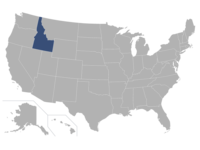
Boise, ID