ISU researchers develop kits to help stoke the biomanufacturing industry
Aug 07, 2026 | 11:08 am ET
Description
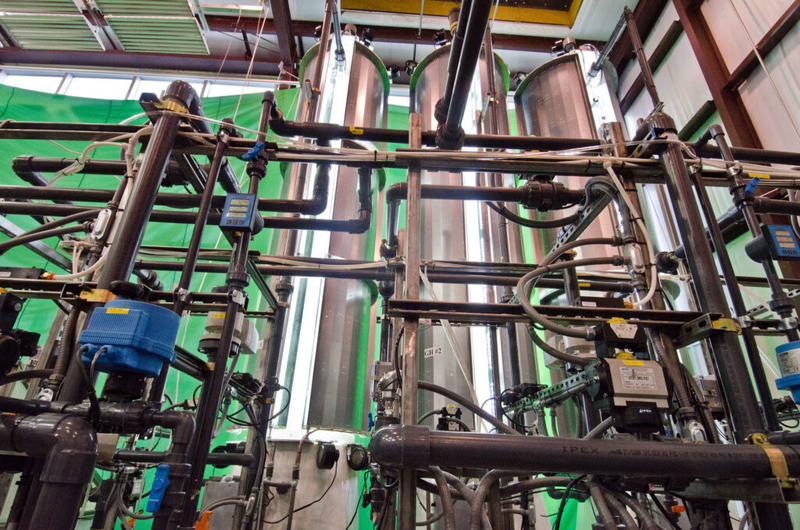
Researchers at Iowa State University and Novonesis are developing classroom bioreactor kits to help boost interest in the burgeoning biomanufacturing field. Pictured is a commercial scale bioreactor. (Photo by Lance Cheung/USDA)
Researchers at Iowa State University are working to increase interest in biomanufacturing with bioreactor kits that can be used at community colleges or high schools.
Nigel Reuel, an associate professor and the Stanley Chair in interdisciplinary engineering at ISU, said students and parents understand more traditional career paths, like nursing or teaching, but usually are unfamiliar with the field of biomanufacturing.
He said the idea is that the kits will introduce students to the “really cool industry in biomanufacturing.”
“This gives students early on an ability to be really hands-on and see, like, ‘Oh, I get it!,’” Reuel said. “We grow the cells; it makes this thing, and that’s a product. It allows them to see that this could be a really kind of interesting career path.”
Biomanufacturing uses fermentation and chemical processes to turn agricultural materials, like corn, soybeans or plant residues into everyday products. Common biomanufactured products include pharmaceuticals and vaccines, fuel, chemicals, plastics, textiles and other consumer products.
Reuel said it’s likely the field will continue to grow as the manufacturing industry looks for alternatives to petroleum-based materials and the agriculture sector vies for additional domestic markets for corn and soybeans.
“There’s huge facilities, high paying, great jobs, and honestly, they’re just kind of hurting for a pipeline because no one really thinks about it,” Reuel said. “It’s not something that a high school counselor is going to sit you down and talk about.”
The research team that came up with the Bioreactor Educational Activity Kits, called BREAKs, didn’t set out with the goal of making something for the classroom.
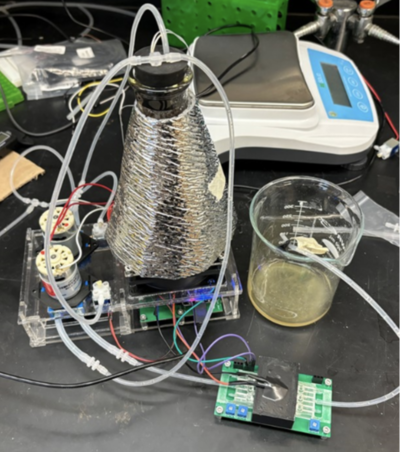
Reuel said the team was working on a grant funded project with the biosolutions company Novonesis to monitor and take control of bioreactors using artificial intelligence. Reuel said to track enzyme activity in a bioreactor and gather data that could be fed into the reinforcement learning AI model, ISU and Novonesis researchers needed access to a “small array of reactors.”
Bioreactors are “fancy” tanks that can grow bacteria or cells rapidly, Reuel explained. Sometimes the cells themselves are the product, or other times, manufacturers want a product that is secreted by certain types of cells, like a specific enzyme.
Reuel said there weren’t any solutions on the market for small, “open source” bioreactors that would meet the goals of the team working to inform the AI model, so they used common parts and made their own small bioreactors for around $300 a piece.
He later pitched the idea to the nonprofit Schmidt Futures and BioMADE, the U.S. Department of Defense sponsored Manufacturing Innovation Institute, and secured funding to turn the reactors into a product for community colleges and advanced high school science classes.
“You don’t really know how something works until you have something that you can take apart and break,” Reuel said. “The idea is that the bioreactor that comes in a box … students can play around with it, build it, grow their own bacteria … at a cost point where it’s not prohibitive.”
Reuel said it will probably take about a year before the kits are ready for orders, but already, the project has secured a partnership with Des Moines Area Community College to develop curriculum around the kits.
The kits are also part of the RuralSTAMINA Biomanufacturing Engine, a U.S. National Science Foundation initiative to “turn agricultural resources into new high-value products, create competitive jobs, and unleash economic opportunities.”
Reuel is chief technology officer of the engine, which received $160 million from NSF for 10 years to connect research, manufacturing, workforce and other resources across the biomanufacturing industries in Iowa and Nebraska.
He said a focus of the engine is training people for the biomanufacturing workforce and keeping the corn belt states “as the center of of the universe in terms of biomanufacturing”
“This is going to be a big deal,” Reuel said.
Des Moines, IA