Educators face off in GOP race for Oklahoma superintendent
Aug 07, 2026 | 6:30 am ET
Description
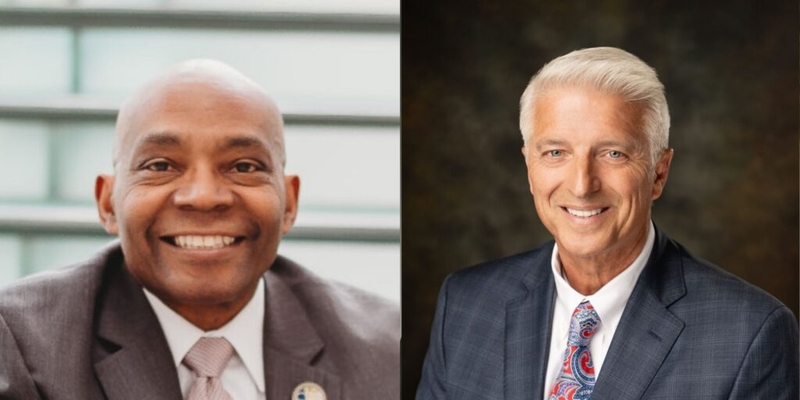
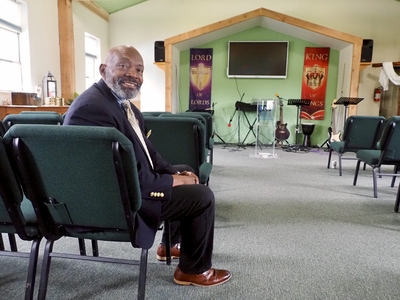
James Taylor, left, and Robert Franklin, right, are seeking the Republican nomination for state superintendent in an Aug. 25 runoff election. (Provided photos)
OKLAHOMA CITY — The Republican nomination for Oklahoma state superintendent will go to one of two longtime educators — either an experienced school administrator who decries political partisanship or a high school teacher and Christian minister who says his insight from the classroom could benefit schools statewide.
Robert Franklin and James Taylor advanced to the Aug. 25 runoff election as the top two vote earners from a crowded GOP primary. The winner will face Democrat Jennettie Marshall in the Nov. 3 General Election.
State superintendent, considered Oklahoma’s chief of public schools, leads the state Department of Education and the state Board of Education.
Franklin, an inductee in the Oklahoma Educators Hall of Fame, has promised to lean on his decades of experience in school and CareerTech administration, rather than party politics, if elected to the post.
Taylor, an 18-year teacher and a pastor, has attracted comparisons to Oklahoma’s far-right-wing former state Superintendent Ryan Walters, but he insists he would bring a different leadership style, one more focused on children’s academic needs.
Both candidates said Oklahoma’s bottom-tier ranking in reading and math scores must improve.
Franklin, 66, of Sand Springs, said the state needs to attract more properly trained teachers to accomplish an academic turnaround.
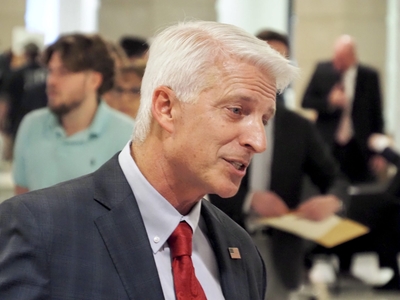
He pledged to collaborate with tribal nations, higher education institutions, state lawmakers and other stakeholders to tackle Oklahoma’s yearslong teacher shortage and to provide effective training in the science of reading.
He said the state also could redesign instruction and elective options in middle schools to expose students to job skills at a younger age, better preparing them for the future workforce.
Improving students’ academic outcomes, Franklin said, will take a “relentless effort.”
“It won’t be what we do on day one,” he said. “It’ll be what we do daily to get us to that place, and that means lots of helpful, thoughtful, seasoned, experienced teachers and reading specialists and job coaches, or what you consider to be instructional coaches, to work with our teachers so that we can begin to really put good practices to work.”
Taylor, 67, of Oklahoma City, said he would carry out new legislative mandates with fidelity by incorporating more reading specialists and phonics-based instruction.
This year, the state Legislature required more comprehensive interventions for struggling readers, including a repeat of third grade for children who score below a basic literacy level.
“We are going to make sure that is going to be a successful program,” Taylor said.
Both candidates point to behavioral disruptions in the classroom as another top issue facing public schools today. Their solutions to the problem differ.
Franklin suggested bringing more behavioral health specialists and counselors into schools to assist teachers.
Taylor said classroom discipline is a strength of his. His idea is to “reproduce myself” through technology, like an informational video, to explain how to handle behavioral issues.
He said his priority is that “our teachers are secure and safe in their classroom” and that students learn to read and do math.
Taylor also promoted on the campaign trail a controversial cost-saving plan to consolidate district superintendent positions from 500 to 100, but he told Oklahoma Voice the idea is now “off the table.” He said he prefers to focus instead on academic outcomes, teacher support and parent empowerment.
Both candidates face criticism as they step into spotlight
After surging to the front of the GOP primary field, Franklin has faced questions over his Republican credentials. He said he was a registered Democrat from 1978 until a few years ago.
Franklin said he changed his party affiliation after the 2022 elections, when key statewide races were effectively decided in the GOP primaries. The Democratic Party also had shifted “to a more liberal agenda that I didn’t align with,” he said.
“I think agendas have become really hardened, and I don’t see hardened positions, no matter what spectrum you’re on, as a really effective way of trying to do the school work,” Franklin said. “This particular position (of state superintendent) probably calls for the least amount of political ideation in that role.”
Taylor, who has called himself the race’s most conservative candidate, has received criticism over his qualifications for office because of his lack of experience in school administration. He said he is confident he is qualified to lead the large Education Department because he has administrative experience in churches.
If elected, Taylor pledged to surround himself with staff members who are strong in areas where he is weak.
The fact that he chose to hire a former employee of Walters’ administration as his campaign communications director also has generated scrutiny. Taylor has since said in public appearances that the employee has been removed from that position.
Taylor told Oklahoma Voice that Walters isn’t someone he aims to emulate. He said he has a calmer temperament than the former state superintendent, whom he criticized for resorting to “name calling.”
“I don’t distance myself from him, and I don’t embrace him,” Taylor said of Walters. “He’s who he is, and he was who he was. That’s not me. I don’t make comparisons. That’s what other people do, is they make comparisons. I don’t make comparisons between he and I.”
Walters resigned in September to lead a nonprofit with more than a year left in his superintendent term. He did not file to run for any political office this year.
Church-state separation a key focus in superintendent race
Taylor, the pastor of First Christ’s Church of Norman, said he wouldn’t repeat Walters’ push to place a Bible in every Oklahoma public school classroom, though he has been supportive of Walters’ pro-Bible social studies standards.
Walters attempted to mandate that all districts teach Bible stories to contextualize the religious beliefs of important figures in American history.
Taylor agreed the country’s “foundation was on a Christian heritage,” but he said teachers don’t need to be required to have a copy of the Bible. State law already allows educators and students to bring their religious texts to school, if they wish.
“I think that you don’t have to have a Bible in the classroom,” he said. “I teach early U.S. history, and early U.S. history is about the Judeo-Christian heritage of our foundation of our country.”
Meanwhile, church-state separation has become a major talking point for Franklin.
While leading the Statewide Virtual Charter School Board, he voted against opening a state-funded religious charter school. The Oklahoma Supreme Court later struck down the school’s concept, deeming it a violation of the state Constitution. The U.S. Supreme Court deadlocked 4-4 on the case, which upheld the state-level ruling.
A second attempt to open a religious charter school in Oklahoma has prompted a federal court case.
Franklin, a member of Life.Church in Jenks, said his Christian faith is a “very important” part of his life, but teaching religious beliefs is the job of faith leaders and families, not public schools.
“There’s a lot of different faiths that are practiced in our schools, and I just think it’s far too slippery of a slope to simply say that this one particular faith is valued and supported by tax dollars more so than this one,” he said. “I don’t think our country was designed that way.”

Oklahoma City, OK