The lost art of disagreeing well: In Idaho, we need these ground rules to truly solve conflicts.
Aug 07, 2026 | 6:00 am ET

Description
We should challenge claims, not character; ask questions before assigning motives; and begin with a shared goal, writes guest columnist Andrew Ellestad. (Photo by Getty Image)
Less than two weeks after the senseless killing of Jordan Harbst on the Boise Greenbelt, the finger-pointing had begun.
State lawmakers claimed a lack of compliance by city officials was to blame. Boise’s mayor struck back arguing that legislators were turning a tragedy into political theater.
Before the family had finished mourning the death of their son, the public conversation had become about who deserved the blame. I couldn’t help but wonder, was anyone actually trying to solve the problem?
This issue isn’t something unique to the Treasure Valley or Idaho alone. We see it play out across the United States over issues like immigration, education, national security or a myriad of other issues.
Pedestals concentrate power. They discourage dissent. What if we built Idaho community differently?
The motivation isn’t to persuade. It’s to score points. Often the loudest voice gets the attention, but the difficult work of listening, negotiating and governing is set aside.
At the College of Idaho, I regularly teach on leadership, negotiation and organizational behavior. As I look at our nation, I’m convinced we don’t have a disagreement problem, we have a disagreement skills problem. Conflict or disagreement, when handled well, solves problems, improves organizations and allows democracies to function.
In my classes, we talk about the difference between task conflict and relationship conflict. Task conflict is focused on the issue at hand. Relationship conflict attacks the person on the other side of the issue.
Every organization, community or social group has conflict. The distinction between the two types is key.
A recent review of over 100 studies which examined over 8,000 different groups found that disagreement over a task is most useful when it stays separate from personal conflict and is directed toward decision quality. Additionally, other research has shown that task conflict is more likely to improve performance when people feel psychologically safe enough to question one another without fear of ridicule or retaliation.
Here in Idaho, it means disagreement needs ground rules. Challenge claims, not character; ask questions before assigning motives; and begin with a shared goal. Without this environment, debate generates passion but little improvement.
It seems that today, we have confused disagreement with disrespect. If we listen carefully, you will often hear a narrative by one party that assumes the other is ignorant, immoral, or corrupt. When such hyperbolic language is used, it becomes practically impossible to engage in a productive conversation focused on solving the issue at hand.
Idahoans have a long history of demonstrating charity and good-will toward our neighbors. As our state grows and more perspectives, influences and opinions emerge, it almost guarantees that we will see more conflict on the topics of taxes, public safety, education or homelessness.
But that conflict does not have to result in relationship conflict. We should expect more from ourselves and the leaders we elect to serve our community.
Democracy and relationships are messy. Our founding fathers understood that as they created the checks and balances that guide our nation. Democracy was never intended to eliminate disagreement.
But it did set up processes and systems in which we can channel our disagreement into better outcomes. When we start treating our neighbors as enemies rather than partners in problem-solving, we’ve already lost something more valuable than the argument at hand.
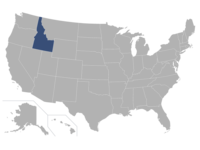
Boise, ID