Indiana’s Medicaid rolls shed people and costs. But what is the price?
Aug 07, 2026 | 5:00 am ET
Description
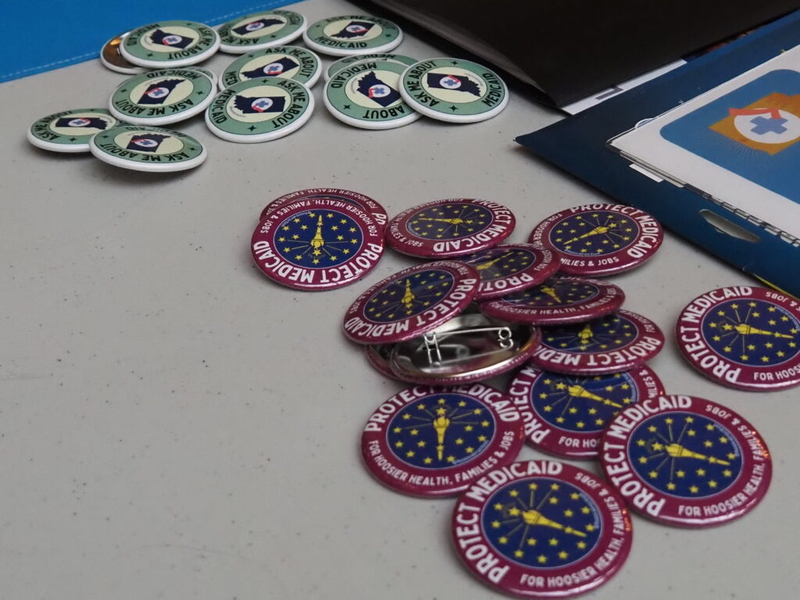
Pins urge people to “Protect Medicaid” at an April 1, 2025 rally. (Photo by Whitney Downard/Indiana Capital Chronicle)
We saw both sides of the Medicaid coin this week.
First, Senior Reporter Casey Smith delivered a three-part series digging into exactly why so many Hoosiers have dropped off the rolls for the state’s low-income health insurance program.
The stories were, at times, heartbreaking.
Parents spending hours, days and weeks to ensure their disabled children can go to the doctor, receive medications and other supports.
Other Hoosiers making appointments to take paperwork to a state office only to have no one around to help.
Missed mail. Losing benefits before the deadline to provide necessary verification.
Data from Indiana’s Family and Social Services Administration shows that, between March 2025 and June 2026, about 44.5% of those cases reviewed were renewed, 31.9% were closed for noncompliance and 7.7% were closed after a finding of ineligibility. The rest fell into a broad category, including pending.
And those kicked off for noncompliance often regain benefits a few weeks or months later, after resolving the paperwork issue. That’s called churn — and there is a cost to it.
The state, and therefore taxpayers, pay in administrative hours and salaries.
But our neighbors on Medicaid also miss doctor’s appointments, fall behind on prescriptions, and backslide on chronic illnesses while they wait for coverage to be reinstated.
Hospitals too feel the brunt of the situation, with many uninsured Hoosiers — including those removed from Medicaid — flooding the emergency rooms.
State officials have said they are tightening Medicaid rules and requirements to ensure it’s there for those who really need it. But these are people who really need it.
The savings
FSSA revealed the other side of the coin Wednesday, when the agency announced it had saved $300 million in Medicaid costs, sending it back to the General Fund for other purposes (or to collect interest in the state reserve accounts.)
It’s clear that Medicaid growth in certain areas, such as autism therapy, had grown faster than is sustainable. And, of course, it’s the responsibility of a participant to follow the rules, provide documentation and ensure their eligibility.
But the fact that compliance denials are occurring at three times the rate of actual ineligibility is a big problem.
It’s a bit reminiscent of the failed welfare modernization contract with IBM from 2009. The plan was to revamp case management and significantly reduce face-to-face meeting requirements via more computerized processes. But incomplete applications and delayed benefits ultimately doomed the project.
Beneficiaries are already struggling to keep up with the renewals, program changes and interim checks. And it’s going to get worse for up to 470,000 Hoosiers on the Healthy Indiana Plan who must start proving in 2027 that they’ve been meeting work or education requirements.
State officials need to ensure the system can bear the new load. One thing that could help is to use texting to reach families. Lower-income families move more often and some of the notices are simply not reaching them. Plus, the postal service isn’t as reliable as it used to be.
Software improvements and more staff are also clearly needed.
But all that comes at a cost. The question is, are we going to spend so much time and resources ensuring eligibility that we are costing the state and society as a whole?
Indianapolis, IN