Nearly 1 in 5 Rhode Islanders is Latino. The voter rolls haven’t caught up.
Aug 06, 2026 | 9:43 am ET
Description
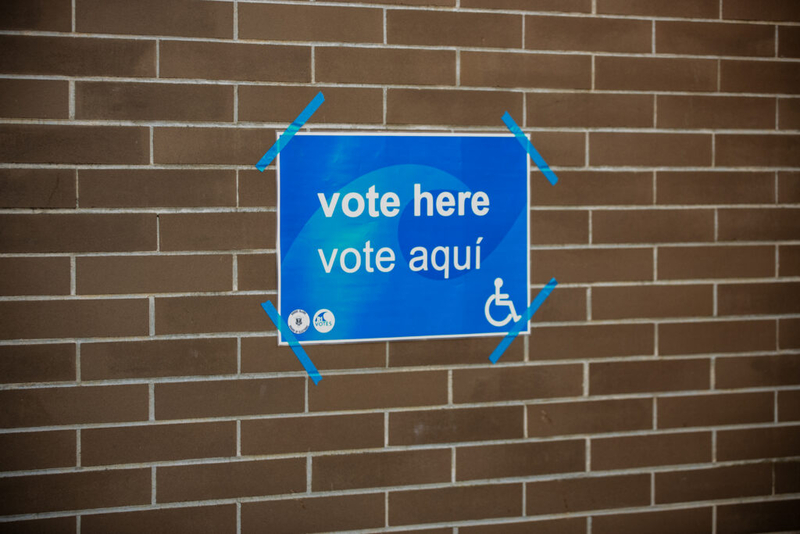
Four Rhode Island cities — Providence, Pawtucket, Central Falls and Woonsocket — are legally required to run bilingual elections under the Voting Rights Act. (Photo by Alexander Castro/Rhode Island Current)
Almost 1 in 5 Rhode Islanders is Latino now, roughly 220,000 people by the Census Bureau’s most recent count, up from 12.4% of the state in 2010. Central Falls is 69% Latino, and about 7 in 10 people who live there speak a language other than English at home. Pawtucket is roughly a quarter Latino. The voter rolls have not moved at anything close to that speed, and the distance between those two lines is where a surprising amount of Rhode Island policy gets settled without us.
Apathy is the easy explanation, partly because the real one takes longer to say out loud. Four cities in this state are legally required to run bilingual elections under the Voting Rights Act: Providence, Pawtucket, Central Falls, and Woonsocket. Whether it actually happens varies by city and by cycle. Federal filings estimate that nearly 3,000 voting-age citizens in Pawtucket alone have limited English proficiency, which means a translated mail ballot application and an untranslated one are the difference between a vote and a form that sits on the counter until it doesn’t matter anymore.
Then there is the part no law can fix. Voting is a habit, and habits get handed down. If your parents took you along to the school committee race, you know where your polling place is without looking it up. If your mother naturalized at 52, or came up somewhere elections decided very little, there is nobody at the kitchen table to tell you that Rhode Island closes registration a full 30 days out, that there is no same-day registration except in presidential years, or that this September the primary lands on a Wednesday because of Labor Day rather than the Tuesday every civics class promised. You find that out on your own, in your second language, off a state website, or you don’t find it out at all. Meanwhile the WhatsApp threads move faster than any correction, and families with mixed immigration status are weighing questions about visibility that most Rhode Islanders never have to think about once.
None of that is indifference. It’s an obstacle course, and it compounds. Campaigns work from lists of likely voters, so once a household falls off, the door knocks stop, the mail stops, and the information about what’s actually on the ballot stops arriving, which makes that household less likely to vote the next time, which pushes it further down the list. Legislators read the same data. A precinct that turns out gets its calls returned. A precinct that doesn’t, becomes a rounding error in somebody’s targeting spreadsheet.
... when a fifth of the state participates below its own numbers, the whole state gets governed on incomplete information. Plenty of Rhode Islanders who have never once thought of Latino turnout as their concern are living with the results of it.
That’s why this matters well beyond Latino families. School funding formulas, RIPTA routes, what rent does next year, how long you wait for a primary care appointment: those get decided by whoever showed up, and when a fifth of the state participates below its own numbers, the whole state gets governed on incomplete information. Plenty of Rhode Islanders who have never once thought of Latino turnout as their concern are living with the results of it.
We are not telling anyone how to vote. The Latino Policy Institute does not endorse candidates and has no plans to start. What we want is an electorate that looks like the state it lives in and that every eligible voter has the information and access to participate.
So here is the ask, and it has a date attached. Tonight, go to vote.ri.gov and confirm you are registered at the address where you actually live. If you have moved since 2024, there is a good chance you are not. Monday, Aug. 10 is the last day to register, or to switch your party affiliation, before the Sept. 9 primary. Miss it and you are waiting until Nov. 3, and the deadline for that one is Sunday, Oct. 4. Mail ballot applications close Aug. 19 and Oct. 13. Early voting for the primary election runs Aug. 20 through Sept. 8, and then Oct. 14 through Nov. 2 for the general election. Polls open at 7 a.m. and stay open until 8 p.m.
Then check on one other person, because that is the part that actually moves the numbers. The cousin who naturalized last spring and never got around to registering. The neighbor who has moved twice and never updated her address. The nephew who turned 18 in March and assumes somebody handled it. One conversation each, and the rolls look different by October.
We are running voter education workshops in English and Spanish www.thelatinopolicy.org/vote-providence and www.thelatinopolicy.org/vote-pawtucket. Bring your questions and bring your mail. We will walk through the registration form, the mail ballot application, and what the offices on this year’s ballot actually control, and nobody gets talked down to for asking something basic.
Check your own registration tonight. Then call the person you thought of while reading this. Monday is the tenth, and nobody in this state should lose a vote to a deadline they never heard about.
The Latino Policy Institute (LPI) is a nonpartisan research and policy organization dedicated to advancing equity and opportunity for Latino communities in Rhode Island. LPI produces data-driven research, shapes state and local policy, and builds the power of Latino communities to advocate for themselves. LPI is a proud member of the Protect Our Healthcare Coalition. Learn more at thelatinopolicy.org.
Providence, RI