Farm Bills have been a farce for years. This one seems tragic
Aug 06, 2026 | 6:50 am ET
Description
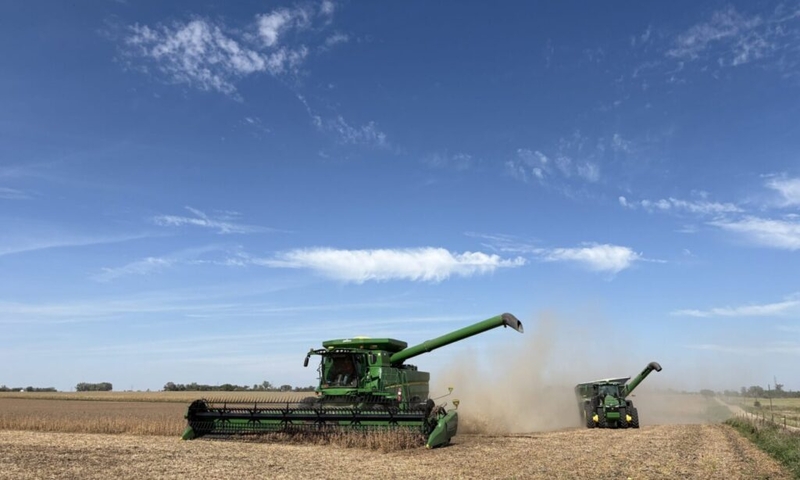
(Joshua Haiar/South Dakota Searchlight).
Lawmakers must stop pretending this Farm Bill works. As Charles Givens once said, “Doing more of what doesn’t work won’t make it work any better.”
The U.S. Senate has released its version of the Farm Bill and lawmakers are already calling it “a strong safety net” and “support for producers.” But out here in rural America, we can see plainly what Washington refuses to admit; this Farm Bill does not fix the problem. It doesn’t even try.
Facing challenges from loss of demand for our products through tariff trade wars, which has led to agriculture trade deficits since 2019, closing of USAID and cutting SNAP programs that undermine what farmers do, produce food for all. Congress doesn’t see this as a problem. It doesn’t try.
Instead, they left out mandatory country-of-origin labeling (mCOOL), year-round E15, meaningful antitrust enforcement, supply management, or any path back to parity pricing (cost of production plus a livable wage), the Senate bill protects corporate power leaving farmers exposed to the same broken system that has failed for decades. The loss of nearly 250,000 farms since 2014 bears this out.
Start with mCOOL. Lawmakers know exactly why cattle producers want it restored. Without mCOOL, beef imports are at record highs and increasing, but consumers have no way to know that it is imported. That omission benefits multinational packers, not American producers. Consumers want transparency. Farmers want fair competition. The Senate bill sides with neither. It instead supports the packers taking advantage in the middle.
But the most dangerous omission is the refusal to confront corporate concentration. Farmers cannot compete in markets that no longer function as markets. Four packers control more than 80 percent of beef processing. Two companies dominate seed sales. Fertilizer, chemical, and grain markets are vertically integrated to the point where farmers face monopoly power on both the buying and selling side. Yet the Senate bill contains no meaningful antitrust enforcement, no market transparency reforms, and no limits on abusive contracting or captive supply. Without structural competition, every other “support program” is just a subsidy for concentrated corporate power.
Then there is the foundation for any real farm policy: supply management and parity pricing. The Senate bill offers neither. Instead, it continues the same model that has failed, especially since 2014—encouraging overproduction, driving down farmgate prices, and then trying to backfill the damage with emergency payments.
Lawmakers know this model is broken. The evidence is overwhelming. Since the trade wars began farmers have received over $200 billion in emergency payments—ad hoc bailouts, disaster packages, market facilitation payments, pandemic aid, and “bridge payments.”
These payments were not signs of a healthy farm economy. They were proof that the Farm Bill as currently designed, cannot adjust to real-world shocks. When markets collapse, when corporate buyers squeeze prices, when global disruptions hit, the Farm Bill has no mechanism to stabilize farm income. Congress has had to invent emergency programs year after year because the underlying policy no longer works.
A Farm Bill that requires $200 billion in emergency patches is not a safety net. It is a failure of design.
The Senate bill does nothing to change that. It does not restore price floors tied to the cost of production. It does not manage supply to prevent overproduction and crashes. It does not rebuild competition. It does not give farmers the tools to earn a living from the marketplace instead of the federal treasury sending money to your mailbox.
What it does is preserve the status quo. A system where farmers take on more debt, rural communities lose population, land shifts to investors, and corporate buyers capture the value farmers create.
Lawmakers still have time to fix this. But you cannot fix it by pretending the current bill supports farmers. A Farm Bill without mCOOL, without year-round E15, without antitrust enforcement, without supply management, and without parity is not farm policy. It is a policy for corporations that profit from farmers’ losses.
Congress is writing a Farm Bill. Rural America needs a farm policy. Those are not the same thing. This moment is a chance to rebuild the system, not repeat it.

Jefferson City, MO