Oklahoma school leaders, state lawmakers at odds over State Question 844
Aug 05, 2026 | 6:30 am ET
Description
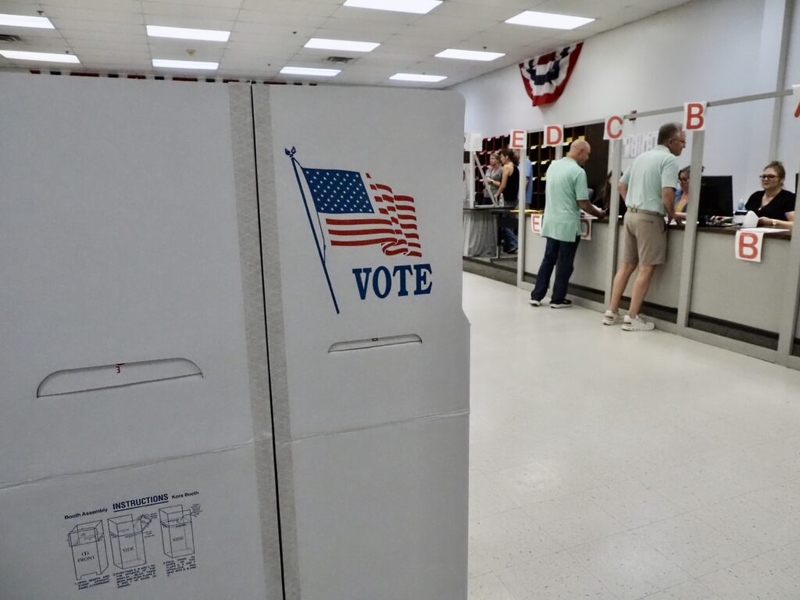
Voters mark their ballots in the Oklahoma County Election Board on June 11 in Oklahoma City. (Photo by Courtney Bell/Oklahoma Voice)
OKLAHOMA CITY — A nonpartisan state question appearing on Aug. 25 runoff ballots, which has vocal support from the state Capitol, has raised concerns that it could come at a cost to public schools.
State Question 844 would give the Oklahoma Legislature the authority to recalculate how much it should pay to local government entities, including school districts and counties, in reimbursements for a manufacturing tax incentive.
The incentive offers a five-year property tax exemption to manufacturers who set up new operations in the state. Under the law, the state must reimburse local entities for the property tax revenue a company is exempted from paying.
Public school leaders said these state reimbursements have added millions in funding that transformed their districts for the better. They contend that allowing lawmakers to reduce the repayments could negatively impact districts statewide, not only in their select areas.
Legislators say the reimbursement rates have become overly expensive and disproportionately benefit a few counties.
Last year, Oklahoma paid $88.6 million for manufacturing exemption reimbursements. About 40% alone went to entities in Mayes County.
The county, located northeast of Tulsa, contains the state’s largest industrial park and earns the biggest share of the repayments.
Much of the park’s developed areas sit within the borders of Pryor Public Schools. The school system received $24 million this year in reimbursements from the manufacturing exemption, likely the most of any Oklahoma district, Superintendent Lisa Muller said.
That money contributes significantly to her district’s operations and payroll, its budget for facilities and its capacity to pay school bond debt.
“It’s revolutionized what we’re able to do within Pryor Public Schools,” Muller said.
The manufacturing exemption reimbursements help generate enough local revenue that some districts, like Pryor, don’t receive any money from the state aid formula, the chief driver of state funding for public schools. Losing the reimbursement revenue could make Pryor and other districts once again reliant on state funding formula dollars, Muller said.
Increasing the number of schools that rely on a finite amount of formula funds would proportionally decrease the dollars available to each district statewide, Muller and other local superintendents told Oklahoma Voice.
House Speaker Kyle Hilbert, R-Bristow, said the claim is simply a “scare tactic.” Rather than paying higher reimbursements to a few districts, he said lawmakers could redistribute some of those funds to schools statewide.
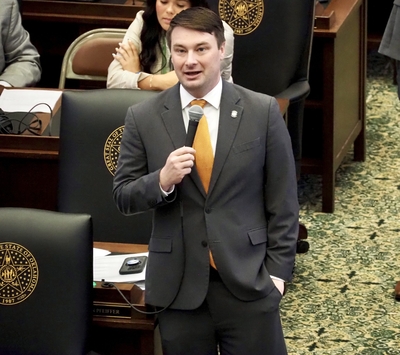
He said it’s not the Legislature’s intent to change any reimbursement rates that are already established. Rather, he pledged lawmakers only would try to negotiate new deals that arise in the future.
Hilbert said lawmakers should be given input in the reimbursement amounts, particularly if state officials believe a new manufacturer has received too high of a property value assessment.
“As it stands right now, a county assessor assesses one of these properties, and whatever the assessed value is, the state of Oklahoma has to pick up the tab,” Hilbert said. “It’s a blank check. The state of Oklahoma doesn’t have the ability to contest this. So, one county assessor gets to determine what the check is going to be, and the other 76 counties have to write the check.”
If lawmakers wanted to eliminate all current and future reimbursements, they could by deeming every industry ineligible for the program, he said. SQ 844 doesn’t introduce that possibility.
The Legislature attempted to do so in 2020, but Gov. Kevin Stitt vetoed it.
“Much of the fearmongering about (SQ) 844 hurting schools and the fear of what the Legislature would potentially do if this state question passed, the Legislature has already had the authority to do,” Hilbert said. “Those are things that the Legislature could already do if it desired to.”
In 1985, the Legislature put the manufacturing tax exemption program on the ballot, and Oklahoma voters agreed to enshrine it in the state Constitution. One percent of the state’s personal income tax and corporate income tax revenue is dedicated to paying reimbursements to local governments, according to the Oklahoma Policy Institute.
Over time, criteria to qualify for the exemption has expanded and changed. The program’s cost has grown far beyond the fund dedicated to support it, requiring state lawmakers to add tens of millions in supplemental appropriations, Hilbert said.
Public schools alone needed a $64.8 million supplement in the 2025 fiscal year to cover all reimbursement obligations.
Minco Public Schools Superintendent Kevin Sims said if the program is too expensive, the Legislature over the years should have put more limits on who could qualify for the tax exemption.
Lawmakers already have whittled certain industries out of the program. They disqualified wind energy farms in 2015, data centers in 2021 and will phase out solar farms in 2028.
Sims said his district, about 30 miles southwest of Oklahoma City, received a “huge” benefit from past manufacturing reimbursements for a nearby wind farm.
The repayments enabled Minco to pay teachers $5,000 above state minimum salaries, make improvements to the district’s football field and build a new high school, middle school and auditorium, he said. A new solar farm is expected to generate more reimbursement revenue for Minco in the coming year.
Sims said he understands “there’s only so many dollars” the state can spend, but SQ 844 presents “a pretty costly situation.”
“The Legislature created this, and they’re trying to create a solution,” he said. “Schools and counties are pretty negatively impacted, in my opinion, from that solution.”
Oklahoma City, OK