Minnesota’s most aggressive drug prosecutor keeps getting overruled. He’s running unopposed (again).
Aug 04, 2026 | 9:55 am ET
Description
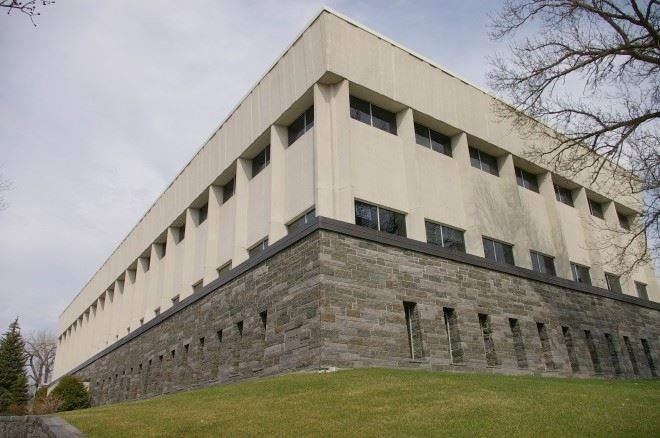
Polk County Government Center in Crookston, where the Drug War is still going strong thanks to County Attorney Greg Widseth. (Courtesy photo)
An alleged fentanyl dealer in East Grand Forks is getting a new trial after prosecutors botched their instructions to the jury that convicted him.
Polk County Attorney Greg Widseth “plainly erred by misstating the law” governing drug conspiracies, the Minnesota Supreme Court ruled last month. To obtain the first-degree conspiracy conviction he sought, he needed to demonstrate that the alleged dealer knew that the amount of drugs sold by the dealer’s co-conspirators crossed a statutory weight threshold.
Instead, Widseth’s team told jurors that the defendant’s knowledge of the quantity of drugs didn’t matter at all, a factual error severe enough that it prompted the Supreme Court to vacate the most serious convictions and order a new trial.
It’s the latest embarrassment for a county attorney who has spent decades pushing the law to its limits in pursuit of severe penalties for drug users.
‘Non-standard and punitive’: Aggressive drug charges in rural county raise civil liberties concerns
Widseth has previously made headlines for obtaining nearly the entirety of the state’s convictions under an archaic “drug tax stamp law,” a drug war relic that prompted ridicule from the lawmakers who eventually repealed it. In 2024, a Reformer investigation revealed Widseth was exploiting a different legal loophole to charge a woman for possession of bong water, again prompting swift action from the Legislature.
A subsequent Reformer investigation found that Widseth was going to unusual lengths to obtain enhanced penalties under a “drug-free zone” law, including requests to the East Grand Forks City Council to designate more public lands as “park” areas where the enhancements apply. It’s “virtually impossible for any person to traverse the city without finding themselves within a school or park zone,” as a county public defender put it several years ago.
Thanks in large part to Widseth’s aggressive approach, Polk County’s incarceration rate is three times higher than the Minnesota average. But beyond arrest and imprisonment numbers it’s unclear from the available data whether life in the county is any better as a result: The county’s drug overdose death rate is similar to demographically equivalent counties in northwestern Minnesota. Overall crime rates show a similar pattern.
Widseth has held the county attorney’s office for more than 20 years, and one obvious rejoinder to his critics is that if voters are unhappy with his approach they can simply kick him out of office. “If voters disagree with the decisions made by [the county attorney’s] office, they can voice that opinion at the ballot box,” as a local judge put it in a 2022 ruling upholding one of Widseth’s charging decisions.
But Polk County voters have been offered no alternatives, as Widseth has run unopposed in every election since 2002. That’s not unusual: All of Minnesota’s 87 counties are electing prosecutors this year, and as of this writing there are multiple candidates filed in just 10 of those contests.
Local prosecutors hold a tremendous amount of discretionary power, deciding who gets charged, what they get charged with, and whether to seek justice via a trial or a plea deal. Elections are the primary check on that power, but in Minnesota and elsewhere that check is largely theoretical.
In the absence of electoral competition, accountability for rogue prosecutors is slow and often expensive, arriving well after the damage has been done. It can come in the form of a legislative push to close an obscure loophole, or a critical news story shining light on an abusive practice, or a Supreme Court ruling on a prosecutorial error after years of litigation.
But for every conviction that gets that scrutiny, countless charging decisions never will.

Saint Paul, MN