A bureaucratic move could force Louisiana childcare sites to close their doors
Aug 04, 2026 | 9:17 am ET
Description
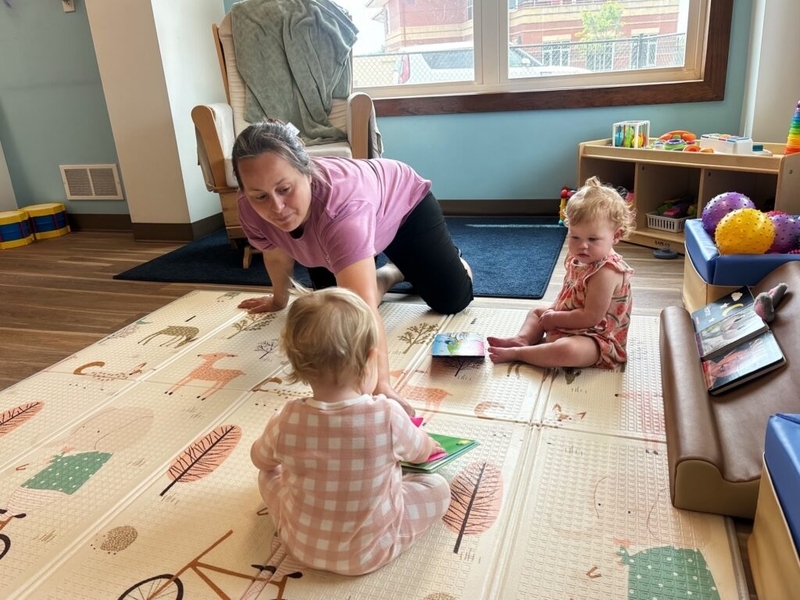
Some childcare providers in Louisiana could go out of business after the state cut funding for a program that connected in-need families with their facilities. (Photo by Amelia Ferrell Knisely/West Virginia Watch)
On June 30, early childhood care providers in Louisiana received notice about children at their facilities who would no longer be part of the state’s Birth-to-3 Program. This program provides high-quality childcare to in-need children age 3 and younger, Louisiana’s most underserved age group.
Unlike previous years, the Louisiana Department of Education notified families that their children were being removed from the B-3 Program. Since 2019, local community networks in every parish have helped families connect with available childcare in their community and apply for state programs.
This spring, the state took over the processing of paperwork from local support networks, meaning families received their notices to reapply for the B-3 Program from Baton Rouge, not someone in their town or community. Not recognizing the centralized notice, many families missed the annual reminder to reapply and did not submit the paperwork to show they were still eligible for the program.
On paper, this is an administrative action. Inside our childcare centers, it is an economic crisis.
The children in question were dropped from the program July 6, but our classrooms were still full July 7. They have been full every day since.
A month later, these children are still at our early childcare centers, eating breakfast, learning their letters, held by teachers who will not turn a child away over a government form.
State funding was pulled but the children were not. Their parents still have jobs and obligations that depend on our doors staying open.
Ashley Jolly, owner of Jolly Kids in St. Bernard Parish, described the position her center now faces.
“We have infants who have been attending for almost a year with no reimbursement,” she said. “One family is now leaving the program, and we’ve lost more than $19,000 in revenue on just two children. Childcare centers are small businesses. We simply cannot survive like this.”
In Port Allen, Stephanie Brown, owner of The Growing Tree Learning Academy, learned that 18 children at her center were expected to lose B-3 funding because of missing applications.
“That’s not just paperwork, that’s 18 children, 18 families and a devastating financial blow to our center,” Brown said.
Similar stories are being repeated in parishes across the state, and the providers hit hardest did everything asked of them. They called parents, printed applications, translated documents and stayed late helping families through the system. Now they are absorbing losses they did not create.
Childcare centers close not from a single policy decision but from an accumulation — a reimbursement that arrives late, a reimbursement rate set below what care actually costs to deliver, a small business insurance premium that jumps, a document requirement added midyear.
Each one looks manageable on its own. Together, they require a business to absorb each costly shock in the system while charging families less than their work costs.
The state’s B-3 funding cut is the latest weight on a childcare system’s load already at its limit.
When a child loses a subsidy, the family’s need for care does not disappear. A parent starts doing math that has no good answer, facing a choice between rent or tuition. A child loses the consistency and relationships that matter most in the earliest years of life.
The hardest question still has no answer: Where are these children supposed to go?
If one center closes, there are not enough seats elsewhere to absorb the displaced children they serve. In rural parishes, a center losing funding might be one of only a few licensed providers for miles.
Providers kept our end of a long bargain with this state. Louisiana officials asked us to raise early childcare standards, and we did. We carried children on our rosters while payments lagged because we trusted the system to catch up.
We are overwhelmingly small businesses, many owned by women, operating on margins thin enough that a single disruption decides whether we open next month.
July has tested that trust, but there is still time to choose how this ends.
Providers are not asking for special treatment. We are asking for fairness.
No child should lose care over paperwork, and no small business should carry losses for circumstances beyond its control.
Providers have stood beside Louisiana families through hurricanes, a pandemic and every economic disruption in between. A closed center is not a gap the marketplace fills quickly. It is a licensed classroom gone, a teaching team scattered and dozens of families starting over on a waitlist.
Some of what closes this summer will never reopen. The losses are still mounting, and every family in Louisiana has a stake in how this is resolved.
Baton Rouge, LA