Medicare for All and West Virginia
Aug 04, 2026 | 6:00 am ET

Description
A hospital “H” sign. (Photo by Sarah Ladd/Kentucky Lantern)
“Analyses show that administrative overhead, insurer profit margins, and PBM-related practices account for a significant share of premium spending. Roughly 16 cents of every premium dollar goes to profits and administrative costs, making overhead the second-largest category of premium spending.” — Rep. Carol Miller, R-W.Va.
I agree 100% with Rep. Carol Miller. What I do not understand is why she and others in both the GOP and the Democratic Party do not endorse the proven way to do away with the overhead — single payer. Medicare has 2% overhead — the other 14% could go to giving the uninsured coverage instead of advertising and million dollar executive salaries.
We must not stick our heads in the sand and continue with a Dickensian free enterprise system; the uninsured sick be damned. Despite her rhetoric, Miller and other elected officials clearly do not want to talk about the elephant in the room — health insurance coverage trends.
In 2010, prior to the passage of the Affordable Care Act (Obamacare), 18% of the U.S. population was uninsured. By 2024, that number had dropped to 8%. But that still means that we have too many who are uninsured.
For example, the uninsured rate for those 19 to 34 years old is 14%. Many of them are working at jobs without coverage. So, the private model insurance system is not only failing, but also failing at nonacceptable rate when it comes to covering the working poor.
In West Virginia, the situation is more stable than most red states. For example, Texas has 19% uninsured. However, in West Virginia the uninsured are still at 8% of the population, about the national average.
For those who are still insured, the situation is problematic. In West Virginia, premium contributions plus deductibles for basic family coverage amount to over 12% of a family’s total income.
Further, In West Virginia, premiums for those enrolled in full family coverage are above the national average. They are going up substantially due to the Trump era cuts in ACA subsidies.
The federal poverty level for a single American is $15,960 for 2026. Lowest cost plan premiums for someone 45 years old who made 401% of the federal poverty level — and therefore received the enhanced premium subsidy — have jumped from $170 monthly in 2025 to $675 now. The cost jump is even greater for someone 55 who made 400% of the FPL — from $18 to $1,041 now. The situation is even worse for a person aged 64 who made 400% of the FPL but was not yet eligible for Medicare, from $0 to $1400 in 2026.
Here is how this works out. Emily is a hard-working senior with a spotless employment record, but she works for a struggling small firm with no insurance coverage. She has an income of $64,000 in 2026, but is paying out $16,800 for a plan with minimal coverage — more than a fourth of her pre-tax pay.
And the situation gets worse every year. Larger companies are absorbing more of the premiums, but they are moving their operations out of the United States in part because of steadily rising health care costs. That means fewer jobs for Americans, especially blue-collar jobs in manufacturing. More and more employers who do stay are dumping the cost of premiums onto their employees and increasing deductibles.
The answer to our problem is simple technically — expand Medicare. A single-payer system will absolutely restrict the rise in costs and cover every citizen. Single payer or something similar is what all developed nations have enacted. Their per capita costs are much less and their mortality and morbidity rates are lower.
We should expand Medicare incrementally, expanding traditional Medicare year by year, eventually making it cover all those over 55, like it does now for those over 65. In 2027, folks who are 64 would buy in. In 2028, people who are 63 would buy in, and so forth. It would be slow, but eventually everyone over 55 would be covered.
Then, the results could be evaluated and it could be expanded to other groups. And, if the impact on providers is minimal, as I believe it would be, the phase-in could be revved up.
Elected officials of good faith on both sides of the aisles must come together and propose Medicare expansion as a bi-partisan compromise for the good of the nation. If Congress was dedicated to helping our country, rather than lobbyists funding their campaigns, passing this legislation would be simple.
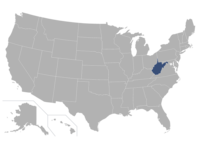
Charleston, WV