More than half of statewide races to be decided in September primaries
Aug 04, 2026 | 7:12 am ET
Description
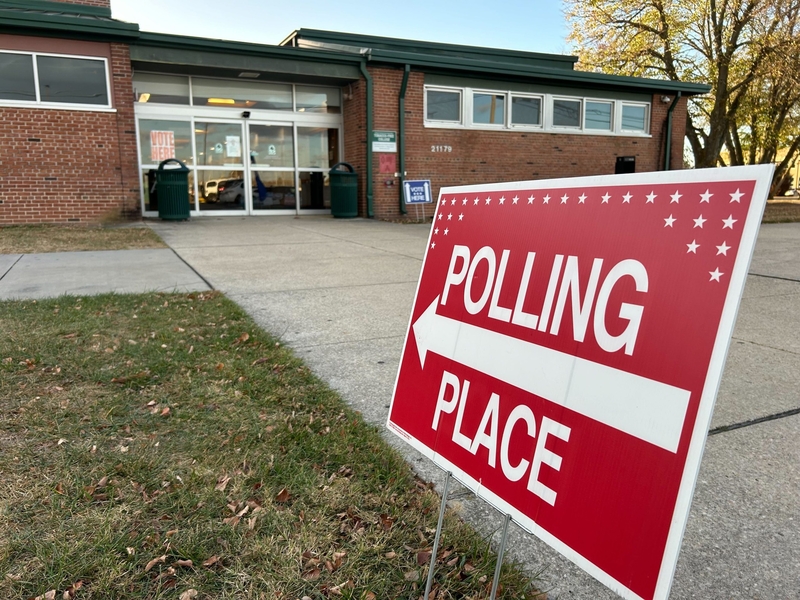
Photo courtesy of Spotlight Delaware
Why Should Delaware Care?
Voters’ ability to make systemic changes to the direction of their local or state government is more likely to occur in the September primary election rather than the November general election due to uncontested races. That is a trend that has only grown deeper in recent years.
More than half of all statewide or statehouse races will be decided by voters in the September primary elections as they lack a general election challenge – a sum that has steadily grown over the last five electoral cycles.
The November 2026 midterm elections will be the least competitive for statewide races in years, including the two races at the top of the ticket. Only Democrats have filed in the races for attorney general and state auditor.
It’s the first time in at least a decade that Republicans failed to challenge Democrats for a statewide office, according to a Spotlight Delaware analysis.
The minority party has not held a statewide office since former State Treasurer Ken Simpler lost his re-election race in 2018.
At their May party convention, Republicans encouraged former U.S. Attorney Julianne Murray to seek the party’s nomination for attorney general, but she ultimately declined. Murray, who had unsuccessfully run for attorney general and governor previously, said that she was not prepared to start another campaign.
Republicans could still nominate a candidate to appear alongside the winner of a three-way Democratic primary on the November ballot, but party leaders would have to approve that nomination by Sept. 1 under state law.
Last week, Dave Graham, an Army veteran and accountant who has unsuccessfully sought both the governor’s and attorney general’s office in the last 12 years, announced that he was seeking the party’s nomination.
The attorney general does not have to be a licensed lawyer — Graham is not — but both parties have historically nominated candidates who are.
Delaware Republican Party Chair Gene Truono, who would have to sign off on Graham nomination, did not respond to a request for comment Monday.
A look at the statehouse
According to Spotlight Delaware’s analysis, 60% of this year’s 55 statewide or statehouse races are uncontested or only feature a primary election.
That’s roughly double the number of races compared to 2022 and 2018, the last two midterm elections when public interest is typically lower.
That takes particular importance this year as Democrats are vying to pick up at least one additional seat to give the party a two-thirds supermajority. That would allow Democrats to amend the state Constitution without a single Republican vote.
In the House of Representatives, 25 of the 41 races either have no challenge at all or will be decided in a primary election. That includes 12 Democrats who are completely uncontested this year – nearly half of the caucus.
Five House Democrats will only have to defend their seats from interparty challenges, often from candidates supported by the Working Families Party, a progressive political organization. Meanwhile two open seats, brought upon by the retirements of Rep. Debra Heffernan and the State Senate campaign by Rep. Mara Gorman, will only feature Democratic candidates.
Just six Democratic representatives – Josue Ortega, Rae Moore, Krista Griffith, Kim Williams, Alonna Berry and Eric Morrison – must overcome both primary and general election challenges this year.
In the State Senate, three incumbents – Democrat Marie Pinkney and Republican leaders Gerald Hocker and Brian Pettyjohn – will get a free pass with no challengers.
Public will get less debate, expert says
Sam Hoff, professor emeritus of history and political science at Delaware State University, said the trend of less competitive elections will likely only further inflame growing polarization.
He noted that not putting up a general election challenge only serves to give a majority party more leverage when it comes to actually governing. By keeping elected officials on their toes about a future challenge at the ballot box, voters may see greater negotiation and compromise between the parties.
“The question that should be asked is why Republicans didn’t do that? The answers that you know, from its face, is that they didn’t think it would be competitive, or they didn’t have the funds or resources, or the candidate him or herself said that they would cover things in a sort of independent streak from the party,” he said.
“Unfortunately the old adage is true, ‘You can’t win if you don’t play.’”
Dover