The future of Alaska’s pollinators
Aug 03, 2026 | 7:28 pm ET
Description
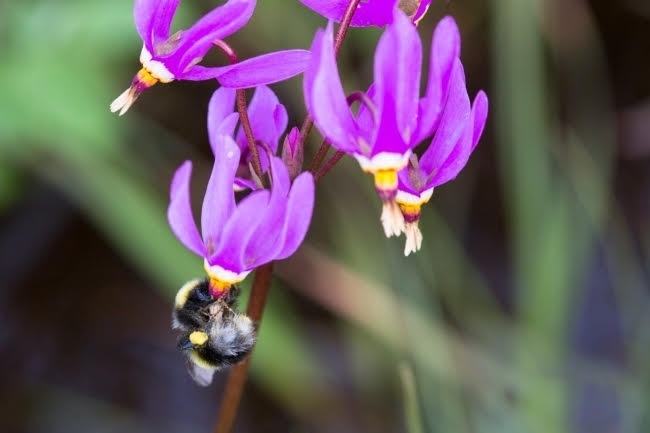
A bumblebee visits shooting stars on June 21, 2023. These early bloomers flower along coastal meadows and sea cliffs. Note the pollen sac on the bee's hind legs. (Photo by Lisa Hupp/USFWS)
On an August evening in Interior Alaska, the sun hangs low over the hills as a bumblebee makes its final foraging trip of the season. The fireweed is fading, the nights are cooling, and the bee will soon retreat underground to overwinter. Moments like this — quiet and easy to overlook — capture the delicate balance that defines life for Alaska’s pollinators.
As the state continues to warm and ecosystems shift, the future of Alaska’s bees will depend on how well they can adapt to rapid environmental change — and how well Alaskans understand and support the landscapes these insects rely on.
A Changing North
Alaska is warming faster than almost anywhere else on Earth. Earlier springs, hotter summers and shifting precipitation patterns are reshaping the timing of plant growth and flowering. These changes affect the seasonal rhythms that bees depend on.
Researchers are watching several key trends:
- earlier snowmelt that may cause flowers to bloom before bees emerge,
- longer growing seasons that may favor some species over others,
- drying soils and shrinking wetlands that alter nesting habitat and
- shrubs and trees expanding into the tundra, changing plant communities.
Some bee species may adapt or even expand their ranges, while others may struggle to keep pace.
The Challenge of Invasive Plants
Invasive species such as white sweetclover and bird vetch are spreading along roadsides, river corridors, and disturbed soils. These plants can quickly dominate an area, reducing the diversity of native flowers that bees rely on throughout the season. While invasives may offer nectar, they often form dense stands that crowd out the varied plant communities needed to support different bee species.
Managing invasive plants through early detection, removal and responsible gardening choices will remain a key conservation priority.
Why Long‑Term Monitoring Matters
Because Alaska is vast and its ecosystems are changing quickly, long‑term monitoring is essential. The Alaska Bee Atlas, the state’s first coordinated effort to document bee diversity and distribution, is providing the baseline data needed to understand how bees respond to environmental change.
Specimen‑based records collected today will allow future scientists to track shifts in species ranges, changes in abundance, new arrivals from the south and long‑term trends in habitat use.
Without these data, it would be difficult to detect subtle but important changes in Alaska’s pollinator communities.
Opportunities for Conservation
Despite the challenges ahead, there are reasons for optimism. Alaska still has vast, intact landscapes that support healthy pollinator populations. Many native bees are adapted to cold climates and variable weather, giving them resilience that bees in other regions may lack.
Alaskans can support pollinators by:
- planting flowers that bloom from spring through fall,
- protecting nesting habitat,
- reducing pesticide use,
- managing invasive plants and
- participating in community science programs.
These actions, taken together across the state, can help maintain the diversity and abundance of Alaska’s native bees.
A Future Shaped by Alaskans
The future of Alaska’s pollinators will be shaped by the combined effects of climate, habitat, and human choices. The research happening today — from the Bee Atlas to long‑term ecological monitoring — is giving Alaskans the tools they need to make informed decisions.
On that August evening, as the bumblebee disappears into the fading fireweed, it carries with it the story of a changing North. The choices Alaskans make in the years ahead will help determine how that story unfolds — and whether future generations will still see bees working the summer flowers of Alaska.
A Future Shaped by Alaskans
The future of Alaska’s pollinators will be shaped by the combined effects of climate, habitat, and human choices. The research happening today — from the Bee Atlas to long‑term ecological monitoring — is giving Alaskans the tools they need to make informed decisions.
On that August evening, as the bumblebee disappears into the fading fireweed, it carries with it the story of a changing North. The choices Alaskans make in the years ahead will help determine how that story unfolds — and whether future generations will still see bees working the summer flowers of Alaska.
I have no affiliation with the Alaska Bee Atlas, the University of Alaska Cooperative Extension Service, the U.S. Geological Survey, or the U.S. Fish & Wildlife Service. This series is based on the public‑domain research, outreach, and scientific work produced by these federal and state organizations. I am deeply grateful for their contributions to pollinator science and public education. The views expressed in this series are my own, based upon review of Federal and State published information.
Juneau