If the facts are on your side, show your work.
Aug 03, 2026 | 2:22 pm ET
Description
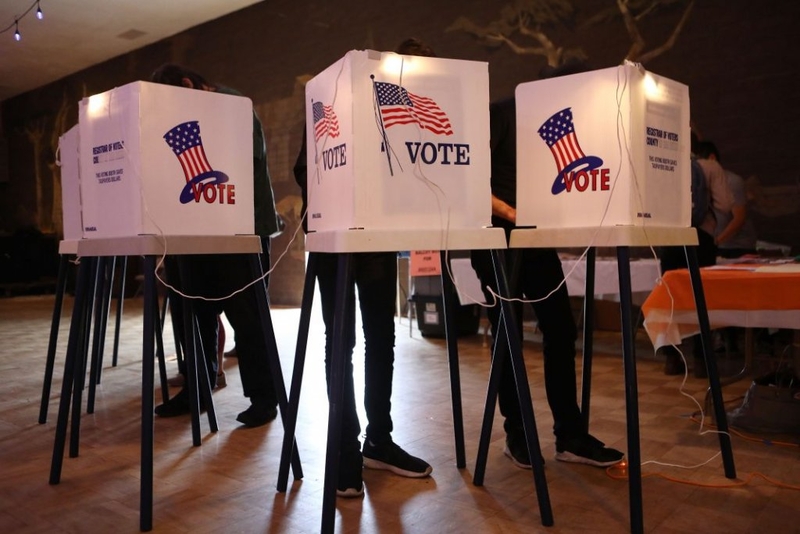
Voting booths. (Photo: Mario Tama/Getty Images)
Former Elections Liaison Dallas Woodhouse recently argued that North Carolinians should judge our election system “by facts rather than assumptions.” On that point, we agree. Public confidence in our elections should rest on evidence, not rhetoric. But that principle carries an important obligation: if Woodhouse and the Auditor’s Office ask the public to judge their work by the facts, then they must be willing to produce the records that allow the public to verify those facts.
Throughout his essay, Woodhouse points to increases in early voting sites, expanded voting hours, and additional weekend voting opportunities. Those statistics may well be accurate. But they do not answer the questions that many North Carolinians have been asking for months.
How were those decisions made? Who recommended particular early voting sites? Why were some locations supported while others were opposed? And perhaps most importantly, why do so many of the most consequential conversations appear to have absolutely no paper trail? Government decisions of this significance should produce emails, memoranda, recommendations, and other records that allow citizens to understand not only the outcome, but the process that produced it.
Instead, over the past several months, a different pattern has emerged. Public records requests have been met with months-long delays, incomplete productions, supplemental requests made necessary because responsive records were omitted, and shifting explanations for why records could not be produced. When records have eventually surfaced, they have often revealed more involvement than officials initially acknowledged. That should concern every North Carolinian, regardless of political party.
Woodhouse argues that the Auditor’s Office merely offered recommendations to county boards, just as advocacy organizations do every day. If that is true, there should be no hesitation in releasing the communications documenting those recommendations. Let the public read them. Let people decide for themselves whether those communications were simply recommendations or something more.
Consider the decision to discontinue providing printed voter registration forms. That decision did not materialize out of thin air. Someone raised the issue. Someone made a recommendation. Someone approved the change. There should be emails, memoranda, drafts, or other records documenting how and why that decision was reached. Yet months after the NC Voter Protection Alliance requested those records, we’re still waiting for a complete production. If the officials responsible for administering North Carolina’s elections believe the facts support that decision, then the records supporting it should be available for the public to review.
The same questions arise with communications between Raleigh and county boards of elections. Records that have eventually been produced demonstrate that state officials were actively discussing early voting plans and polling locations with county election officials. Yet many of those communications came to light only after persistent follow-up and supplemental requests. If the facts support the Auditor’s Office’s actions, why were so many of those records missing from the initial productions?
Most recently, the watchdog organization American Oversight accused the Auditor’s Office of violating North Carolina’s Public Records Act after official text messages involving Woodhouse were absent from the agency’s response to its public records request, despite those communications later becoming public through news reporting. The Auditor’s Office now argues that because Woodhouse has resigned, it no longer has access to records stored on his personal devices.
That dispute is about far more than one employee’s text messages. It reflects a recurring pattern in which records are delayed, omitted, or explained away until outside reporting demonstrates that they existed all along. If Woodhouse wants the public to judge his work by the facts, then he and the Auditor’s Office should be committed to producing the records that document those facts.
Woodhouse concludes by urging readers to judge election administration by facts rather than rhetoric. Again, I agree.
But facts are not true because you declare them to be. They are established because citizens can independently verify them. That’s why public records laws exist. They allow the public to evaluate the evidence rather than simply accept the government’s version of events.
If Woodhouse and the Auditor’s Office are confident that the facts support their actions, then they should have nothing to fear from transparency. Produce the records. Show the emails. Release the memoranda. Let North Carolinians judge the evidence for themselves.
If the facts are truly on your side, you shouldn’t be afraid to show your work.
Terence Everitt is the executive director of the North Carolina Voter Protection Alliance and a former Democratic state lawmaker from Wake County.
Raleigh, NC