Maryland’s case for a statewide housing revolving fund
Aug 03, 2026 | 9:25 pm ET

Description
Maryland could go a long way toward solving its housing shortage with a revolving housing fund, which is already successful in Montgomery County, write Zachary Marks and Tom Coale. Here a worker snaps a chalkline on a modular home in Gallup, N.M., in a file photo from 2018. (Photo by Tech. Sgt. Austen R. Adriaens/U.S. Air National Guard)
Maryland’s housing goals are big. Gov. Wes Moore has declared housing the foundation of economic opportunity, and each session he and the General Assembly have advanced legislation to ease land use and permitting. Maryland’s Department of Housing and Community Development (DHCD) has guided more than $300 million in housing investments this year alone – nearly all through the Federal Low Income Housing Tax Credit (LIHTC) program.
While the ambition is strong, land use reform is muted by a lack of financing for market-rate and affordable communities alike. With no budgetary relief on the horizon, Maryland needs a durable financing tool that doesn’t depend on any single budget cycle’s surplus and can produce housing at scale without draining resources needed for LIHTC-financed affordable housing.
That tool must multiply public dollars instead of simply spending them – a state-level housing revolving fund, capitalized through Maryland’s bond authority, designed to fill the gap that stops approved housing projects from breaking ground.
The mechanics are straightforward. Maryland issues bonds to seed a fund – we recommend $250 million to start – administered by DHCD. The fund provides subordinate financing at below-market rates, covering 15% to 30% of a project’s capital stack above what banks will lend. Developers repay the fund with interest, servicing the bonds, while principal recycles into new projects as they’re built and leased – a one-time public commitment that becomes a permanent, self-sustaining engine.
The proof this model works, and is sustainable, is inside Maryland’s borders.
Montgomery County’s Housing Opportunities Commission created a $100 million Housing Production Fund, funded through an HOC bond and a matching county appropriation. HOC uses the fund to replace private equity in market-rate developments, taking ownership positions. Cutting the cost of that equity, from the 15% to 20% private investors demand to 5% lets stalled projects proceed with greater affordability and renter protections.
That single fund is projected to produce 6,000 residential units over the bond’s 20-year life, with 1,800 permanently affordable. Interest on the fund’s loans flows back to the county to offset the annual appropriation – a structure that costs taxpayers almost nothing while generating housing at scale. Over time, HOC gains ongoing cash flow and asset appreciation it can reinvest in more housing.
Private developers have flocked to the program because HOC brings certainty of execution to deals they’ve put millions at risk to design and entitle – capacity that ensures strong communities and lets the model scale if the fund expands.
Montgomery County runs a complementary $14 million Affordable Housing Opportunity Fund – a rapid-acquisition vehicle, matched 3-to-1 by private lending, that helps preserve at-risk affordable properties faster than federal programs can.
What Montgomery County built at the county level, cities and states are building at scale. HOC’s model is widely credited as the inspiration for housing production funds from Atlanta to Chicago, and for new state-level funds in Michigan, Massachusetts and New York. Nashville’s mayor recently proposed a similar bond-backed loan fund, calling it the first phase of a larger program – not a one-time fix, but infrastructure that compounds.
The track record is popular: Austin voters approved $250 million in bonds in 2018 and returned four years later for $350 million more, and Columbus went from $50 million in 2019 to $200 million in 2022 to $500 million last November – the largest local housing investment in the city’s history – after its commitment helped create or preserve 7,000 affordable homes.
None of those cities solved their housing crisis in a single vote. They established the mechanism, demonstrated results, built public confidence, and returned for more. Maryland should follow the same path, with structural advantages Nashville, Austin, and Columbus lack: DHCD, a housing finance agency with decades of LIHTC administration, multifamily bond authority, and developer relationships.
Leverage helps too – New York’s $100 million fund attracted another $115 million in private capital, and Maryland could expect similar.
The fund’s structure should prioritize production and include mixed-income flexibility from the start. Montgomery County’s lesson: Funds built exclusively around deep affordability serve the fewest projects and can’t meaningfully grow supply. A state fund supporting workforce and market-rate production alongside deeply affordable units will deploy capital faster, generate more returns and last longer – while requiring a meaningful affordability set-aside to participate.
Maryland faces a housing deficit of roughly 96,000 units, concentrated in jurisdictions with strong job markets and rents. It has the bond capacity and infrastructure to meet that need. The model is validated in our own backyard and copied across the country.
Start with $250 million. Build the infrastructure. Come back for more.
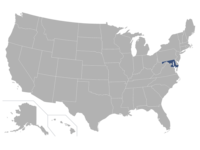
Annapolis, MD