Renee Shaw has no regrets (and plenty of gas left in the tank)
Aug 03, 2026 | 5:30 am ET
Description
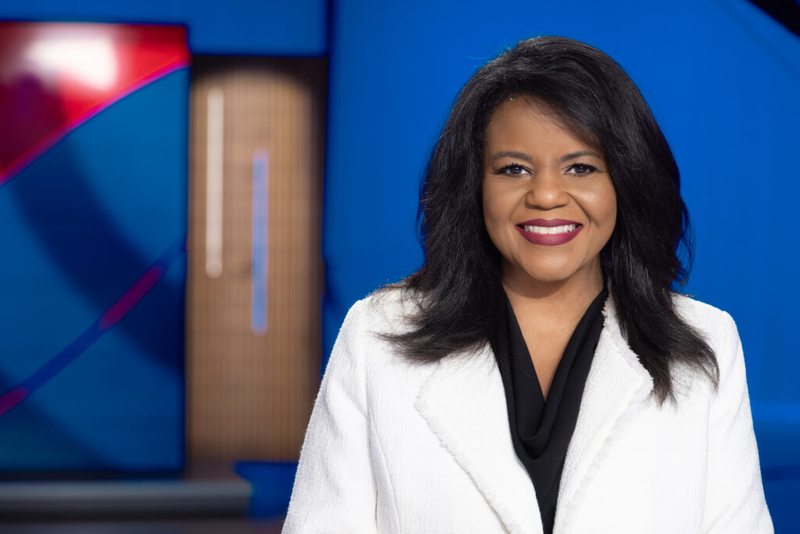
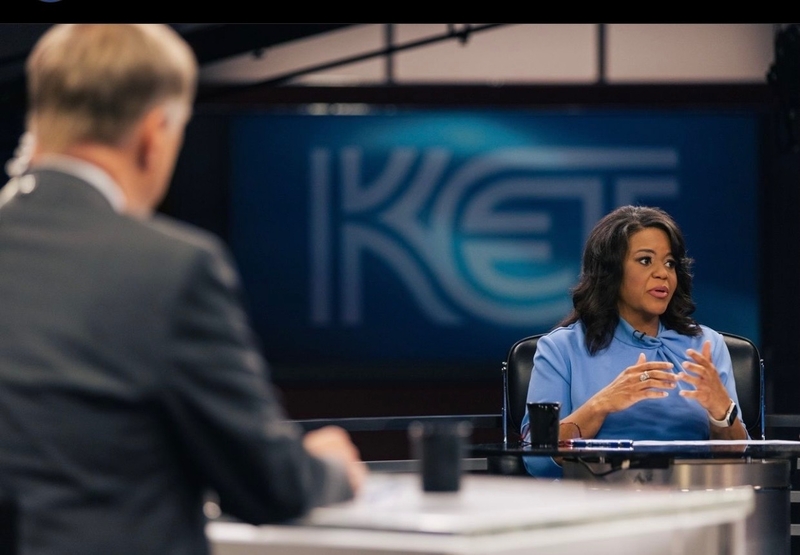
KET journalist Renee Shaw (Photo courtesy of KET)
Editor’s Note: One of Kentucky’s most familiar faces is leaving our television screens. Renee Shaw has announced she is retiring from Kentucky Educational Television, where for the past 29 years she has covered innumerable stories, anchored thousands of shows, interviewed hundreds of people, and overall, brought Kentucky’s public policy issues into our homes and consciousness. It seemed like a good time for a trip to her KET office for an interview looking back on her career, on journalism, on Kentucky itself. This has been lightly edited for space and clarity.
Linda Blackford: Okay. Renee Shaw, queen of Kentucky journalism. So you have big shoes here. You do most of the public policy journalism from the only public television station in the state. You cover the legislature. You cover politics. You are leaving big shoes. Why now?
Renee Shaw: Well, it’s the right time. I’ve always thought you want to go out on top of your game, and I feel that I have, given not just the last 10 years that I’ve been the host of Kentucky Tonight, but the 20 years prior to that. I’ve done it all, from working with Al Smith to working with Bill Goodman, and I came up through the ranks as an associate producer and a field reporter and a producer and a writer and a researcher. And so I really felt like I’ve given it my absolute best.
We have been able in the last four to five years since launching the weeknight public affairs show, Kentucky Edition, to bring in some enormously talented folks. So I feel, Linda, that my job is done, that I’ve gone as far as I think this position allows me to be in, and there’s some talent behind me that I want to create a path for. And if you stay in your job, and you’re at the top, and you just stay there and stay there, it squelches the growth pattern for others who really need to blossom, and I don’t want to be guilty of doing that.
LB: You have said you’re going to take a break, a sabbatical, right? But you’re not retiring, retiring.
RS: So I like to say I am rewiring, not retiring, right? I am. I consider 53 to be young. I have a lot of energy left. Maybe even more so than I did in my 30s, one because I’ve got my priorities right. I’m not looking for name recognition. I think sometimes when you’re starting off and you’re young, you want to be known, and then when you get there, you kind of realize, huh? I don’t know if it’s all cracked up to be.
It’s more about the work, and so you know, I know there’s a lot of gas left in the tank, and I don’t know what it looks like on the other side of a sabbatical, but I’m excited to get to the next chapter. And I know, as a woman of strong faith, that God’s got it all laid out. It’s just waiting for me.
LB: I didn’t know you started here when you were 24. How did you get to Kentucky?
RS: I’m from Tennessee. Went to Western Kentucky University and got a bachelor’s in government, and they now call it broadcast journalism, but broadcasting. And then I stayed and got a master’s in organizational communication, and while all of that time I was working for the public television and public radio station there, so I have always been a PBS brat. I grew up in a very rural area in Portland, Tennessee. It’s a bedroom community of Nashville now, but you know, 50 something years ago, Portland was kind of remote, and we didn’t have early childhood education centers. It was called Mom Stays Home, and you watch PBS. PBS and my mother and father were my early educators, and my mother spent a lot of time with me watching Mr. Rogers and Sesame Street and all those great programs, where I saw a world and life a lot larger than what was outside my window, and I learned about appreciating differences in people. Even then I thought, gosh, I think I might want to work for a place like that, right?
So I was at Western, and the general manager at what’s now called Western’s Public Broadcasting Service, talked to Ginni Fox (former KET director), and she said, we’re looking for somebody to cover Frankfort – and I just learned this last week – Chuck Anderson said, ‘I’ve got the pick of the litter.’ And you know the rest is history.
I have been in this office since January 6, 1997.
LB: So, you came as a Frankfort reporter. What was it like the first time you went to Frankfort?
RS: Oh my gosh, Linda! I was so intimidated, right? I remember just feeling in awe of the privilege for this to be the place I would work. Like this is my first really big girl job, and I’m covering Frankfort, and I get to know who these people are, and I’ve got access to these places. And I also realized that I didn’t know jack.
It was the higher education session of 1997. That was my first session, and I remember, you know, at the time Bill (Goodman) had Charles Wethington and Paul Patton on for that show, and I just remember, like, wow! I am watching. I didn’t understand the significance of how important it would be, really. But looking back on it, look at that bedrock legislation. I mean, it was like it was like the KERA of 1990, right?
And so I remember being intimidated, but full of anticipation about what I could do and the mark I could leave because I didn’t see many people like me.
LB: Well, I wanted to ask you about that. Frankfort is known as being full of conservative rural men who may not have ever seen an African American woman in this position. What was that like?
RS: You know, I think it was very respectful because I have a certain way of presenting myself, like I’m about the business. I would find the common ground in the rural experience because you know, Black or white, meet people where they are, and don’t pass judgment. So even at 24 years old, I knew I needed to be open-minded and not assume that because I was in a predominantly white male environment that they were going to look down on me or think that I was incompetent or I was not worthy of being in that environment. I assumed that they assumed the best about me. That’s how I approached it, and over time, I’ve been able to prove them right. I don’t believe that everybody who is praising me now thought I could do it 20-something years ago. I’m not that naive, but I’ve proven myself, and if you had doubts, I’ve shown you what I could do, and if you believed in me from the beginning, I hope that I’ve affirmed that and gone beyond.
But I also had some good mentors. Charles Marie Maxberry, who worked in state government; Joan Taylor. And when I got to Frankfort, these women, along with the late wife of Sen. Reggie Thomas, Linda Thomas, who worked here in education, they kind of surrounded me. Former Sen. Georgia Davis Powers was like ‘you know you’re new here. Let me just give you some advice.’ And I had these aunties, you know, these tias who were so prevalent in my life, saying, ‘Here’s how you got to hold yourself, you know, and here’s your countenance, and here’s how you got to do things, and be strategic in your thinking and in your words when you’re with them.’ All the things, and so you know, I look back on that and think of those women whose names I want to say proudly because they helped shape my path, and I owe a lot to them for that.
LB: Back in 1997, things were not so ugly between between the press and politicians, basically. So it was a better atmosphere altogether. But you have held on to a level of trust from all manner of people, to an extraordinary degree, I would say. How have you done that?
RS: It is a high tightrope. I’ve got to be better than prepared. If I don’t know it, I need to go ask somebody who does. I need to read. You know, if you’re covering the session and you get through Friday by Saturday, I am reading those bills and I am highlighting. I like to highlight and make notes and margins so that when I sat down to ask a question about, you know, what was called the sewer bill? I crafted questions that got at the heart of what the viewer needed to hear and understand. And when someone told me something off the record, it was off the record.
LB: Do you recall a story or a time when your questions were worrisome to KET, like when there was a real tension between ‘we’ve got to get to the bottom of this, even though it’s going to annoy people in Frankfort who pay our bills’?
RS: You know, I think that I have been very blessed that I haven’t had to run anything by them, right? I will say that I’ve been blessed to have Shae Hopkins, who has been the KET CEO from all most of my tenure, has never questioned my determination to be accurate and factual and fact-based, and to be respectful and civil. Now we may have had conversations about my outside role in doing public appearances and that kind of thing, right? I never wanted to look like I was favoring any particular side of anything by being in an advocacy role. I’ve been very mindful that my role is not to editorialize and to provide commentary. I settled into the role that I signed up for, and that is to be fact-centered and people-centered, and to also, I think, to elevate. I mean, the greatest joy hasn’t always been being at 700 Capitol Avenue. It’s being able to go out after the session into Hawesville or Pikeville or Paducah, or Boyd County, and really talk to people who are affected by the policy, or who have actually, in their community-mindedness, come up with solutions to solve some of the problems that government can’t or won’t fix.
LB: Have you ever thought about going into politics?
RS: Oh, good lord! How many times will I be asked that question? You know, I thought about it but I just don’t know, Linda. I don’t know if a person like me is in vogue enough for the electorate. I mean, I think people are complimentary, but just because they’re complimentary of you doesn’t mean they’re going to vote for you, right? But I think people might be very surprised to know I’m an independent by registration, you know, and I consider myself someone who likes the middle, right, and who believes in reasonable, thoughtful approaches to large, seemingly intractable problems.
LB: What are the stories that you recall that you did that had the most impact, and or what are your favorites?
RS: My favorite. Well, we did a six part series on youth mental health called ‘You Are Not Alone,’ and we did that work circa 2017- 2018. I mean, before it was even popular to talk about mental health. It’s a really good volume of programming.
When you get to talk to people, that’s the ‘heart’ work. That’s the soul of what I’ve done. I’ve had the best job to go up to people I’ve admired and say, ‘Hey, I want to talk to you,’ and they let me do it.” I hope that they took away from that that it was not just a show for me, that I was invested in learning about them and who they were, and that’s been the greatest.
LB: Any other big ones?
RS: Stedman Graham was my first interview for Connections back in August of 2005, and that is Oprah Winfrey’s beau, and he was here for the Lexington Minority Business Expo. But here’s what really impressed me about him was he said, ‘Don’t make your work your life. Don’t look back and wish you had given more to your life than your work.’
LB: And did you did you heed that advice?
RS: I don’t know if I did or not. I mean, honestly, I put it all out for this job. But you know, now my life as I’m older, I’m reprioritizing some of that and thinking, as you do in midlife, you wonder what if I’d concentrated more on this, would I have that. But I don’t have any regrets – I mean life is how it was supposed to be and it’s been a pretty charmed life, and I’ve been able to hopefully encourage young women who either look like me or don’t, to think that’s the way to do it.
LB: You’ve been doing this a long time. You probably know the state and its issues better than a lot of people. Things are very divided, and Kentucky is still sick and poor and uneducated. What do we do? What do you see moving forward?
RS: That is such a large question, and I think that education is the key. I mean, for me, education was my passport to a larger life. I’m a first generation college student, and my parents worked so hard to get me through college without having mounds of student debt and being able to get a postgraduate degree. We have to reframe how we see the value of education for everybody, regardless of their backgrounds and their pedigrees, and make it accessible. You know my former pastor at Bracktown (Rev. Dr. C.B. Akins), and he would say ‘there’s two things somebody can’t take away from you: Salvation and education.’
LB: Let’s switch to journalism. Journalism is also not in great shape. Where do you see journalism going, and or what do you think needs to happen?
RS: Well, I think that even though we’re in the midst of our greatest challenge and maybe even identity crisis, I always like to look at the silver lining – that this is a time for extreme and immense opportunity. We know that people still value community-driven and centered journalism; that they still want to see themselves. So I think what we need to do is we need to lead local, and our stories need to be focused on the local people, their concerns, and really get at the heart of how they feel. And if they don’t see themselves reflected in the content that we deliver, then why would they ever invest in our content?
But it also requires the community to want to be news literate. It is incumbent upon people to take it on themselves to be able to decipher: Is this AI or am I getting all my news from one source that really just affirms what I believe, or am I willing to be challenged by listening to the complete opposite? People have to do their own brain work, and I think it’s incumbent upon our industry to really try to do more in terms of news literacy and civic engagement.
Frankfort