What’s an Oklahoma water board to do about a lake running dry? Let’s start with their job.
Aug 03, 2026 | 6:29 am ET
Description
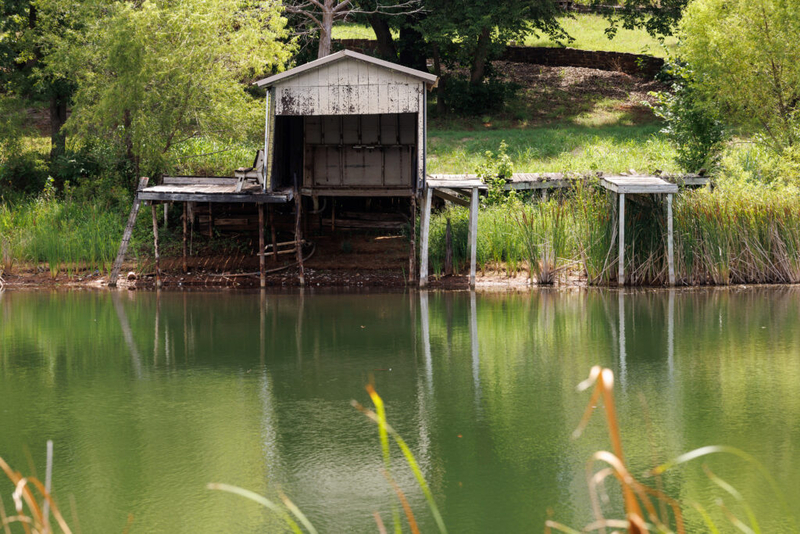
A dock sits above the water level at Cedar Lake near Hinton, Okla., Wednesday, July 15, 2026. (Photo by Nate Billings/For Oklahoma Voice)
No resource is more critical to our state’s future than water.
Our agricultural industry relies on it. So does our oil and gas industry. And all Oklahomans need it for drinking, cooking and bathing.
Yet the state agency entrusted with ensuring that our water resources are being managed appropriately is dispatching a clear SOS that they’re in over their heads.
The Oklahoma Water Resources Board is giving the alarming impression that their employees are little more than glorified paper pushers and exceedingly shortsighted and fearful when it comes to making hard decisions that affect access to water.
Instead, their lackadaisical approach shows they’d rather shirk their responsibilities and let our courts determine how water should be used.
Nothing has demonstrated their ineffectiveness more clearly than the fiasco playing out at Cedar Lake, approximately 45 miles west of Oklahoma City.
Over a year ago, residents of the area that shares a name with the lake began complaining to the Water Resources Board that something other than drought was drying up the body of water and draining water wells in the community of about 400 that has existed for over 75 years.
Turns out Oklahoma’s weak water laws emboldened a neighboring property owner to build not one, but two, dams on tributaries that have long fed the lake. An independent hydrologist’s analysis recently found that those tributaries have also helped recharge the Rush Springs aquifer.
The aquifer, which dates back over 250 million years to the Permian Period, isn’t a minor underground water source. The Water Resources Board reports it covers over 2,400 square miles in the west-central portion of our state, providing water in counties where tens of thousands of Oklahomans live and work, including Grady, Caddo, Custer and Washita.
The drop in water levels is noticeable to pretty much anyone. For generations, residents have baptized children there. They’ve fished and boated.
Water levels have dropped so much that boat docks are sitting many feet above the water or landlocked. Private water wells have dried up and have started producing mud. And residents are rationing water, taking sponge baths because there’s not enough for a shower. Their property values are plummeting because nobody wants to buy lakefront property on a disappearing lake.
For anyone else, except our winsome Water Resources Board, this would be a clear warning that something is very, very wrong with the watershed and aquifer out there.
Wouldn’t any regulator with an ounce of sense feel compelled to get out of their comfy chairs at their Oklahoma City headquarters and head out to Cedar Lake to get to the bottom of what’s going on?
Apparently not these Oklahoma regulators.
For Cedar Lake residents, there is no mystery. They’re convinced a politically well-connected family built an unpermitted dam, known as Dam No. 6, on a tributary. They believe that dam and another on the property, known as Dam No. 5, are the source of their woes. (It’s not clear who owned the property when dam No. 5 was built in 2005.)
The current manager of the neighboring property is one V. Glenn Coffee, an attorney who is paid $150,000 to advise the state Senate Republican Caucus. The Republican is also a former Senate president and served as Oklahoma’s secretary of state during former Gov. Mary Fallin’s administration.
It’s clear from emails Oklahoma Voice obtained through an open records request that the Water Resources Board did nothing substantive to address residents’ escalating complaints for over a year. That is, until last month when they suddenly and inexplicably decided to let the dams remain while the property owners went through the permitting process after the fact. After facing an angry group of residents, they decided to wait to take up the issue until September.
Their recommendation to let the dams remain is despite a report from Carol Becker, an independent hydrologist with Johnson-Becker LLC, who has about 35 years experience in water quality and resource management.
Becker found that the two dams alone are capturing runoff from almost 40% of the watershed. In layman’s terms, the dams are impounding water that’s supposed to be flowing to Cedar Lake. Becker found the lake, meanwhile, recharges the Rush Springs aquifer that sits beneath it. That aquifer in turn feeds Cedar Lake residents’ water wells.
So why is the Water Resources Board OK with all this?
Our outlet asked.
Rather than do their job – which should include educating the public about water laws and explaining policy decisions – leaders at the Water Resources Board offered one of the flimsiest excuses I’ve heard.
They said that they had gotten so many questions about the situation that they weren’t going to bother to answer any.
That’s not how a state agency should function. Have they forgotten that the taxpayers pay their salaries and that’s who they’re accountable to?
One thing they did explain in a prepared statement is that state law apparently allows property owners to construct dams willy-nilly on their property without first obtaining permits. For the record, that’s a crazy way for any state to manage water.
It’s not clear why lawmakers continue to allow that. It’s also not clear if the Water Resources Board even has the power to order an unpermitted dam demolished.
The state agency also brazenly suggested that the Cedar Lake property owners establish a rural water district, incorporate the community to make it eligible for financial assistance, connect to a nearby rural water district, or obtain expanded surface or groundwater rights.
Why should these residents have to upend their way of life when there’s clearly an unpermitted dam that is impacting an entire watershed?
It’s past time that lawmakers take a closer look at our water laws because, if this isn’t clear, they’re very weak.
Right now, it’s Cedar Lake residents that are suffering. Who’s next? Our growing economy? Farmers and ranchers and the growing number of people who call our state home?
It’s time for the Water Resources Board to do their job.
Because we don’t want the courts to shape our water laws for us.
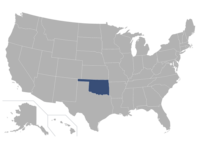
Oklahoma City, OK