Oregon transportation agency faces $200 million budget gap
Jul 31, 2026 | 7:33 pm ET
Description
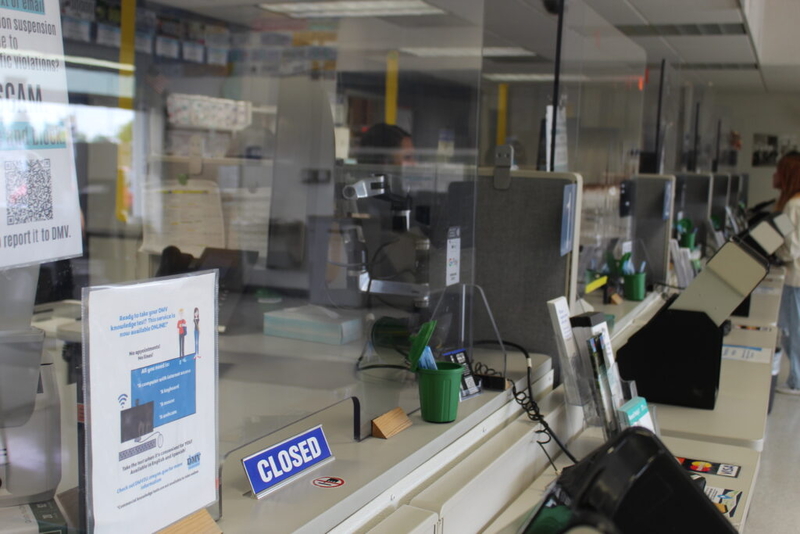
A “closed” sign sits at a counter at the DMV office in Albany. Since Jan. 1, 2026, there have been 34 full day office closures across Oregon Driver and Motor Vehicle division offices because of staffing shortages.
(Photo by Mia Maldonado/Oregon Capital Chronicle)
Oregon’s beleaguered transportation agency is staring down a $200 million budget gap for the 2027-29 budget cycle and layoffs unless the state Legislature intervenes, according to agency officials.
The Oregon Department of Transportation’s budget gap largely stems from inflation and declining gas tax revenue as more people drive electric vehicles, and it means the agency will likely experience its fourth budget cycle in a row having to make reductions, agency deputy director Travis Brouwer said in a virtual presentation Friday to the Oregon Transportation Commission, the group charged with setting transportation policy.
That’s unless the Oregon Legislature finds a way to provide additional revenue to the agency.
Democratic lawmakers in 2025 passed a law that would bring $4.3 billion in new tax revenue to the agency over the next decade, but voters in a May referendum overwhelmingly rejected most of those new revenue streams, including increases to gas and payroll taxes and car registration and title fees.
The agency by law can’t move money from one division’s budget to another without legislative approval, and federal funding the agency receives cannot be used toward maintenance, leaving officials with few options for closing the budget gap.
‘Tragic for the state’: Agency leaders faced with cutting nearly 550 positions
The transportation agency has made significant progress in addressing its budget gaps, Brouwer said, reducing its spending by over half a billion dollars since 2019 by moving staff out of leased buildings into state-owned buildings, implementing more information technology systems to reduce staff and eliminating at least 11 vacant senior executive positions.
But those budget reductions come at a cost, he said.
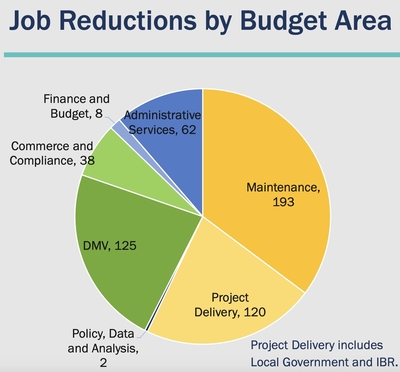
Without new revenue, the agency will need to eliminate almost 550 vacant and filled jobs, or 11% of its workforce, he said. The agency’s maintenance and operation’s branch would get hit the hardest, with 193 jobs cut, followed by 125 jobs within the Oregon Driver and Motor Vehicle Services Division, 120 project delivery jobs, and dozens of jobs within administrative services, commerce and compliance and the finance and budget division.
“The risk of these cuts is truly tragic for the state in the long term,” said Tova Peltz, the agency’s chief engineer.
If the legislature doesn’t find new revenue streams, Peltz said the agency would have more than half of its road maintenance crews operating with five or less people — putting both Oregonians and those staff at risk.
It means less people plowing roads in the winter, less vegetation removed from roads, less clearing ditches or culverts and fewer pavement repairs. It also means fewer crews available to respond to severe weather events, she said.
At the Oregon Driver of Motor and Vehicle Services Division, budget cuts mean closing even more of its offices. The division already grapples with severe staffing shortages, especially in rural areas.
“We’ve got about the same number of budgeted positions at DMV as we did 25 years ago, but there are 800,000 more Oregonians, and of course nearly all of them need to come to DMV for our services,” division administrator Amy Joyce told the commission.
The Commerce and Compliance Division, which tracks commercial driving and rail operations, would look to close some of its weight locations and redirect its focus to more popular interstate highways, Division Administrator Carla Phelps said.
As for the division that handles the agency’s facilities, human resources and IT, cuts would result in deferred facility maintenance, aging technology in a time with greater cybersecurity risks because of artificial intelligence, and possibly more workforce management issues, according to Thomas Amato, the Support Services Division interim administrator.
Oregon lawmakers say they’ll prioritize bipartisanship in 2027 transportation funding plan
The meeting somberly closed with Oregon Department of Transportation Interim Director Chief Chris Warner apologizing to agency leaders for having to consider cuts to their staff and services.
“For anyone who has a public service ethic, it must really be painful to present those kinds of scenarios and to be thinking about those,” Warner said. “Thank you, and I’m sorry.”
A 12-member group of business and transportation stakeholders appointed by Gov. Tina Kotek has since May been working on recommendations for solving the Oregon Department of Transportation’s impending funding shortfall. The group will present recommendations to lawmakers before the next Legislative session in 2027.
Salem, OR