Call for input on wetlands regulations should catch South Dakotans’ attention
Jul 31, 2026 | 5:16 pm ET
Description
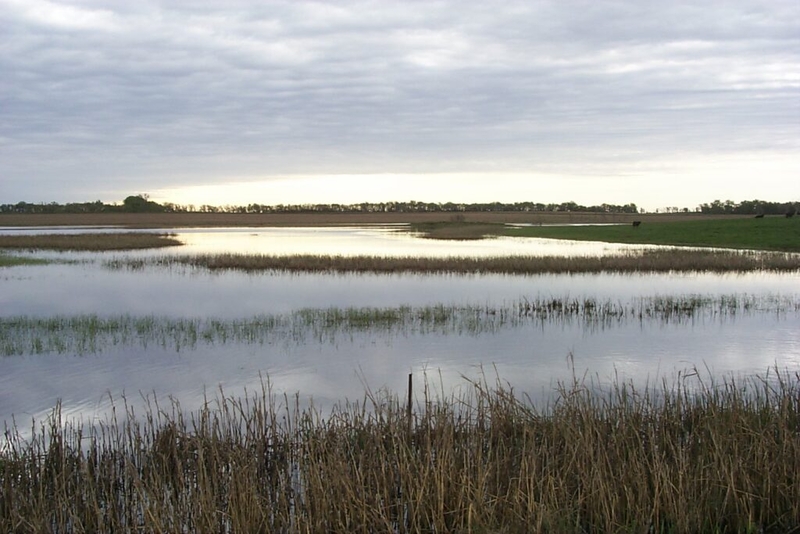
A wetland sunset in South Dakota. (Unaltered photo courtesy of USDA NRCS South Dakota under a Creative Commons license)
Duck hunters know the difference between a bird passing overhead and one circling the decoys. The first may vanish. The second deserves your full attention.
A notice published July 24 by the U.S. Fish and Wildlife Service is beginning to circle South Dakota’s wetlands, and anyone who cares about birds, wildlife, flooding, water quality or the meaning of a permanent agreement ought to take notice.
The agency wants public input on setbacks for drain tile near federally protected wetland easements. Drain tile is buried, perforated pipe used to remove excess moisture from farm fields.
Comments are due Aug. 7, giving the public just 14 days to respond to a five-state question involving hydrology, private property rights and permanent conservation agreements.
That is an extraordinarily short window. It is the regulatory equivalent of shooting at a blue-winged teal with a stiff tailwind: You can take the shot, but no one pretends it’s a fair one.
Across northeastern South Dakota, thousands of small wetlands are protected by permanent federal easements. Landowners voluntarily sold those easements. The government made a one-time payment — much of it from federal Duck Stamp purchases — and the landowner agreed that wetlands would not be drained, filled, leveled or burned.
When they dry naturally, they can still be farmed, grazed or hayed.
Now the Fish and Wildlife Service is reconsidering how far underground tile must remain from wetlands to prevent drainage.
A tile line does not have to run through the middle of a wetland to drain it. Modern systems can intercept groundwater, snowmelt and rainfall before the water reaches the basin. The pothole can stay on the map while holding less water for shorter periods, or eventually almost none at all.
The current approach uses site-specific science — soil, slope, tile depth and groundwater conditions — to determine how close tile can be placed without harming the wetland. Water does not stop at a line on a map.
Ducks Unlimited, Delta Waterfowl and other conservation organizations are warning that weakening the system could diminish wetlands that hunters and taxpayers already paid to protect. A permanent easement should protect a functioning wetland, not a dry outline in a government file.
These shallow basins support shorebirds, cranes, grebes, herons, pelicans and migrating birds. They also support the insects and plants that sustain grassland birds. Temporary and seasonal wetlands may not hold water all year, but they are often among the most productive parts of the landscape during spring migration and nesting season.
When those wetlands disappear, the effects spread beyond the edge of the basin.
Farmers also have legitimate expectations. They deserve clear rules, timely decisions and calculations they can understand.
The agency should explain its methodology, establish timelines and provide meaningful technical review when a landowner believes a setback is excessive.
The current system also protects cooperating landowners. A landowner who requests a setback determination and installs tile according to the approved plan is protected if an unexpected wetland impact occurs. That is a reasonable balance.
But making the process clearer is different from making the easement weaker.
The agency says restrictions on tile outside the mapped wetland may allow it to regulate “a larger property interest than it acquired.”
‘Wild places are worth fighting for’: Concern grows for receding South Dakota wetlands
The government did not merely purchase an interest in the ground beneath the wetland’s visible boundary. It purchased the right to prevent the wetland from being drained. That right means little if a drainage system can be installed just outside the line and pull away the water that creates the wetland in the first place.
This matters far beyond bird populations.
Wetlands hold water on the landscape, slow runoff, reduce downstream flooding, filter nutrients and provide habitat for deer, amphibians, fish and pollinators. Northeastern South Dakota is already dealing with rising lakes, flooded roads, threatened homes and proposals to spend tens or hundreds of millions managing excess water after it moves downstream.
It makes little sense to weaken wetlands that store water upstream while taxpayers write checks to deal with that water later.
South Dakota’s wetlands have already lost layers of federal protection through recent court decisions and Clean Water Act policy. Wetland easements are different. They are not new regulations imposed on unwilling landowners. They are permanent property agreements voluntarily sold and publicly purchased.
The Fish and Wildlife Service should improve the process. It should provide landowners with speed, clarity and fairness. It should also extend the comment period and give South Dakotans a reasonable opportunity to be heard.
It should not move the decoys, silence the marsh and then tell us the Prairie Pothole Region is still functioning as nature intended.

Pierre, SD