Iowa State University CyTown project delayed to 2028 with groundbreaking this fall
Jul 29, 2026 | 7:43 pm ET
Description
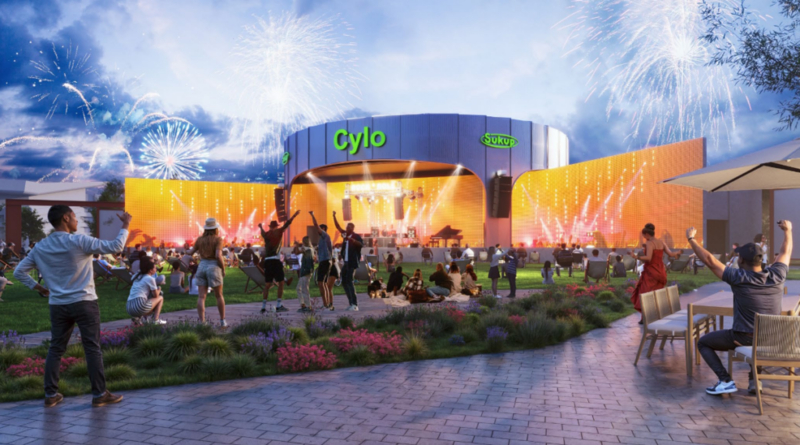
Iowa State University's CyTown development is set to have a groundbreaking this fall and complete construction in early 2028. (CyTown rendering courtesy of the Iowa Board of Regents)
Members of the Iowa Board of Regents have been invited to CyTown’s groundbreaking at Iowa State University this fall, though the timeline for the development’s completion has been pushed back into 2028.
Michael Norton, general counsel and senior advisor to the president at ISU, told board members Wednesday that the projected time for completion of the CyTown development has been moved from the fourth quarter of 2027 to the first quarter of 2028, but the planned Sept. 2 groundbreaking for the bulk of the project will bring with it a more concrete timeline.
CyTown is a mixed-use development project designed to bring lodging, retail, entertainment and more to the area on ISU’s campus between Hilton Coliseum and Jack Trice Stadium. Norton told the board there have been changes to the management agreement the university holds with Goldenrod Companies that had a part in the delay, namely relating to the project’s amphitheater.
“Goldenrod really didn’t have any connection to that, and yet we were asking them originally to secure the debt for the construction of that part of the project. What became … apparent through the negotiations of the deal were that that was kind of throwing off the rest of the deal, from the impact of the debt that would have to be taken out to secure or build that project,” Norton said.
The university and company decided instead to pull the amphitheater out of the Goldenrod agreement and use bonding to fund its construction, Norton said. The project will cost $18 million, $12 million of which has already been secured “through contribution intents from donors,” and this method will be cheaper from a debt perspective.
A “side letter” has also been added to the agreement with Goldenrod to guarantee revenues for the CyTown Suites, residential spaces with 10-year leases that will overlook CyTown. Over the 30-year contract, Norton said the revenue guarantee totals $160 million.
“We have no debt obligation to the banks, but we do have an obligation and a side letter to Goldenrod guaranteeing the revenue that is behind those contributions to the project, and that will allow Goldenrod then also to be able to secure the financing necessary for the construction of those buildings,” Norton said.
With the delayed timeline, Norton said construction of the hotel planned for CyTown will better align with construction of the rest of the development, when previously they believed it would be “significantly behind.”
Projected construction costs have risen slightly from where they were in December, Norton said. Assuming a 90% occupancy of the development over the next 30 years, he said the university is expected to make $172 million in net revenue, and even if occupancy drops to as low as 50%, all costs would still be paid, though revenue would drop to zero.
That’s the “worst-case scenario,” Norton said, and is “highly unlikely” to actually happen, but even if it did, he said the university would work to modify the development and capture different forms of revenue.
“What’s amazing with this project, even at that dire situation of 50% occupancy and we break even, the university still ends up with like $579 million of assets at the end of the 30 years,” Board President Robert Cramer said. “So that’s what makes this project very unique and a good, creative solution.”
Des Moines, IA