Fifty for 150: First peach trees planted on Western Slope of Colorado in 1882
Jul 29, 2026 | 6:10 am ET
Description
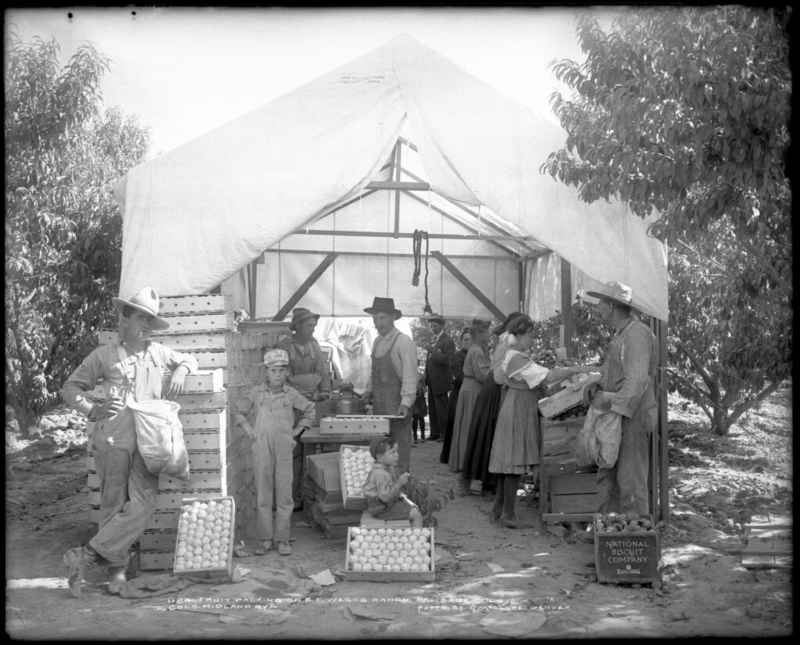
A group of workers pack peaches at B.F. West's Ranch in Palisade in 1907. (Courtesy of Denver Public Library Special Collections, MCC-1124)
John Harlow, one of the early white settlers in Mesa County, first planted fruit trees in 1882 at his farm at Rapid Creek, a few miles from what is now Palisade. Those are widely considered the first fruit trees in Grand Valley, and they spearheaded the agricultural tradition of peach-growing in the area.
Those trees, however, mostly died in that first year. Harlow fertilized the soil with burnt bones and ashes the next year and the trees grew well, according to a history published in 1994 by the Journal of the Western Slope. Within a few years, and after the completion of the Grapevine Ditch to divert water from the creek to his orchard, the trees started producing peaches. Today, Palisade peaches are known for being extra sweet and juicy.
“According to the Grand Junction News, 1886 was the most successful year Harlow ever had on his Rapid Creek farm,” that history says. “His orchard, numbering over two thousand peach and two hundred apple trees, now four years old, continued to thrive and twenty-four trees produced peaches in small numbers.”
In 1887, Harlow sent some peaches to the Denver Exhibition and won a blue ribbon. The next year, he grew about 1 ton of peaches.
Peaches were soon part of the Grand Valley’s identity, and Palisade even had a local baseball team dubbed the Palisade Peach Pickers. Peach Day began in 1887 to celebrate the area’s agricultural growth, and by 1895 over 6,000 people attended the festivities. President William Howard Taft attended Peach Day in 1909 as part of a visit to Grand Junction. The modern Palisade Days peach festival began in earnest in the 1970s.
“We suggest that the name Grand Junction be dropped and that we substitute therefor the name ‘Peach City.’ Grand Junction is too much backwoods and too long for a metropolis,” said a snippet from the Glenwood Avalanche published in the Sept. 10, 1895, edition of the Grand Junction Sentinel.
There are now over 25 orchards and farms in Palisade, according to the city’s Tourism Advisory Commission and the festival attracts around 10,000 people every year. In 2025, Colorado farmers produced around 13,000 tons of peaches valued at almost $36 million.
Denver, CO