With industry wary of Arctic Refuge, Alaska’s own government plans a lonely quest for oil
Jul 17, 2026 | 5:00 pm ET
Description
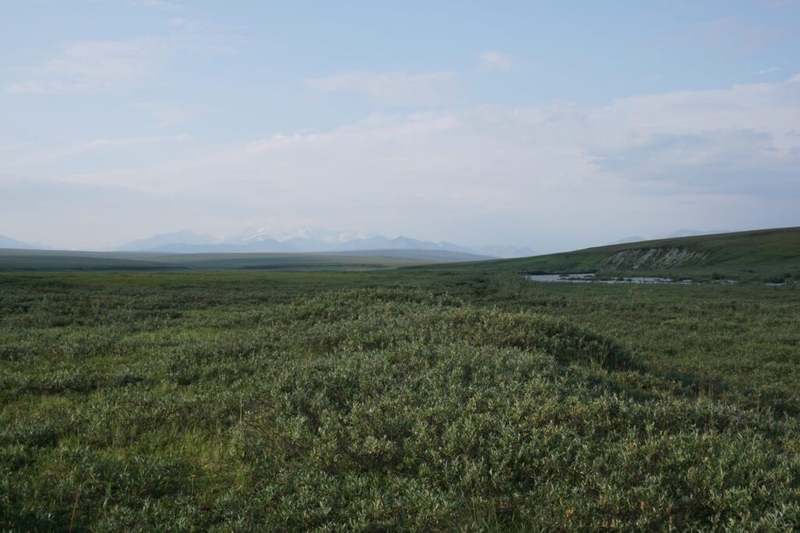
Alaska's economic development agency wants to fund oil exploration on the coastal plain of the Arctic National Wildlife Refuge — one of the most hotly debated areas of federal land in the country. (Photo by Max Graham)
After decades of fierce debate over oil drilling in the Arctic National Wildlife Refuge, oil companies largely appear leery of the idea.
The contested swath of federal land, on Alaska’s Beaufort Sea coast, is politically fraught and far from existing roads and pipelines. And given the limited data on its geology, oil executives still aren’t sure how much petroleum is trapped underground.
In spite of three federal lease sales of refuge land in the past decade — with the most recent sale just last month — not a single major oil company has bid.
Instead, the industry is flooding into a different federal area far to the west, the National Petroleum Reserve–Alaska, where there are proven oil deposits and fewer political obstacles to development.
But the decades-long quest to find oil in the Arctic Refuge isn’t over. The largest oil and gas exploration program in the area’s history could soon begin — funded not by companies like ConocoPhillips or ExxonMobil but by an arm of the state of Alaska.
Alaska’s economic development corporation, the Alaska Industrial Development and Export Authority, known as AIDEA, is launching its own, up-to-$175-million plan to search for fossil fuels beneath the refuge’s coastal plain, a sliver of tundra along the Arctic Ocean.
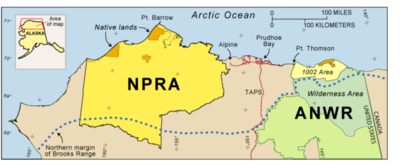
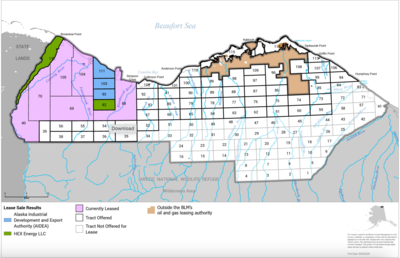
The state agency is the largest leaseholder in the refuge, having bought up more than 600 square miles since U.S. Congress opened the area to leasing in 2017. If AIDEA can acquire key permits, large trucks could roll across the frozen tundra as soon as next winter, shooting shockwaves deep underground to scan for oil reservoirs.
But the plan faces stiff blowback, and it’s stirring up debate about the future of the Arctic Refuge and spending decisions by AIDEA — a state-owned corporation that’s already under attack by opponents of its pro-resource extraction agenda.
AIDEA and its allies argue that its work will help prove the refuge contains vast amounts of oil, and could unleash a flood of corporate investment that would translate into jobs and state revenue for Alaska.
Critics, meanwhile, say that a state entity shouldn’t take on the role, and risk, of an oil company — spending big in an area where industry has refused to invest.
“They’re lone wolves out on the tundra, so to speak,” said Pat Pourchot, a former U.S. Department of Interior official who also once served as commissioner of the Alaska Department of Natural Resources.
AIDEA was one of only two participants in the latest federal lease sale, along with a small Alaska gas producer, HEX.
The two entities bid on just one-tenth of the acreage offered by the Trump administration.
“Very serious concerns about reporting on ANWR”
The exploration work that AIDEA now intends to fund is known as “3-D” seismic because it generates a three-dimensional image of rocks deep underground. That information would give analysts a much clearer and more detailed idea of what’s beneath the ground than older, 2-D data that was collected in the refuge in the 1980s.
The effort could yield crucial insight into the area’s oil potential, said Mark Myers, a former director of the U.S. Geological Survey who’s also worked as a top land manager for Alaska state government.
“You would need 3-D out there, quite clearly, to understand what’s under the ground,” Myers said. “Modern data will inform a lot.”
Promising results could attract oil companies — but there’s no guarantee the data will be positive, he added.
“Whether or not the oil is there is independent of what we want to believe,” Myers said.
Oil prospecting is speculative work, typically the domain of private investors and companies with technical expertise — and a willingness to sustain big expenses that don’t always pay off. Merely searching for oil in the Arctic can cost hundreds of millions of dollars, and ramping up to production can cost billions.
While AIDEA has loaned money to other oil and gas companies before, it has never overseen its own Arctic exploration program. Its staff is not made up of petroleum geologists nor other technical experts typically employed by oil firms.
But in May, AIDEA’s governor-appointed board approved spending up to $175 million on the 3-D seismic testing, including “permitting and regulatory work.” It did not include money for drilling, which would typically come after seismic data has been collected.
Industry experts say that budget is higher than usual for a season of seismic work on the North Slope. But the resolution does not specify how long the project will last, and AIDEA is not obligated to spend all the money approved by the board.
In 2013, then-Gov. Sean Parnell’s administration proposed spending $50 million on oil exploration in the refuge, equivalent to some $70 million today when adjusted for inflation. But the Obama administration blocked that effort.
AIDEA has not released details about its effort to gather seismic data, and officials with the agency declined to answer questions or release basic information about it, including an expected timeline. The agency has not yet applied for key permits from the federal Bureau of Land Management and U.S. Fish and Wildlife Service, according to spokespersons for those agencies.
“We’re advancing seismic. We’re advancing a drilling plan. We’re fighting the opponents of the project in the federal district court,” AIDEA Executive Director Randy Ruaro said at a board meeting last month.
Ruaro did not respond to questions seeking clarification about his comments, though in a previous email to Northern Journal, he expressed “very serious concerns about reporting on ANWR and bias.”
Some positive impacts of development of the refuge’s coastal plain “seem to get omitted from every story,” Ruaro added, pointing to potential revenue to state and local governments, royalties that oil producers would pay to the state and the resulting higher Alaska Permanent Fund dividend checks for state residents.

Ruaro also said media coverage tends to ignore “the unfair treatment of Kaktovik,” an Iñupiaq community inside the refuge whose leaders support development, as well as “intentional discrimination against Alaska and North Slope oil and gas development by banks and insurers instigated by the Gwich’in.”
Leaders of the Gwich’in, an Indigenous group in Alaska’s Interior and northwestern Canada, have long opposed drilling on the coastal plain. The area encompasses the calving grounds of a major caribou herd that migrates south into Gwich’in lands, where the animals are harvested for food.
“Advocating for our way of life does not discriminate against anyone, but it most certainly doesn’t discriminate against massive corporations with huge stores of wealth that are making decisions based on financial return and risks,” Kristen Moreland, executive director of the Gwich’in Steering Committee, wrote in an email to Northern Journal.
“We’re not going to do anything radical”
To lay the groundwork for its seismic program, AIDEA is spending $1 million on a contract with a subsidiary of the North Slope’s Indigenous-owned corporation, Arctic Slope Regional Corp. — a longtime supporter of drilling in the refuge.
The subsidiary, ASRC Consulting and Environmental Services, is working on community outreach, environmental studies and permitting related to the seismic program, according to documents that Northern Journal obtained through a records request.
ASRC is also subcontracting with a Houston-based firm, SAExploration, that has been working on proposals for seismic testing in the refuge since 2018.
A spokesperson for the ASRC subsidiary referred Northern Journal to AIDEA for comment.
Under a separate, $70,000 contract with AIDEA, the ASRC subsidiary last year issued a glowing report on the coastal plain’s oil and gas potential.
The report described the refuge as the most promising unexplored area in North America — excluding offshore deposits — citing historical data and large new discoveries on state land nearby. Decades ago, the U.S. Geological Survey estimatedthat as many as 16 billion barrels of recoverable oil lie beneath the coastal plain.
While the Legislature oversees AIDEA’s annual operating budget, the agency’s finances are separate from other government funds — and only certain kinds of spending, like issuing bonds over a certain amount, require specific legislative approval.
Still, some lawmakers aren’t convinced that seismic testing in the refuge is the best use of AIDEA’s money
“I do think that the scale of some of these projects — the type of development that they pursue, and the lack of oversight on that development — does really raise questions about: What are our priorities as a state?” said Rep. Ashley Carrick, a Democrat from Fairbanks who chairs the House State Affairs Committee.
Carrick introduced a bill last year that would require legislative approval of AIDEA spending proposals over $100 million. It failed to advance.
Most of Alaska’s elected officials — as well as many Iñupiaq leaders in Kaktovik and across the North Slope — have pushed hard to open the Arctic Refuge to development, citing potential economic benefits.
One longtime proponent, Republican U.S. Sen. Lisa Murkowski, said the recent lease sale results “were not surprising, given the acreage already leased and the continued partisan push against responsible development.”
Murkowski described the refuge as “basically unexplored,” suggesting that it could be similar to an oil-rich geologic formation, the Nanushuk, that was discovered only about a decade ago. That formation has since led to the industry’s revival in the petroleum reserve, to the west of the refuge.
The coastal plain’s “true prospectivity can only emerge as leaseholders move forward under a federal administration willing to work with them,” Murkowski said in a statement to Northern Journal.
The other petroleum company with leases in the refuge, HEX, has not announced plans for the area it acquired in the recent sale.
“I’m here as an Alaskan trying to be a responsible developer for Alaska, so we have opportunities in the future for our kids and my grandkids,” said John Hendrix, HEX’s chief executive.
HEX mostly produces natural gas in a different petroleum basin, Cook Inlet, near Anchorage. Hendrix declined to comment on the potential for partnering with AIDEA on development in the Arctic, but the two entities have worked together before. Two years ago, AIDEA opened a $50 million line of credit to HEX to fund the company’s drilling in Cook Inlet.
Hendrix described HEX’s foray into the Arctic as a way to diversify his business. He would not say if the company is already planning work on its leases — and if so, when it might happen.
“We’re a private company, and we keep that stuff tight to ourselves,” Hendrix said. “We’re not going to do anything radical. But we will do what we have to do to bring production forward.”
Juneau