For Hawaiʻi Wheelchair Users, Air Travel Means Risking Mobility
Jul 17, 2026 | 6:01 am ET
Description
Photo courtesy of Honolulu Civil Beat
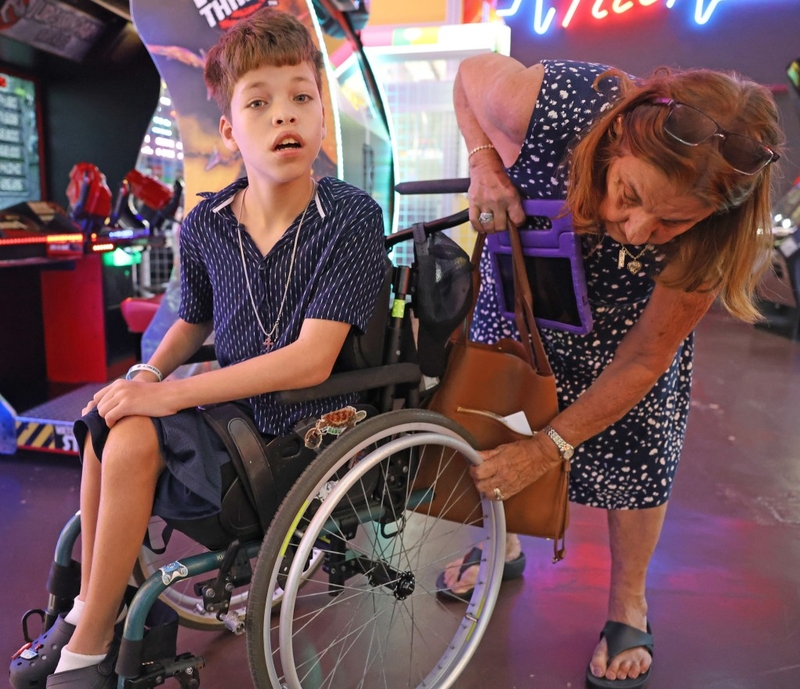
Several times a year, Linda Eblacas and her great-grandson, Cylas, board an early morning flight from Hilo to Oʻahu. Cylas has cerebral palsy and uses a wheelchair, and they travel for his routine health check-ups with a specialist not available on the Big Island.
When his custom chair was returned to him after landing on Oʻahu one day in 2023, Eblacas noticed it was “a little wobbly,” and she had a hard time pushing it. But they didn’t have time to focus on it. They were headed to Kapiʻolani Medical Center for a pediatric hip surgery.
Only when they reached the hospital did they turn the chair over to discover that the entire frame was broken, barely holding itself together. It was a surprise that they had made it to the hospital, she said. The chair was completely unusable.
In the following days and months, Eblacas said she spent hours over the phone and sent nearly a dozen handwritten letters to Hawaiian Airlines, asking the company to take responsibility for breaking the $15,000 wheelchair.
But in an email reviewed by Civil Beat, Hawaiian Airlines wrote that since the damage was not reported within four hours of getting off the plane, the airline couldn’t confirm when the damage occurred, and “we will not be financially liable.”
Wheelchair users in Hawaiʻi say flying comes with the persistent risk that airlines will break the chairs they rely on to get around, and that getting a chair repaired — or getting compensation for a new one — can take months, if it happens at all. It's a particular point of anxiety for neighbor island residents who have to fly to Oʻahu frequently for medical appointments and dread the possibility of swapping out their specially equipped chairs for bare-bones replacements.
Wheelchair users with custom, motor-powered chairs are among those with the most to lose. Those personalized devices are built specifically for an individual’s body and can cost thousands of dollars.

Under the Air Carrier Access Act, or ACAA, airlines are required to repair or replace a damaged wheelchair or scooter and return it in its original condition. But that doesn’t always happen.
In 2024, the Department of Transportation issued a record $50 million penalty against American Airlines, citing years of unsafe handling of wheelchair users and thousands of cases of damaged or delayed wheelchairs.
Protections strengthened after that, requiring airlines to provide "safe and dignified" wheelchair assistance, improve staff training, and take responsibility for damaged or delayed wheelchairs.
But after an airline industry lawsuit pushing back on the measures said the new rules went too far — wrongfully making airlines liable for wheelchairs that they may not have mishandled — the Trump administration has repeatedly delayed enforcement of key provisions. A final decision is not expected before the end of this year.
Cylas got a new chair through his insurance about a year after the incident. But in the meantime he had to use an adult loaner wheelchair that was “so old and didn’t fit him,” according to Eblacas.
In an emailed statement, Hawaiian Airlines wrote that passengers with damaged wheelchairs must make a written report to an airline representative within 24 hours of arrival. If a guest discovers that their wheelchair has been damaged, the airline said, they should notify the baggage service office before leaving the airport “whenever possible.”
The airline declined to discuss Eblacas’ case.
“For privacy reasons, we cannot comment further on individual customer matters,” Tara Shimooka, senior brand PR manager at the airline company wrote.
Now, Eblacas, 77, is afraid to take Cylas’ wheelchair when they travel.
“I cannot tell you how many hours I cried,” she said. “I just felt so sorry for my little boy.”
'It's Disheartening'
For wheelchair users on Hawaiʻi's neighbor islands, the fear of a damaged chair adds anxiety to what's already a taxing burden.
Moss Kuon, who lives on Maui, was born with hypermobile Ehlers-Danlos syndrome, a genetic condition that causes severe joint pain. Kuon began using a wheelchair last year and flies roughly twice a month, usually to Oʻahu or Los Angeles for family visits or specialist appointments unavailable on Maui.
In the past year, his wheelchair has been damaged five times, he said, four of which he reported. The second time, the wheelchair was one he received through the non-profit Wheelchair 4 Kids, which was worth roughly $3,000.
“I know it’s not their intent, but it’s disheartening to know that every time I fly I risk losing my mobility,” Kuon, 16, said. “It makes me anxious to travel.”
After the second incident, Hawaiian connected Kuon to a technician to help repair his custom chair, but since there is only one tech on Maui, he said, it took about six weeks.
The loaner chairs airlines provide in the meantime, Kuon said, are often hospital chairs which are “bulky, uncomfortable and heavy.”

Some fliers have started taking matters into their own hands.
“When I fly now, I take tools with me to repair my own chair,” said Maria McClellan, a wheelchair user who made local headlines in 2018 when Hawaiian Airlines damaged her custom $40,000 wheelchair on a flight from Oʻahu to Kahului. In that case, Hawaiian offered her $500 in flight credits and connected her to a technician.
She now lives in Delaware, closer to a medical specialist, and hasn’t flown interisland much since, but “it’s really unfortunate because the flight is really short, 30 to 45 minutes, but the stress of getting the chair on and off that plane is not worth it,” she said.
In 2024, Shu Cole, a director in the department of Health and Wellness Design at the Indiana University School of Public Health-Bloomington, received a $2.5 million grant to conduct research into improving air travel for those with mobility limitations.
She said that tracking complaints matters, but it understates the problem because most wheelchair damage goes unreported since it can be faster to repair a chair yourself and the reporting process can be tedious. The damage, however, is very real.
“Breaking a wheelchair, even though it is one chair that is broken, that’s like a person’s legs being broken,” Cole said. “So you can’t compare it to luggage that is lost or damaged.”
Interisland Flying
Based on reported damage, airlines nationwide mishandled wheelchairs and scooters at a rate of about 1.09 in every 100 in the first quarter of 2026, according to a consumer report by the U.S. Department of Transportation.
Alaska Airlines, which now shares an operating certificate with Hawaiian Airlines, had a slightly higher rate of roughly 1.20 per 100 wheelchairs. Those rates are consistent with the previous year.
"One percent, 2% damage is no cause of action for them," said Eric Lipp, a wheelchair user and founder of Open Doors Organization, a national nonprofit making goods and services accessible to people with disabilities in tourism and transportation. "The analysts don't study who they're hurting, do they?"
Although Hawaiʻi’s Department of Transportation does not track wheelchair-mishandling numbers at the state level, some experts say the shortage of physicians on neighbor islands, combined with smaller aircrafts used on interisland routes, may compound the problem here.
In addition, smaller planes cannot always accommodate certain wheelchairs.
Even though it isn't legally required, Cole, the professor at Indiana University, said the burden tends to fall on the passenger to notify the airline in advance about their wheelchair's size and weight to ensure the smoothest possible experience.
Mokulele Airlines, one of three carriers operating interisland routes, flies Cessna 208 aircrafts which have no overhead bins and are not equipped for people who use certain mobility devices. According to the airline's own policies, wheelchairs generally must be checked at the ticket counter rather than stowed in the cabin, and passengers are asked to give advance notice for powered wheelchairs that may need to be partially disassembled to fit in the plane's cargo hold.
The airline’s guidance notes that some of its aircraft cannot accommodate cabin wheelchair stowage at all, and guests on certain routes must be able to climb the aircraft's stairs on their own or with a travel companion's help, since crew "cannot physically lift guests into or within the aircraft," according to their website.
Mokulele is the only air carrier that flies to Molokaʻi and Lānaʻi, as well as smaller airports in places such as Hāna on Maui.

Lipp has worked with over 65 airlines and 70 airports worldwide to conduct free training for employees on how to appropriately handle different types of chairs. For instance, he teaches employees how to remove the joystick from wheelchairs and has workers sit in motor-powered chairs to understand how they move.
He hasn't done any trainings yet in Hawaiʻi but he intends to.
"They need training there," he said. "They need it everywhere."
But the responsibility to fix the issue isn't solely on airline carriers, Lipp said.
“Wheelchairs that are made today are not made to fly, and airplanes that are made today are not made to carry wheelchairs,” he said. “There is nothing that anybody can do until those two groups get their stuff together.”
He added that wheelchairs come with rules and instructions when purchased, and insurance companies limit where you can use mobile chairs. But people push those limits just by living life, he said.
“It’s in your home; you’re not supposed to be outside in the chair hiking, but we want to do things,” he said.
Lipp also founded Global Repair Group, which works with Hawaiian and other carriers, to take over claims when an airline damages a mobility device. He added that airlines may reasonably push back against paying out claims because there are some, albeit rare, reported incidents of fraud.

Told about Eblacas’ situation, Lipp said that Hawaiian should have taken responsibility for the broken wheelchair and paid for it. But that's not what happened.
Instead, toughly five months after Cylas Eblacas’ wheelchair was broken, Hawaiian Airlines sent his great grandmother an email. They wanted to apologize for the inconvenience.
In it was a $200 flight voucher.
“It was like a slap in the face,” she said.
Civil Beat's health access reporting is supported in part by the Atherton Family Foundation. Our reporting on healthcare access issues in Maui County is supported in part by the Fred Baldwin Memorial Foundation.
Honolulu, HI