Grace abandoned: Ohio’s journey to politicians stealing power from voters in elections
Jul 13, 2026 | 3:30 am ET
Description
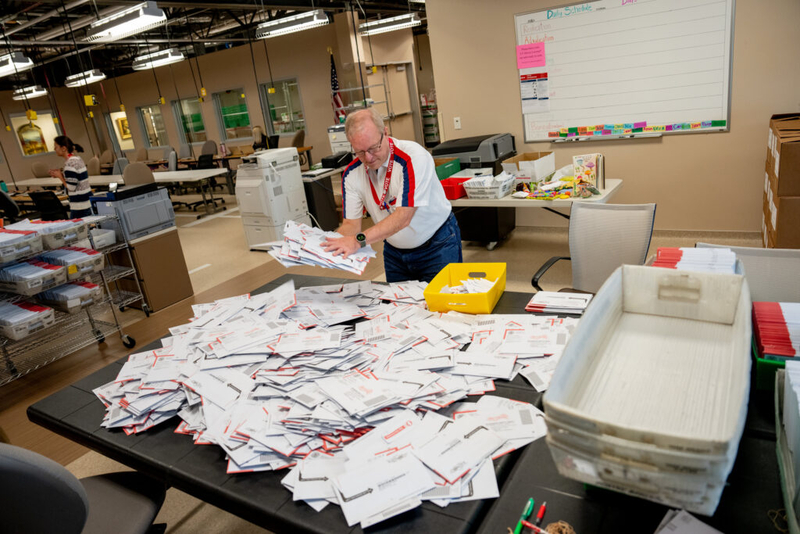
Election workers process ballots. (Photo by Spenser Heaps, States Newsroom.)
Ohio voters might want to ask state officials why the U.S. Supreme Court ruling upholding the so-called “grace period” for mail-in ballots doesn’t matter here.
Why did the legislature last fall, as we were preparing to give thanks for our blessings, rush through changes in our election laws that made it harder to vote and easier for Donald Trump to stifle resistance?
The answer comes from a multi-layered 22-year story that points to one conclusion: The Ohio Republican Party has stolen voters’ power in elections and access to the franchise, and is equipping Donald Trump to do the same in the next few months.
First, let’s get the simplicity of grace periods out of the way.
In Ohio last year, if you dropped your absentee ballot in the mail five days before Election Day and for some reason it was routed through the Detroit Post Office (I speak from recent experience) it might arrive at the local board of elections a day or two after Election Day.
In 2025, Ohio’s four-day grace period meant your vote would have been counted if it was postmarked before Election Day and arrived within four days after the election.
Not this year. The legislature and Gov. Mike DeWine changed the rules.
A ballot that arrives after midnight election night won’t be opened. It’s headed to the incinerator rather than counted in what promises to be one of the most consequential mid-term elections in American history.
More than 11,000 votes in the November 2024 presidential election would have been destroyed rather than counted under the new rule.
Let’s go back two decades and find out why we had a grace period in the first place.
In 2004, Ohio was one of three closely watched pivotal states in the hot Bush-Kerry presidential election. Polling showed them neck and neck. Adding to Ohio’s tension was a constitutional amendment proposing to ban same-sex marriage, plus new voting machines across the state. Turnout promised to be extraordinary — and it was.
The system failed. There weren’t enough machines, not enough poll workers, and some voters were waiting in line for more than eight hours.
At one polling place at closing time there were 400 people still in line. Worse, a machine in a Columbus suburb gave George W. Bush 3,893 extra votes and Kerry lost the state by only 2 percentage points.
For only the second time in American history there was a Congressional motion to reject a state’s slate of electors. It was Ohio’s.
The election was a public relations nightmare for Ohio Republicans. They controlled the state legislature, governor’s office, Ohio Supreme Court, and the Ohio Secretary of State’s office with J. Kenneth Blackwell at the helm.
Republican state Rep. Larry Wolpert of Hilliard offered a solution in 2005: Let anyone who wants to vote by mail do so. The supporting argument was that mail-in ballots would take the pressure off of having enough machines and poll workers on election day.
Absentee ballots were not as common then. In the 2004 election and for decades previously, Ohioans could only cast a mail-in ballot if they knew they would be out of town or otherwise incapacitated on election day. In 2004, about 10 percent voted by mail, and many were overseas military as the U.S. engaged in wars in Afghanistan and Iraq.
The legislature approved Wolpert’s idea.
But as Wolpert anticipated the first test in the 2008 presidential election he had a new concern: What if the U.S. Postal Service can’t handle all the ballots in a timely manner. And again, Ohio was in the spotlight as the first Black presidential candidate faced off against a military and citizen hero.
Wolpert proposed another fix: A 10-day grace period. As long as a ballot was postmarked no later than Election Day, it had 10 days to arrive at the local board of elections to be counted. The legislature approved.
In those days, Republicans didn’t know who would be most likely to vote by mail. They did it to prevent another election disaster.
But now they know who is most likely to vote by mail: Democrats, about 2-1.
Which brings us to the Trump-MAGA regime.
What began as an effort to help all Ohioans vote and avoid embarrassing catastrophes has become a tool for disenfranchising Democrats and concentrating power in the hands of Republicans who claim to be populists but instead are working against the people of Ohio.
(For anyone who wishes to argue that Republicans would not do such a thing, I’ll remind them that the Republican Speaker of the Ohio House and former chairman of the Ohio Republican Party were arrested in 2020 and now in prison for orchestrating what a federal prosecutor described as the largest bribery scandal in state history. The GOP goal was to use the bribes to orchestrate elections and pass laws that benefited those who would do the bribing. In this case, it was First Energy, and Ohioans were on track to pay billions in higher utility rates as a result.)
The 10-day grace period stood the test of time. In 2020 and the height of the coronavirus pandemic, 57% of Ohioans voted by mail or early to avoid large crowds and the deadly infection.
But Donald Trump lost that election. And that’s when it all started. The steal.
His false claims of voter fraud, especially for mail-in ballots, and attempts to prevent the peaceful transfer of power energized his MAGA adherents in Ohio.

The state was overrepresented among those arrested in the Jan. 6 insurrection. When Mar-a-Lago was raided, a Columbus-area man attempted to shoot up an FBI office.
And an emboldened Ohio legislature came to Trump’s aid.
Emboldened how? Despite the Speaker of the House and director of the Ohio GOP indicted in a massive bribery scandal months before the 2020 election, gerrymandered district borders resulted in Ohio voters returning the GOP to power at the Statehouse.
More importantly, this emboldened legislature and Gov. DeWine in 2021 drew district boundaries again that the Ohio Supreme Court ruled violated the constitution’s anti-gerrymandering clause. They defied the state court and we proceeded to elect an unconstitutionally districted legislature.
Today, of our delegation to Congress, 66% are Republican. In the Ohio Senate, 77% are Republican. In the Ohio House, 65% are Republican. But only 19% of Ohio voters have registered as Republicans and in polling, about one-third of Ohioans identify as Republican.
People wonder: Will Donald Trump defy the courts? In Ohio, the legislature and governor already have.
In the midst of that battle, in May of 2022, then-Ohio Senate President Matt Huffman was quoted in the Columbus Dispatch as saying that as the supermajority we “can pretty much do what we want.”
But while the Ohio GOP was riding high in 2022, the same wasn’t the case at the national level. The House Select Committee investigating the Jan. 6 insurrection held a series of hearings concluding in December 2022 that poured emotional testimony and photos into the political ecosphere as it explored Trump’s role in attempting to block the election certification, his failure to stop violence, and his baseless claims of voter fraud.
At the same time, a predicted Republican sweep of Congress in midterm elections failed to materialize, raising concerns among GOP leaders that they might be facing headwinds.
And Trump announced his plan to run again in 2024.
The Ohio GOP jumped to action to complicate free and fair elections. A bill languishing in the Senate for a year, Ohio House Bill 458, introduced in October 2021, proposed to eliminate August special elections. That’s all.
The bill was grabbed in the first week of December 2022 and more than 40 new provisions were added, imposing new identification requirements to register to vote and to cast a ballot on Election Day. Failure to present the required ID meant the voter had to use a provisional ballot and then go to the board of elections to prove identity.
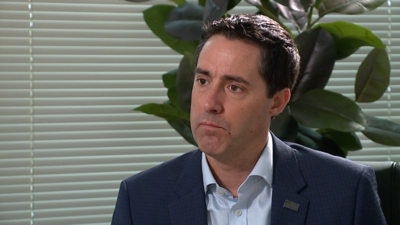
Ohio Secretary of State Frank LaRose defended the ID requirements saying that polling shows people overwhelmingly favor some form of photo ID for voting. That was true. About 80% of Americans liked the idea. But while that was the main talking point, the legislature went way beyond photo IDs to make it harder to vote.
Lawmakers also reduced the time voters had to prove their identity in the event they were challenged at the polling place. The time period was reduced from seven to four days, meaning they might need to secure a certified birth certificate and visit the Bureau of Motor Vehicles by Saturday rather than have a full week.
How many Ohioans might be ill-prepared to meet these new requirements? Bureau of Motor Vehicles data suggested that about 500,000 registered voters did not have the necessary state identification to continue to vote. Trump beat Kamala Harris by 640,000 votes in 2024 and Hillary Clinton by 447,000 in 2016.
For people who might be challenged at their polling place in Cincinnati’s densely populated Price Hill area, a trip to the board of elections in Norwood to prove their identity might require a half day’s bus ride. If they needed a certified birth certificate, another few hours on the bus and $24.
The bill also reduced the number of days in which a voter can request an absentee ballot, eliminated the option of voting at the board of elections the day before the election — one of the busiest days — and limited the number of drop boxes for absentee ballots to just one per county.
Franklin County, Ohio’s 17th most sprawling county with 891,435 registered voters has one box, as does Lake County, Ohio’s tiniest county: one box and 80% fewer registered voters (161,867).
And after Republican Ohio Senate General Government Committee Chair Theresa Gavarone of Bowling Green said the 10-day grace period for mail-in ballots might be eliminated, they instead reduced it from 10 days to four. Her argument for the reduction was two-fold: People want to know who won, and more days to count means more opportunities for fraud.
But her suggestion that people wanted to know who won meant they wanted the vote count within hours of the polls closing. Knowing who won didn’t include taking time to make sure that everyone who put their ballots in the mail on time or were challenged at the polling place were counted. That, historically, was tens of thousands of voters.
Moreover, lawmakers offered no evidence that fraud ever occurred in those grace periods.
There was little time to muster public testimony in the 10-day window in which the bill was debated, but 19 presented opposition testimony and only one, speaking on behalf of the Florida-based Opportunity Solutions Project, was in favor of the bill.
Two days after the last opponents spoke, the bill was voted out of committee, approved in the Ohio Senate and the Ohio House concurred.
Did any of these changes make a difference?
In the five years prior to this bill, an average 7.2% of people who didn’t have adequate identification were unable to satisfy requirements in time to prove they were legitimate voters.
In 2023, the first year of the new identification requirements, the rejections surged four-fold to 29% and remained high at 25% in 2024, according to a study by All Voting is Local, a voter-rights advocacy group.
In total, 34,364 provisional ballots were rejected in 2024, the group said.
The report is head-exploding.
Who are the people who were rejected? Were any of them legitimate voters who were unable to gather the new documentation? Did they have transportation? What communities did they live in? What was their life situation?
This information wasn’t explored by GOP lawmakers in public, though it is very possible they had it then (and LaRose is able if not required to know most of this now).
And with so few people in Ohio paying for quality local journalism these days, there aren’t enough investigative reporters to find out.
As he signed Ohio House Bill 458, Gov. Mike DeWine said that he believed that the provisions should assure the state’s election integrity “and I do not expect to see any further statutory changes in Ohio voting procedures while I am governor.”
Except the opposite happened.
Trump took office and began an effort to take control of elections.
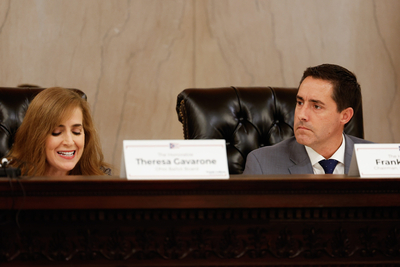
On Oct. 14 last year, Gavarone and Republican state Sen. Andrew Brenner of Delaware County introduced Ohio Senate Bill 293 with one purpose: Eliminate those last four days of grace. That’s all. Keep the talking points simple. But like the previous bill, it would grow to be much more.
For context, in the same week that the no-grace bill was introduced, the federal government was shut down over healthcare-benefit cuts that were about to go into effect, Vice President JD Vance said the president was considering invoking the insurrection act, Secretary of Defense Pete Hegseth issued an order that Pentagon news media were not permitted to publish any information that wasn’t authorized by the Defense Department, an alleged drug boat was exploded killing three people and the president posted an AI video of himself in a fighter jet dropping fecal matter on No Kings protestors, tens of thousands who had gathered that weekend.
In that head-spinning news on a weekly basis, the bill was through both houses in five weeks — a remarkable feat for Ohio lawmakers. Bills and resolutions usually don’t move that fast unless Republicans want to control women’s reproductive rights or, well, elections.
In her public statement about eliminating voters’ grace, Gavarone did not disclose publicly that this was an idea considered and discarded three years earlier — which might require explanation as to why it was kept.
Instead, Gavarone cited a Donald Trump March 25, 2025 executive order that said all ballots must be received no later than Election Day to be counted.
One might conclude that she believed Trump had the authority to do so and states had to act. It was a curious position for her to take, considering that the U.S. Constitution grants election powers to the states and Congress, not the president.
Though Trump’s order was most likely unconstitutional, and some states said they would resist, Ohio Republicans were just getting started.
Only one week after introduction, the first hearing on Ohio Senate Bill 293 was held in the Senate General Government Committee chaired by Hudson Republican Kristina Roegner.
Gavarone and Brenner offered more reasons for the legislation. Brenner’s statement was simple: Four days of grace are four more days for cheating, though he offered no evidence that the grace period had facilitated any cheating.
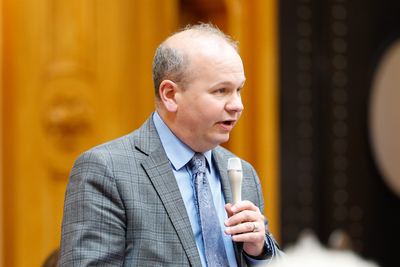
Gavarone told her colleagues that the U.S. 5th Circuit Court of Appeals had ruled that Mississippi’s grace period was unconstitutional. Ballots had to be counted on Election Day, the 3-judge panel said. She argued that states needed to respond swiftly to the ruling and named a few other states that already had changed their rules.
An example she gave was Minnesota, which she described as a “reliably blue state.” But Minnesota’s mail-in ballots always were required to arrive by the close of polls on Election Day. They only adjusted the time for in-person delivery on Election Day — it had nothing to do with the grace period. Moreover, the “reliably blue state” was actively opposing Trump’s executive orders in the courts.
Thus, Gavarone’s contention that this was a bipartisan mutually-shared concern about election integrity loses credibility. The audacity to suggest it flies in the face of the name of the plaintiffs on the case: The Republican National Committee and the Mississippi Republican Party.
That wasn’t the end to her fog of disinformation. Gavarone apparently was unaware of the following as she proposed restrictions on Ohio voter rights:
• The three judges on the 5th Circuit panel who heard the appeal of the Mississippi District Court ruling were all Trump appointees. A disproportionate number of the 5th Circuit’s cases are appealed to the U.S. Supreme Court and a disproportionate number are overturned. In other words, this court’s record wasn’t stellar.
• The U.S. District Court for the southern District of Mississippi, which originally heard the arguments, threw it out on a summary judgment, meaning the judge had heard enough. Republicans had no case. The judge, Louis Guirola Jr., was appointed to the bench by Republican George W. Bush, had been the senior judge for six years and also served at the time on the U.S. Foreign Intelligence Surveillance Court at the behest of Chief Justice John Roberts. He was respected.
• The 5th District ruling was a year old. If the ruling is foundational to her bill, why did the GOP wait a year?
• More importantly, Gavarone didn’t disclose potentially disqualifying information. Several states had filed suit to block Trump’s executive order and they won just a few months earlier. A U.S. District Court in Massachusetts found that grace periods were indeed constitutional – NOT unconstitutional. The court went as far as to block Trump’s order.
• And finally, the Mississippi 5th Circuit ruling was not binding on Ohio, though the Massachusetts case had implications for Ohio because Trump’s executive order was blocked.
Public hearings on the no-grace bill began a week after her testimony and public opposition was 50 to two.
The only supporters were not from Ohio. One was a lawyer from Texas, the other a lobbyist from Indiana and both working for organizations tied to Project 2025, a playbook for dismantling the separation of powers in the federal government and shifting governing authority to the president.
The Texas man was Chad Ennis. He assisted Texas Attorney General Ken Paxton in questioning the integrity of the 2020 elections in Harris County, Texas, a county of 5 million people which votes Democratic. Paxton is a 2020 election denier who led Republican states in attempting to block certification of Joe Biden’s victory. Ennis is now vice president of the Honest Elections Project, which was among about 100 conservative organizations supporting the creation of Project 2025.
The other proponent was Paul Lagemann, a former Indiana flooring-business owner who became a political consultant and for the last 19 months has been a lobbyist for Heritage Action, the political arm of the Heritage Foundation. The Heritage Foundation was a key leader in Project 2025.
On the other hand, 50 Ohio citizens delivered opposition testimony.
Unfazed, Republicans moved the bill to the Senate floor where it was approved immediately after opponents finished their testimony.
Then the black magic happened.
When the bill moved across the building to the Ohio House, it grew from five pages to 67 and contained several new cumbersome requirements that for all practical purposes gave Donald Trump what he wanted from Congress in the so-called SAVE Act — if not more.
The changes require the secretary of state to compare the state registered-voter database with the Department of Homeland Security’s database of U.S. citizens.
Should there be a discrepancy, the person’s voter registration would be summarily canceled with no warning or opportunity to respond.
Moreover, the secretary of state must routinely check every voter, compare birth dates, name-spellings, driver’s license numbers, addresses and Social Security numbers across other databases.
If a jot or tittle is out of place, a letter is to be sent to the voter seeking proper documentation and verification or they will be challenged when they try to vote and have only four days to fix discrepancies.
In the Ohio House, there was no public support for the more restrictive bill.
Opposition grew – 74 provided testimony against it. That’s 74-0.
But despite there being no public support, the bill was voted out of committee to the full Ohio House where it was approved the following day, back to the Ohio Senate for approval of the House amendments, then to the governor for his signature.
DeWine signed it Dec. 19 and it went into effect three months later.
Left in the ether was the opposition testimony from Ohioans. Like that of John Sheehan. He is a Dayton-area retired Air Force major who did his research. He found that in the three previous elections, 20,896 votes would have been incinerated rather than counted if the four-day rule had not been in effect.
“Is it actually the intent of the Ohio legislature to disenfranchise over 20,000 registered Ohio voters?” he asked in his testimony.
Another was Columbus attorney Andrea Yagoda, who in the short time she had to prepare her 7-page testimony she spelled out many of the same arguments used in the U.S. Supreme Court to overturn the 5th Circuit ruling. She delivered an angry demand.
“These legislative committees always ask the voters for data, etc when we testify and yet conveniently fail to provide any to support their bills. Tell us Senators Gavarone and Brenner how does the four-day grace period encourage fraud? Ohioans like myself would like to know.”
What are Ohioans to do as the legislature dismantles public education, facilitates taxpayer subsidies of artificial-intelligence factories, prohibits free speech on campus, and operates its own newsroom that attempts to discredit the free press?
“Vote” is too simple of an answer. While voters do in fact need to turn out Ohio elections already are stolen at the state level and the final machinations for a Trump takeover are only months away.
The questions are: What do Ohioans hope for and how do we get it?
First of all, the majority of Americans no longer support this administration. In Ohio, Trump’s approval has dropped from plus 11 in the 2024 election to minus 14 in a recent Fox News poll.
The right to vote is identified by 85% of Americans as extremely or very important to our country’s democratic identity, according to an Associated Press-NORC poll done in anticipation of the 250th anniversary.
Alarmingly, the poll shows 33% believe there is NO threat to voting rights. If you are concerned, you are in the majority.
Ever hear of Alcoholics Anonymous? They meet regularly and challenge each other to live constructive, productive lives. Form a Trump Derangement Syndrome Anonymous group. Meet often with friends, discuss shared values, challenge each other to constructive action, and figure out how to be seen, heard, and respected.
Each time you meet, talk about what you did. Freedom of speech and assembly and the right to address our government — to irritate if necessary — may be our last resort.
Find and contact your state legislator here: https://www.commoncause.org/find-your-representative/
Doug Oplinger is a Pulitzer-Prize winning journalist who worked at the Akron Beacon Journal for 46 years and led the statewide Your Voice Ohio media collaborative of 50 newsrooms for five years. He is a contributing author in the Kettering Foundation book “Reinventing Journalism to Strengthen Democracy” and provides pro-democracy news analyses of Ohio current events in The Ohio Defiant on Substack and Facebook. He can be contacted at [email protected].
Columbus, OH