‘What do we have in common’: Traveling the 250 miles through Tennessee’s House District 9
Jul 08, 2026 | 6:02 am ET
Description
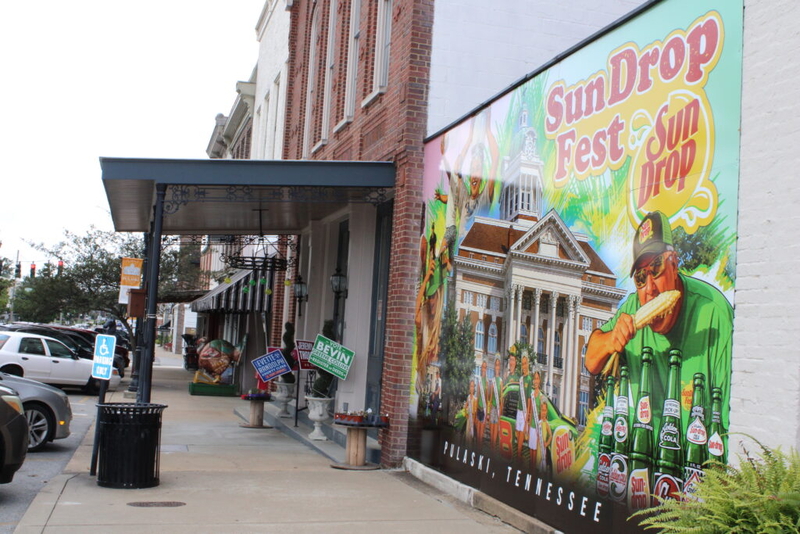
Tennessee's new 9th Congressional District 9 starts in Nolensville and runs through rural towns like Pulaski ending at the Memphis International Airport. (Photo: Adam Friedman/Tennessee Lookout)
Krystal Donnelly raises her eyebrows, purses her lips and lets out a deep exhale while standing outside the Pulaski dry cleaners she’s worked at for over two decades.
“Oh, the fun Nine.”
It’s the eve of America’s 250th anniversary, it’s hot, and Donnelly is asking why I’ve decided to brave the elements to walk the city’s town square. The answer, of course, is redistricting.
Eight weeks earlier, Tennessee’s Republican-led legislature redrew the state’s U.S. House map with hopes of eliminating the last Democratic-held seat: Congressional District 9. The new map was created in a hastily called special session at the urging of President Donald Trump and less than 48 hours after the U.S. Supreme Court greenlit states to eliminate majority-minority districts.
The 9th has historically been a seat drawn around Memphis, and the state’s largest concentration of Black voters. This correlation has also meant a Democrat has held the 9th for 144 of the last 150 years, dating back to the end of the Reconstruction Era following the Civil War.
The new seat still includes a bite-sized chunk of Memphis, but in order to drown out Democrats — and with that, Black voters — Republican lawmakers created a new map splitting the city across three districts. The “new Nine” is an L-shaped gerrymandered seat stretching across vast expanses of rural Middle and West Tennessee, pinned between two of the state’s wealthiest suburbs outside Nashville and Memphis.
I drove U.S. Route 41A from the outskirts of Nashville through Nolensville to Shelbyville, crossing in and out of District 9 at various points because lawmakers had carved up several counties to create what they believe are nine Republican-voting U.S. House districts.
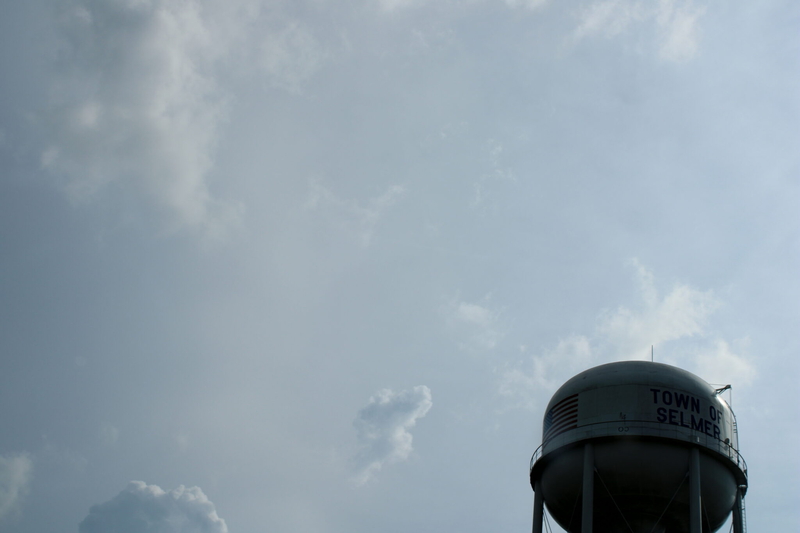
I then found U.S. Route 64 in Fayetteville, stopping in Pulaski, Lawrenceburg, Waynesboro, Savannah, Selmer, Bolivar and Germantown before ending at Memphis International Airport, which serves as the district’s western boundary.
“What do we in Pulaski have in common with Nashville and Memphis?” Donnelly said. “At least here, some people work in Nashville because it’s cheaper to live out here, but in Waynesboro or Savannah it’s a totally different life.”
On the surface, Tennessee’s District 9 is so precisely drawn it’s almost confounding. But the 9th might not even be the most bizarrely drawn district of the most recent map — that distinction could go to the 5th — or even in the last three decades.
In 1992, with Democrats in control of Tennessee’s state legislature, the 4th district was stretched to similar lengths, with Democrats hoping their longtime strongholds in rural West and Middle Tennessee could dilute Republicans’ growing strength in Nashville’s suburbs and out east.
What links the district?
From a coffee shop in Shelbyville with horse-themed decor to the Tennessee River Museum in Savannah to a chain restaurant on the outskirts of Memphis and even in the district’s richest neighborhood in Nolensville, one thing came up again and again: the cost of housing.
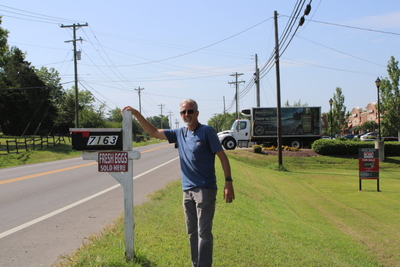
Gary Goats has owned his home in Nolensville since what he describes as a time when the previously unincorporated city was still “country.”
Now, almost 50 years after he purchased the property, he looks out at the new Liberty Federal Credit Union and the AT&T store surrounding his once-idyllic rural property on Nolensville Pike, and said he’s selling the house.
“It’s not quiet anymore, and it’s expensive up here now,” Goats said. “Luckily we’ll be able to make some money on this property. Maybe we’ll move to Lawrenceburg or Waynesboro where it’s cheaper.”
America faces a housing crisis after decades of restrictive zoning policies have shrunk the supply of places to live, driving up the cost of what is often the single largest budget item for most people.
Tennesseans are not immune to the pressure of rising home prices, driven by a combination of new residents and restrictive zoning laws across the state — problems neither new nor partisan.
The Beacon Center, a conservative Tennessee-based think tank, and ThinkTennessee, a center-left organization, have both made similar points that housing costs in Tennessee are out of control.
“Few Tennesseans realize that the biggest factor limiting where and how many homes can be built, leading to higher housing costs, is zoning by local governments,” a 2023 report from the Beacon Center detailed.
Since the start of 2021, every county and city in the 9th has seen home values increase by a minimum of 20%, like in the Memphis suburbs, Bolivar and Shelbyville, according to Redfin, an online real estate agency.
Areas like Nolensville and Savannah have exploded, though, with home prices up 50% over the past five years; in Pulaski, the average sale price of a home in 2021 was $155,000 and today it’s $300,000.
Rural vs urban vs suburban
On the Nashville side of the 9th, I knew I had entered the district when a string of auto shops and payday lenders in old buildings gave way to freshly paved roads, new apartments and a Sprouts grocery store.
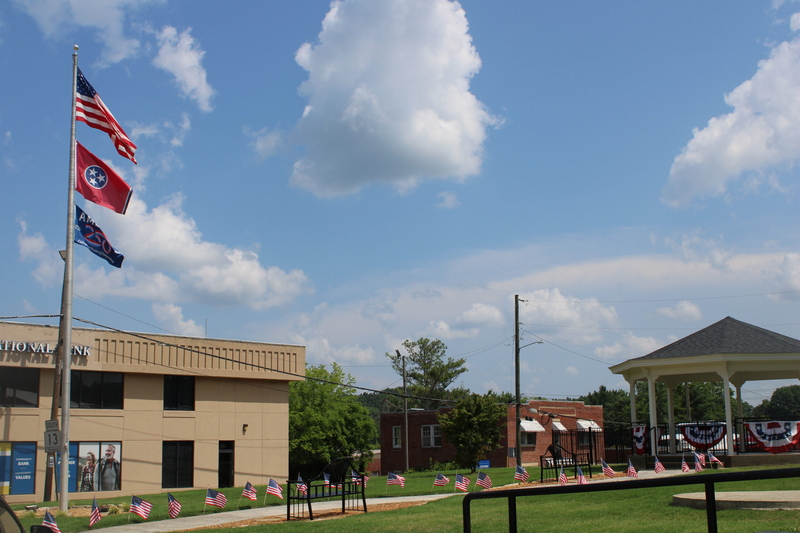
Then, as I traveled farther west, the new suburban feel turned into a rural landscape as I drove through what seemed like miles of forest and farmland, with the occasional sight of cows grazing in the distance. The spattering of towns along the 9th’s east-to-west stretch served as the primary indication of how far I’d traveled. This ended as cars clogged the roads and buildings grew taller as I entered Memphis.
The 9th, as has been the case of Tennessee politics for decades, has an urban-suburban-rural split. The district’s population is almost perfectly split between its 13 rural counties and its two urban-suburban ones.
For the 2026 election, the dichotomy has shown itself in the Republican primary, where Memphis state Sen. Brent Taylor and Chapel Hill state Rep. Todd Warner are the leading candidates.

Both men are running campaigns in Trump’s image.
Taylor is a former mortician who has tried to raise his statewide profile by selling himself as a conservative agitator, fighting “that sorry ass DA, who refused to do his job,” as he said in a recent advertisement, referring to Shelby County District Attorney Steve Mulroy, a Democrat.
Warner is a corn and soybean farmer also pushing his conservative bona fides, but has taken a different tactic, emblazoning the words “drain the swamp” on almost all of his campaign literature.
Taylor has the backing of the state Republican establishment, including gubernatorial candidate U.S. Sen. Marsha Blackburn, and the seat was even drawn to include his West Memphis house on the district’s edge. Warner has clashed with state Republicans, refusing to back Gov. Bill Lee’s private school voucher program.
There are also two other Republicans running, Charlotte Bergmann, who’s run multiple times, and first-time candidate Jeremy Thompson.
For Warner’s hometown of Chapel Hill, the election is a whiplash because 2026 was the third time the community has been redistricted into a different U.S. House seat in the last six years.
Republicans successfully drew out a Democratic-held Congressional seat in 2022 by combining rural areas like Chapel Hill with other conservative Middle Tennessee counties to dilute Democratic votes in Nashville.
The 2022 gerrymandering of Nashville laid the blueprint for how Republicans could do the same in Memphis after the Supreme Court ruled states with a history of racial discrimination no longer had to draw U.S. House districts with a majority-minority population, helping them secure more representation in Congress.
For Memphis, the predominantly Black city has been represented for the last 20 years by U.S. Rep. Steve Cohen, a white Democrat. The new 9th seat is a disappointment for some Memphis Democrats who anticipated a race between an older generation, represented by Cohen, and the younger insurgent one as represented by state Rep. Justin J. Pearson.
Instead, Cohen, 77, bowed out in May, not wanting to fight for a seat nonpartisan Cook Political Report classifies as “Solid Republican,” but also potentially the most flippable of any of the state’s new U.S. House seats.
The race now features Pearson taking on Memphis state Sen. London Lamar as the top two challengers; Jim Torino of Columbia and LaTroy A-Williams of Memphis round out the Democratic ballot.

Pearson is a community organizer who rose to national fame in 2023 after Republicans temporarily expelled him and another Democratic lawmaker over their protests to a lack of action on gun control following a school shooting in Nashville that killed six. Lamar, who has been endorsed by Cohen, made a name for herself in the state legislature via her speeches in opposition to Republican laws like a state abortion ban and the most recent redistricting.
Hanging over the race is the political environment, which is making it increasingly hard for congressional candidates to run independently of the national party’s reputation. While many voters might be in new districts in Tennessee, they care less about who their actual representative in Congress is and more about the party that represents them.
Goats said he didn’t have an opinion on the Republican primary for the 9th, since he would vote for the winner no matter what, as they both seemed in line with Trump.
But he did care about who won the Republican primary for Tennessee governor.
Outside his house in Nolensville, he pointed to a Blackburn for Governor sign across the street and then one for state Rep. Monty Fritts — both are running for the GOP gubernatorial nomination — behind him.
“I’ve voted for her in every election,” he says. “But I’m thinking about voting for him.”
Nashville, TN