Stocks are up, unemployment is down – so why is a leading NC economist raising a red flag?

Description
From groceries to gas to travel plans, a new Catawba College–YouGov Survey finds that 72% of North Carolinians say rising prices have caused them to cut back on purchases. (Photo: USDA)
The Dow Jones Industrial Average topped 53,000 for the first time this week, a milestone celebrated by Wall Street investors. But a leading Kenan-Flagler Business School economist says a closer look at the latest economic data shows a clear disconnect in how many consumers are viewing and experiencing the American economy.
Kenan Institute research director Camelia Kuhnen said economists were “relatively optimistic” that jobs nationwide in June would increase by 125,000. Instead, only 57,000 jobs were added to the U.S. economy.
The national unemployment rate fell to 4.2% last month, but that too was a worrisome sign.

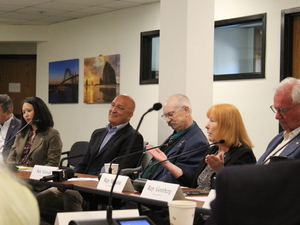
“The main driver for the drop in unemployment is that some people have left the labor force,” Kuhnen told reporters in a recent briefing.
The labor force participation rate also dropped in June to 61.5%.
“It has been stable for a while, but we’re seeing this tick down in the labor force participation rate, which is not really a very good thing,” said Kuhnen.
Some older people may have accumulated enough financial wealth to retire early, but Kuhnen said the departure from the workforce of men and women in their prime years will have a negative impact on the nation’s future economic growth.
Twenty-seven percent of those who are currently jobless are long-term unemployed.
“Research has shown that the longer you are unemployed, the harder and harder it is for you to find a good match in the labor market,” Kuhnen said. “Your human capital gets depleted and diminished, and so it’s not good to see such a high fraction of those unemployed being long-term unemployed.”
Consumer sentiment impacts summer travel, fall elections
Another surprise in the data released by the Bureau of Labor Statistics July 2 is the loss of 61,000 jobs in the leisure and hospitality sector.
“The picture is not exactly a happy one,” said Kuhnen. “A lot of economists expected to see a bump from the World Cup in line with what we saw back in 1996 because of the Atlanta Olympics. In the June data, we don’t see this bump.”
The decline in leisure and hospitality can be traced to consumer sentiment.

A Catawba College–YouGov Survey released this week finds that 72% of North Carolinians say rising prices have caused them to cut back on purchases.
The survey of more than 1,000 North Carolinians found 57% who said they had difficulty in affording monthly expenses.
The Catawba College–YouGov Survey conducted a similar poll in January. This latest survey finds North Carolinians expressing greater concerns about affordability than they did at the beginning of the year.
“An eight-point rise in cutting back on regular purchases sends a message that North Carolinians see the everyday economy as worsening,” said Dr. Michael Bitzer, director of the Center for North Carolina Politics & Public Service.
Bitzer said affordability will be a factor in November’s mid-terms.
When those experiencing monthly economic hardship were asked who they intended to vote for in North Carolina’s U.S. Senate race, Democrat Roy Cooper held a 22-point lead over Republican Michael Whatley. When those not facing any economic angst were asked about their intended vote, the race becomes a virtual tie with voters favoring Cooper 44% to Whatley’s 42%.
Bitzer cautioned in a press release that while the findings don’t prove that affordability concerns cause certain voter preferences, they do “demonstrate a strong relationship between economic perceptions and electoral choices in this midterm environment.”
Amid solid job numbers, a North Carolina economist sees troubling headwinds
At the Kenan-Flagler Business School, the focus is not on the political landscape. Kuhnen said she is more concerned that the personal savings rate continues to slide, declining from 4.5% in 2025 to 3% this year.
“Spending more does not mean that you are better off as a household,” Kuhnen said. “[Consumers] have been depleting their savings, and this is why in those surveys people are quite pessimistic.”
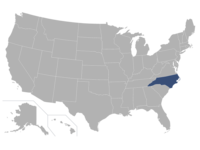
Raleigh, NC