Feds approve Arkansas’ request for flexibility in spending U.S. education funds
Jul 07, 2026 | 7:21 pm ET
Description
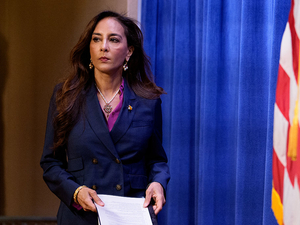
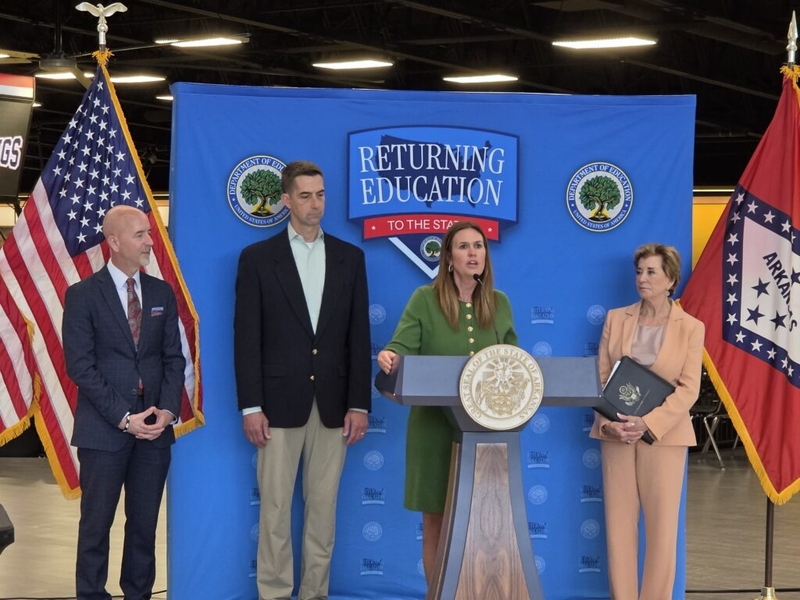
Arkansas Education Secretary Jacob Oliva, U.S. Sen. Tom Cotton, Arkansas Gov. Sarah Huckabee Sanders and U.S. Education Secretary Linda McMahon tout the reduction of red tape for Arkansas schools via federal waivers at the Hot Springs Junior Academy charter school on July 7, 2026. (Photo by Tess Vrbin/Arkansas Advocate)
HOT SPRINGS — The U.S. Department of Education on Tuesday approved Arkansas’ requests to consolidate federal funding and reduce the amount of paperwork and red tape required of school administrators.
U.S. Education Secretary Linda McMahon signed the Returning Education to the States Waiver, the Ed-Flex Waiver and amendments to the state’s federal accountability plan after a news conference at the Hot Springs Junior Academy charter school. Arkansas Education Secretary Jacob Oliva applied May 27 for the three waivers.
Arkansas is the fifth state after Iowa, Louisiana, Indiana and Vermont to receive these waivers.
McMahon, Oliva, Gov. Sarah Huckabee Sanders and U.S. Sen. Tom Cotton all decried bureaucracy in the education system.
“That’s what our Reclaiming Arkansas education waiver achieves: less paperwork that our districts and our state have to provide to the federal government, fewer tests that our students have to take, and more flexibility for our teachers so they can focus on their real job, which is educating our kids,” Sanders said at the news conference.
Many public school district faculty from Arkansas support the waivers, according to the public comments the Education Department received before submitting the waiver requests in May.
Several administrators said they would further support expanding the waivers to allow private and charter schools to receive federal funds directly instead of routing them through local public school districts.
“Requiring public school personnel to manage the paperwork, requisitions, ordering, and invoicing for nonpublic schools creates an unsustainable administrative burden,” Bryant Public Schools Superintendent Karen Walters wrote. “Furthermore, from the standpoint of the funds’ intent, nonpublic schools are best positioned to identify their students’ specific needs and determine the most effective use of their allocations.”
The Arkansas Education Association opposes “removing the guardrails requiring that distinct sums of federal monies are used for their distinct purposes,” AEA President April Reisma wrote in the organization’s public comment.
“If approved, these changes will erode transparency, shift federal funding away from formula-driven distributions specifically designed to direct more resources to high-needs districts, and make it significantly more difficult to evaluate whether dedicated funding is reaching and assisting the beneficiaries that Congress specifically intended,” Reisma said.
Oliva said Tuesday that fewer federal requirements will create more accountability, not less, for Arkansas schools. He also said about 34 cents of every federal education dollar in Arkansas goes toward maintaining compliance with regulations instead of supporting students.
“We don’t want to run a state accountability system and a federal accountability system when we know our state accountability system identifies more students in schools that need additional support,” he said.
McMahon repeated her commitment to follow President Donald Trump’s directive “to sunset a 46-year, $3 trillion failed education bureaucracy in D.C.” on Tuesday. The Republican-led U.S. Senate narrowly confirmed McMahon to her post last year. It would take an act of Congress to abolish the Department of Education altogether.
McMahon’s visit to two Saline County schools on her “Returning Education to the States” tour in August 2025 drew protests from parents critical of McMahon and Trump’s plan to dismantle the federal education department. Parents also criticized one of Sanders’ policy priorities, the LEARNS Act, which state and federal officials praised Tuesday.
The sweeping 2023 education overhaul law raised starting teacher pay to $50,000 per year, provided literacy coaches for every K-3 teacher in schools graded “D” or “F,” and started a new school voucher program that has been open to all Arkansas students as of the 2025-26 school year.
The rising cost of the voucher program has raised concerns from Democrats and some Republicans in the Legislature.
Sanders also championed a 2025 law banning student cell phone use during school hours. Two rising seniors at Hot Springs World Class High School told state and federal officials at a roundtable after the news conference that the cell phone ban has improved their ability to engage with their coursework.
Little Rock