Nebraska officials see ‘game changer’ in new Workforce Pell Grant program
Jul 07, 2026 | 8:17 pm ET
Description
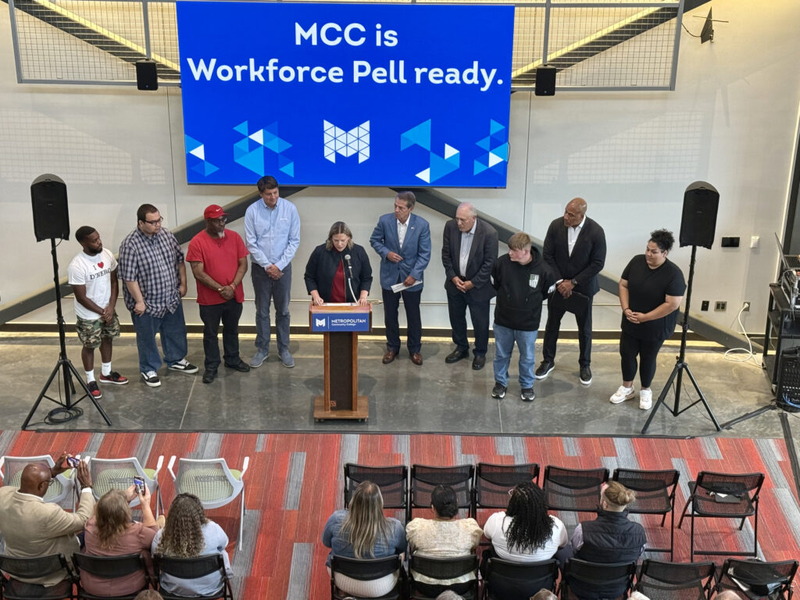
Nebraska Labor Commissioner Katie Thurber speaks at a press conference at Metro Community College, as Nebraska launches the federally-funded Workforce Pell Grant program. (Cindy Gonzalez/Nebraska Examiner)
OMAHA — Nebraska officials raved Tuesday about a new federally-funded Workforce Pell Grant program they expect will boost the state’s labor force and more quickly connect trainees with high-demand jobs.
Gov. Jim Pillen and State Labor Commissioner Katie Thurber discussed the program on the grounds of Omaha Metropolitan Community College — one of the first community colleges in the nation prepared to launch Workforce Pell.
“This is another important piece of workforce development,” Pillen said at a media event at MCC’s Fort Omaha campus. “It’s about … meet where you are, get where you want to go.”
The funding is available nationwide through the Working Families Tax Cuts Act signed into law last July. MCC officials said that for the first time, Pell Grant funding now is extended to students for eligible, short-term noncredit and microcredential workforce training programs.

At MCC, officials said four programs so far meet eligibility criteria: phlebotomy technician, certified pharmacy technician, commercial driver’s license and CompTIA+ information tech.
Thurber said she expects other community colleges across the state to offer Workforce Pell, once they qualify. They must show, for example, a 70% student completion rate, 70% job placement rate.
Tuition for eligible students should be fully covered, said Randy Schmailzl, MCC president. There are no As, Bs and grading involved, he said. Rather the focus is on becoming competent in the subject matter during training that lasts 8-15 weeks. Employers get involved on the ground floor to help ensure transition into jobs.
Schmailzl said he had been working with other college representatives for a decade to get federal officials on board with the idea. “This is a game changer,” he said.
MCC was ready to launch Workforce Pell, said Schmailzl, because it had previously established its Career Forward pandemic-era program, which turned out to be a prototype of sorts. Career Forward was developed as a way to help people transition into different jobs and careers through short-term training, he said. MCC at the time used COVID-19 recovery funds for the effort.
“My goal is ‘get this done’ so people can get to work,” Schmailzl said.
Ty Heath is among MCC students accessing noncredit workforce training already, and is looking forward to more options under Workforce Pell. He is a recent high school graduate, not sure what career path to take. The grant program will allow him to check out options.
“It’s a preview of what my life could be if I so choose,” he said.
Workforce Pell funding is available to students who are not already receiving a traditional Pell Grant and have not reached their lifetime Pell eligibility limit. Unlike traditional Pell Grants, students who already hold a bachelor’s degree (but not a graduate degree) could qualify, MCC officials said.
Lincoln, NE