New Mexico residents push to save nearly 80-year-old Sunspot Solar Observatory as demolition nears
Jul 03, 2026 | 12:00 pm ET
Description
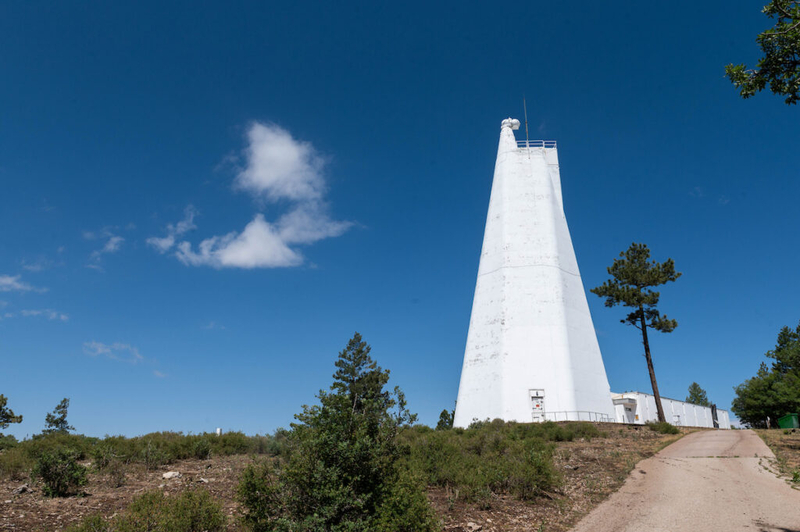
The Sunspot Solar Observatory, pictured in 2022, is slated for demolition after liquid mercury leaked from the main telescope. (Courtesy of New Mexico State University and Josh Bachman)
A coalition of New Mexico residents are pushing to save the nearly 80-year-old Sunspot Solar Observatory in the Sacramento Mountains near Alamogordo, after the National Science Foundation announced its plans to demolish the site.
The U.S. Air Force in 1947 announced it would fund a solar observatory dedicated to researching solar flares and sunspots — within eyesight of the White Sands Missile Range. The National Science Foundation took over operations in the mid-1970s and a consortium including New Mexico State University has overseen operations of the visitor’s center and Richard B. Dunn Solar Telescope since 2017.
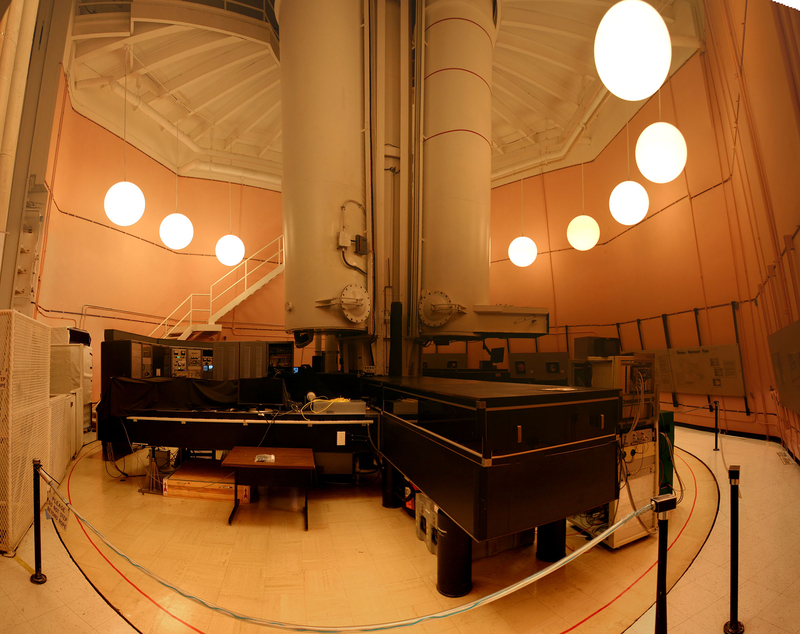
For decades, the telescope, in particular, was seen as a major scientific breakthrough. Its 250-ton optical system was suspended in 120 gallons of liquid mercury, which meant the excessively heavy machinery was easy to turn by hand.
In January, though, the National Science Foundation announced that the liquid mercury had spilled into the building housing the telescope. It immediately closed the campus off to the public and kept it that way. By February, the NSF announced plans to demolish the site and return the land to the stewardship of the U.S. Forest Service.
Residents, former employees and even some state lawmakers still see plenty of uses for the campus, though.
“They’re going to destroy something that has scientific history and cultural history,” Dave Dooling, who worked as the education officer at Sunspot for nine years and is now leading the effort to stop demolition, told Source NM. “It’s our own personal Project Hail Mary going on here.”
Dooling’s contributions to the site include the Sunspot Solar System Model. In the attraction he created, Sunspot was, aptly, the sun, and signs installed on the surrounding roads showed visiting motorists relatively how far each of the planets’ orbits were from the center of the solar system.
Dooling and a grassroots coalition known as Friends of Sunspot are pushing to pause the demolition until stakeholders in the area can agree on a plan. He has traveled to local city council meetings to seek the help of elected leaders in his area and spitball ideas for the site, including a mixed-use property that could include educational facilities, camping sites and STEM seminars.
“We’re going to keep pushing until the wrecking ball starts swinging,” he said.
At public meetings, Dooling has often spoken alongside Heidi Sanchez, who ran operations at the facility’s visitor center. Sanchez told Source NM she believes that if they got the ear of the right state leader, they could build “something unique for this state that no other state has.”
Along the way, the pair has made some powerful allies.
Scott McLaughlin, the executive director of Spaceport America, told Source NM he learned of the proposed demolition while he was camping in the area. He stopped into a local bike shop and overheard people talking about the demolition.
McLaughlin, who grew up in the area, recalled many childhood visits to the observatory with his parents.
“I’m hoping enough people can create momentum to get the National Science Foundation to slow down so all these people who are interested can figure something out,” he told Source NM. “I consider it part of the Space Valley ecosystem.”
McLaughlin started researching the matter more, he recalled, and began reaching out to state lawmakers in hopes of finding someone who might be able to take up the issue.
It caught the eye of Rep. Dayan Hochman-Vigil (D-Albuquerque), the New Mexico House majority whip. Hochman-Vigil, a lawyer who practices aviation and space regulatory law, told Source NM that she has had productive conversations with lawmakers who represent the area around Sunspot and hopes the National Science Foundation will pause demolition long enough for folks in the area to figure out an alternative.
“There’s just so much history and so much potential…it would be an absolute shame to totally lose access to those resources,” she said.
The National Science Foundation in a statement to Source NM noted it plans to turn the land back over to the U.S. Forest Service, but will provide public updates along the way.
“NSF’s priority is making sure the mercury contained within the telescope is safely addressed,” spokesperson Cassandra Eichner wrote.
Eichner wrote that the decision followed an environmental review, which included a public comment period. That did not turn up any preservation proposals that “were feasible to pursue,” she wrote.
“We recognize what this site has meant to the community and are grateful for their support and engagement with Sac Peak over the past 50 years,” Eichner wrote. “Through their support, the observatory helped propel the nation’s leadership in solar science and scientific excellence.”
The agency’s plans don’t faze preservation advocates like Dooling, though, who said he will continue to meet with other concerned policymakers, residents and former employees until they can come up with a workable alternative.
“The only guarantee is if we don’t do anything, it will get wrecked,” he said.

Santa Fe, NM