‘Doing nothing was not an option’: NC Senate votes to crack down on hemp
Jul 03, 2026 | 12:30 pm ET
Description
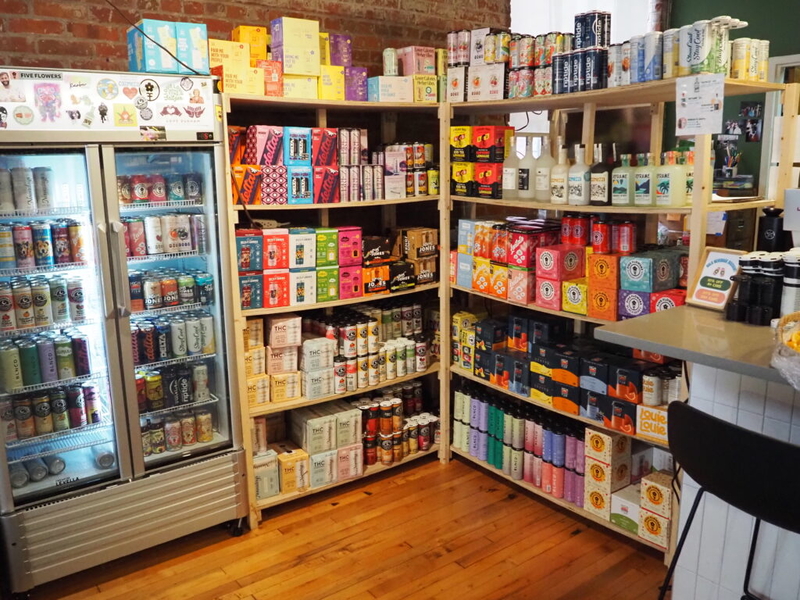
THC, CBD, and Delta-9 products line the shelves at Redhead Hemp on Nov. 13, 2025. Under the congressional ban, almost all are set to become illegal in 2026. (Photo: Brandon Kingdollar/NC Newsline)
On their last day before heading home for nearly a month, North Carolina senators voted to ban most cannabis products currently being sold in the state.
The version of House Bill 328 the Senate approved would ban all intoxicating hemp products in North Carolina. Intoxicating hemp products are defined as any with a total THC content of more than 0.4 milligrams. THC is the compound responsible for the psychoactive effects of cannabis. Hemp business owners have said that limit would ban nearly all products on the market.
The bill would also ban the sale of any hemp consumables to anyone under 21, and ban xylazine and synthetic kratom, two other emerging substances that have prompted health concerns. Natural kratom sales would also be limited to people 21 and over.
It’s the latest action in a back-and-forth between the state House and Senate over what regulatory scheme to impose on substances that have become extremely prevalent in the past few years. Highly potent kratom and hemp derivatives can be found on the shelves of nearly any gas station or vape shop in the state.
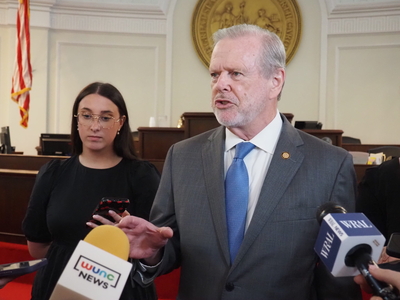
The House had already packed up when senators voted to pass the bill. But Senate President Pro Tem Phil Berger (R-Rockingham) said the crisis posed by these substances was too pressing to wait until lawmakers return at the end of July.
“The personal loss that has occurred across the state of North Carolina as a result of these products is such that we just could not and should not delay any further,” Berger told members of the media after session Thursday. “We have gotten to such a point where doing nothing was not an option.”
The lack of regulation around hemp derivatives, which hit the market en masse after federal regulations allowed them to be sold in 2018, has sparked bipartisan concern, reflected in the 43-6 vote to pass the bill in the Senate.
Sen. Paul Lowe (D-Forsyth) said on the floor that he supports the bill because the hemp industry is in dire need of regulation.
“Some of these products that are sold in these stores, they come from other countries, they can’t even be sold in the country that they come from,” Lowe said. “I have no problem voting this bill at all, because I don’t think this stuff is safe.”
The state’s child fatality task force reported in 2025 that there has been a 600% increase in emergency room visits for minors related to cannabis since 2019. Rep. Jimmy Dixon (R-Duplin) cited the case of a 14-year-old hospitalized after purchasing an intoxicating hemp product when the House debated its own version of the bill last month.
‘We can’t really pivot’: North Carolina hemp stores, farms prepare to fight federal ban
Senate Democratic Leader Sydney Batch (D-Wake) said she primarily supported the bill because of its restrictions on “gas station drugs that are really harming our constituents,” such as kratom, which has led to its own increase in health emergencies. She was more skeptical about its approach to hemp, raising concerns that it could ensnare non-intoxicating products that have legitimate medical uses.
“What I hope that we can do is move forward, with regards to the next month that we’re not going to be here, to sit down, give them our ideas, see if they can incorporate it in a conference report that addresses a lot of North Carolina farmers who are growing hemp so that they don’t go bankrupt,” Batch said.
The bill follows a federal ban on intoxicating hemp products that was enacted as part of the Farm Bill last year, but which has not yet taken effect. Hemp industry lobbyists have since rallied to overturn the ban before it takes effect in November.
Those efforts appear to be paying off — in a letter to Congress last month, the Trump administration urged Congress to reverse itself and keep these hemp products legal.
Berger said passing a ban at the state level ensures North Carolinians will be protected regardless of what the federal government does.
“What we have put in place — or what we’re trying to put in place, hopefully the House will pass the conference report — is a ban on intoxicating hemp products. And if the feds decide that they don’t want to do that as we go forward, North Carolina would still have a ban on intoxicating products.”
He left the door open to the relaxation of some restrictions in the future.
“If there are folks that want to legalize marijuana, then they can introduce that bill, we will talk about that,” Berger said. “If there are folks that want a specific regulatory scheme of some sort on some of these things that would allow folks over 21 to purchase them, let them introduce a bill and let’s see about it.”
The Senate version of the bill goes further than the House version, which would have set an age limit of 21 years old for hemp-derived consumables but otherwise left the market undisturbed, by banning a large swath of hemp-derived products currently being sold. The Senate also requires consumers to be 21 for the products that remain legal.
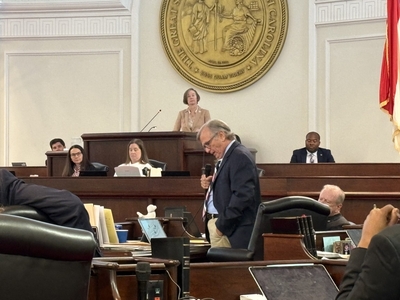
Even proponents of loosening restrictions on marijuana supported the bill. Sen. Bill Rabon (R-Brunswick), the architect of the bill that nearly succeeded in legalizing medical marijuana in North Carolina, delivered a fiery rebuke of the hemp products being sold all across the state on Friday.
“I’ve had the epiphany that the big players and the people who want to make the money can’t make the money they want to make, can’t prey upon the people whom they want to prey upon, in a regulated product way,” Rabon said. “So if that’s the case, we have to do away with all of it. There’s no other option.”
The House will have the opportunity to take up the Senate’s version of the bill when they return to session on July 27. It is unclear whether they will agree to do so.
Raleigh, NC