Alaska’s native bees: tough, diverse and built for the North
Jul 02, 2026 | 6:00 pm ET
Description
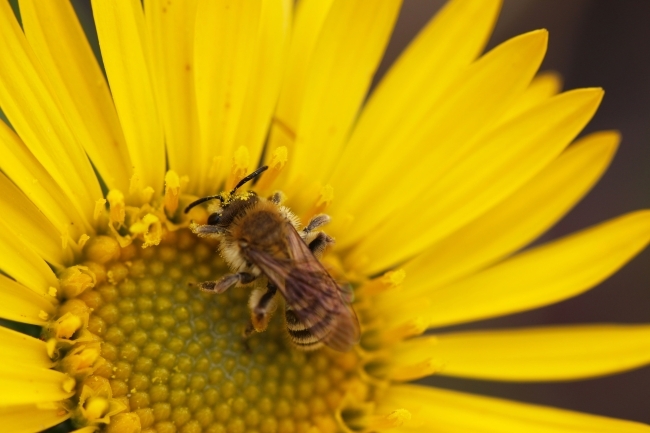
A mining bee is seen on a flower on Nov. 15, 2015. (Photo by Peter Pearsal/U.S. Fish and Wildlife Service)
If you kneel in a patch of early summer tundra and listen closely, you may hear a faint, steady buzz rising from the mosses and dwarf shrubs. It’s the sound of Alaska’s native bees — a diverse, resilient group of pollinators that have evolved to survive some of the harshest conditions on the planet.
While many people picture honeybees when they think of pollinators, Alaska’s story is different. The state’s pollination work is carried out almost entirely by native bees, not managed honeybee colonies. These wild species have lived here for thousands of years, adapting to cold temperatures, short summers and unpredictable weather.
More than 100 species of native bees have been documented in Alaska, and researchers believe more remain undiscovered. These bees come in a surprising variety of shapes, sizes and colors — from large, fuzzy bumblebees to tiny metallic sweat bees no bigger than a grain of rice.
Among the 22 species of bumblebees in Alaska, these five are the most common pollinators:
Bumblebees (Genus Bombus) Bumblebees are the most visible and charismatic of Alaska’s pollinators. With more than 20 species statewide, they are essential to berry crops, wildflowers, and alpine plants. Species such as Bombus polaris and Bombus hyperboreus are specially adapted to Arctic conditions and can generate heat through rapid muscle vibrations. This allows them to fly in temperatures that would ground most insects.
Mining Bees (Family Andrenidae) These solitary bees nest in the ground, often in sandy or well‑drained soils. They emerge early in spring — sometimes before the last patches of snow have melted — taking advantage of the first available blooms.
Leafcutter Bees (Genus Megachile) Leafcutter bees are master builders. They cut circular pieces of leaves to construct nests in hollow stems, wood cavities, or abandoned burrows. Their strong jaws and efficient pollination behavior make them important contributors to both wild and cultivated plants.
Sweat Bees (Family Halictidae) Small and often metallic in color, sweat bees are abundant across Alaska. Some species nest in soil, while others use rotting wood or plant stems. Their small size allows them to forage in tight spaces and on delicate flowers.
Cuckoo Bees (Genus Sphecodes) These parasitic bees lay their eggs in the nests of other species. While their behavior may seem harsh, cuckoo bees are important indicators of ecosystem health — they can only survive where host species are thriving.
Alaska’s bees use a wide range of nesting strategies. Some dig burrows in soil warmed by the sun. Others occupy hollow stems, abandoned rodent tunnels or natural cavities in moss and tundra hummocks. These nesting habits make them vulnerable to habitat disturbance — even small changes in soil structure or vegetation can affect their survival.
Their foraging patterns are tightly synchronized with the short summer bloom period. When flowers emerge, bees must work quickly to gather nectar and pollen before the season ends. A delay of just a few days in spring emergence can mean the difference between a successful colony and a failed one.
Despite their resilience, Alaska’s native bees remain understudied. Many regions of the state have never been surveyed, and new species records are still being discovered. Programs like the University of Alaska Anchorage’s Alaska Bee Atlas are helping fill these gaps, relying on volunteers and researchers to document species across the state’s vast landscapes. Agencies such as the U.S. Geological Survey and the U.S. Fish and Wildlife Service have noted the importance of these efforts in understanding pollinator health.
Understanding Alaska’s native bees is essential for protecting the ecosystems that depend on them. These insects are more than pollinators — they are indicators of environmental change, partners in food security and a vital part of Alaska’s natural heritage.
In the quiet hum of a bee moving through a patch of wild geranium, there is a reminder of the resilience and beauty of Alaska’s smallest wildlife.
Juneau